Two Ohel men’s groups help men show up, communicate better, and feel better doing it.
Ohel provides mental health support that helps individuals and families in the Jewish community function better in their day-to-day lives.
Women often talk about communication, emotional awareness, and ‘doing the work’ (even if we don’t always love doing it). For many men, that doesn’t come naturally. Not because they don’t care, but because they were never really taught how. And it’s not just a communication issue, sometimes it’s knowing how to handle what they’re feeling in the first place. That’s where Ohel’s men’s groups come in.
Ohel offers two different men’s groups, depending on what kind of support is the right fit.
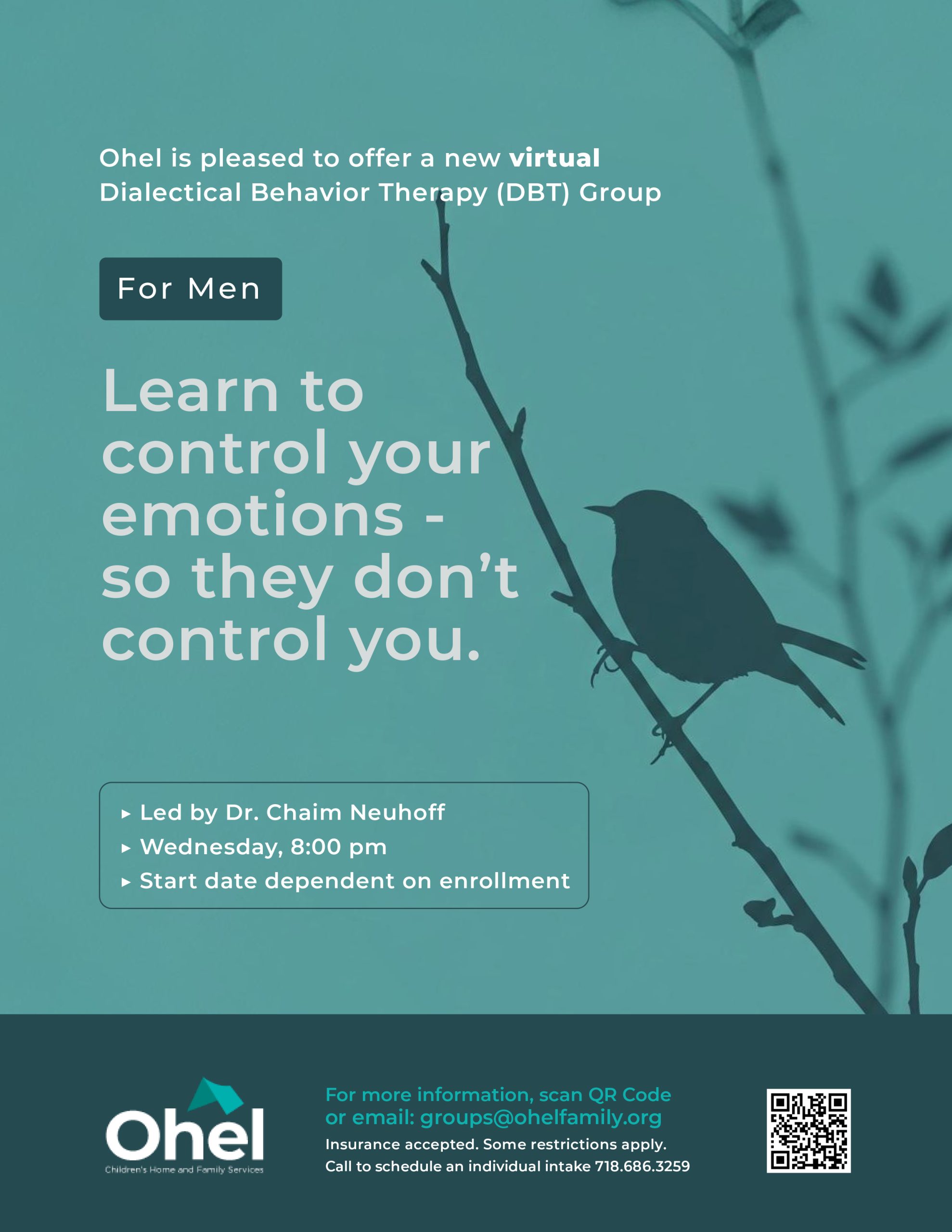
Men’s DBT Group, led by Dr. Chaim Neuhoff
Are you familiar with Dialectal Behavioral Therapy? Read more about DBT in our previous review of Ohel’s women’s DBT group, here.
This group offers additional tools for men already in counseling. The DBT group meets weekly (mostly virtually, with occasional in-person sessions), and each week focuses on one practical, usable skill: skills like how to recognize emotions and respond instead of shutting down.
These are real tools that men can learn and implement immediately.
The format is simple. Learn the skill, practice it, while sharing the process with other men who are working on the same things. Participants in the DBT group are also in individual therapy, where those skills get personalized and applied more deeply.
The program runs in 6-month cycles, covering the four core DBT modules; it’s highly recommended to go through it twice.
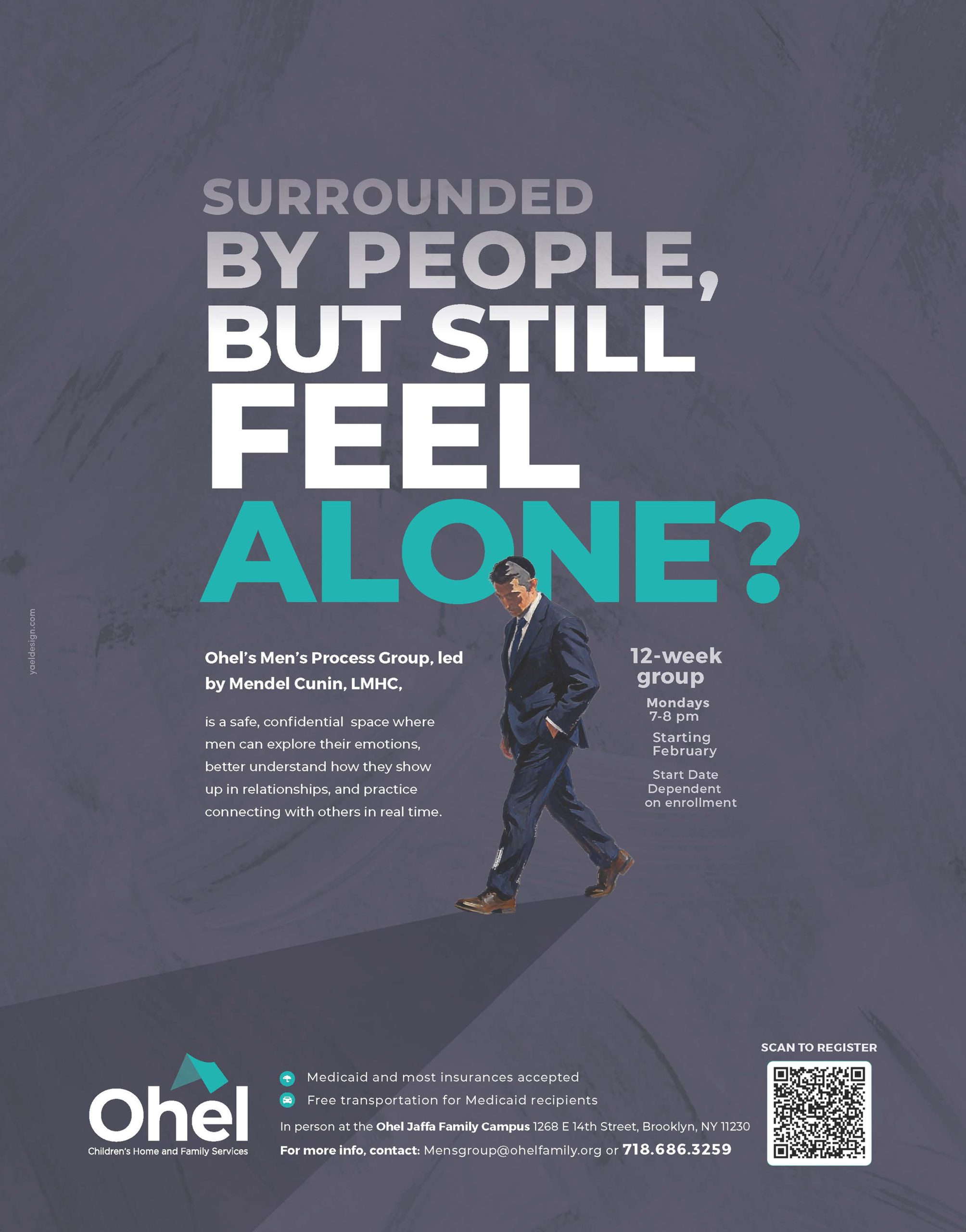
Men’s Interpersonal Group, led by Mendel Cunin, LMHC
This group is less structured, which is exactly the point, and is available to all, Here, the group itself is the work. It’s designed for men who are doing well day-to-day, but struggle in their relationships, especially when it comes to opening up, expressing feelings, or staying present instead of shutting down.
In this space, men start to notice, in real time, how they show up with others. The group becomes a practice ground for being more open, more expressive, and more connected. Over time, the skills they practice carry over at home and in their relationships.
This group runs in 12-week cycles, but men often continue to further develop their skills.
Why Do Men Join These Groups?
Most men initially come because someone has encouraged them to, or they see for themselves that they’re ready for more. But they stay because they feel the difference.
They feel better. Their relationships improve. And all that ‘work’ starts to pay off in real ways!
If this sounds like something that could help someone in your life, Ohel makes this support more accessible than ever! For more information, reach out to Ohel at (718) 686-3259 or email mensgroup@ohelfamily.org or groups@ohelfamily.org.