

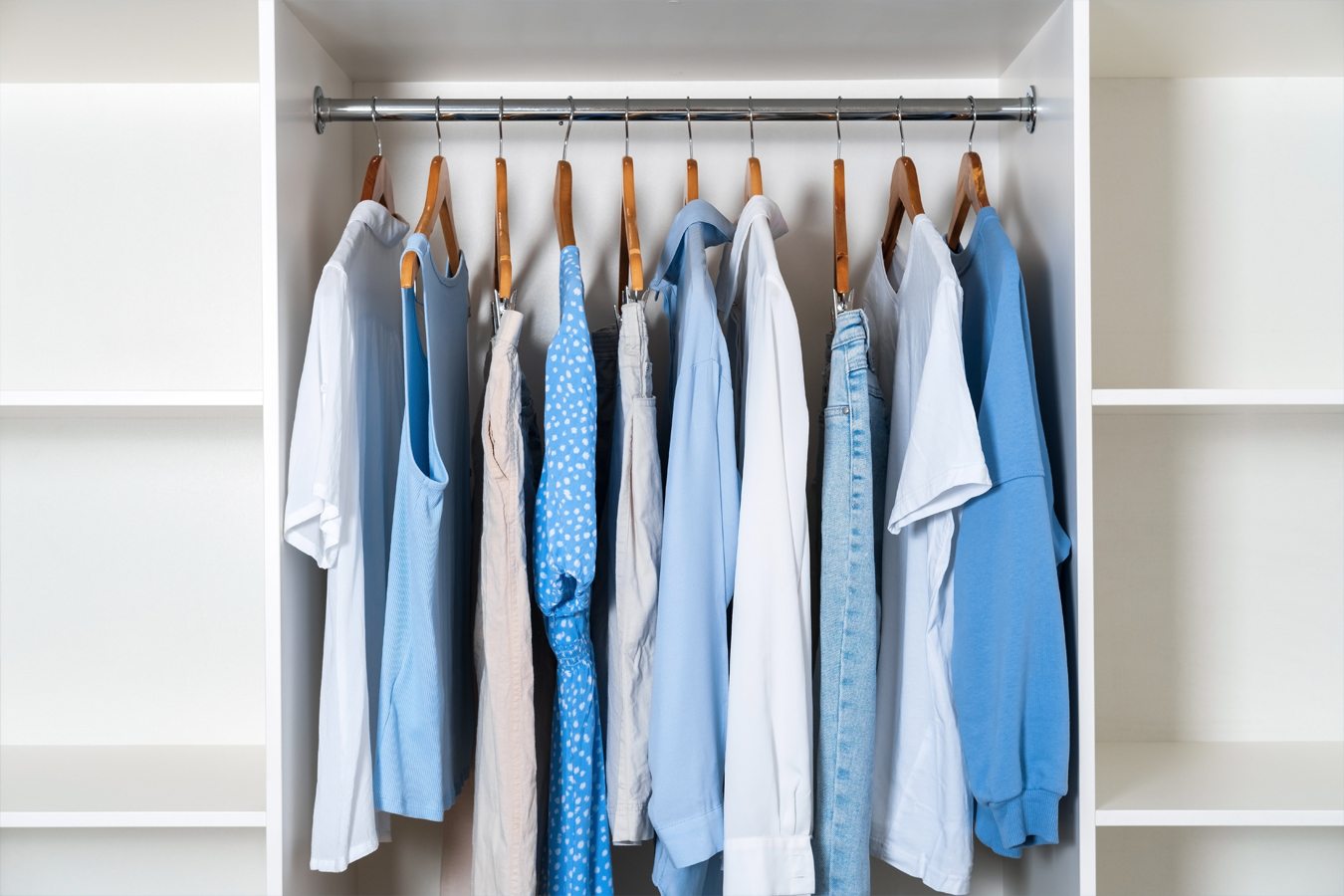
If a custom closet isn’t in the works, you can still make your existing closet work for you with these closet hacks.
Editor’s Note: We love organizing here on Between Carpools, so we’re also excited to introduce Devorah Pomerantz, whose creative out-of-the-box ideas can help those with all types of spaces. We hope that some of her solutions may be just what you needed!
Dear Devorah,
My closet is small and awkward, and more than once I’ve been told that the solution is to redo it – rip it out and start from scratch with something custom.
That’s not something I can afford right now. Is there a way to make it functional without tearing it apart?
– Closet-Conflicted
Dear Conflicted,
“Redo the closet” sounds like a simple suggestion – until you’re the one standing there realizing it means construction, decisions, and a level of commitment you were not planning on making over a closet. Plus, for anyone that’s in a rental, any permanent closet investments don’t make so much sense either.
Here’s the good news: most closets don’t need to be rebuilt. They need to be rethought. And thankfully, rethinking is a lot less expensive than rebuilding.
Some of the best closets I’ve worked in didn’t involve construction or custom plans. They worked because the space was used more creatively – and because the client stopped forcing the closet to function the way it was “meant” to.
Let me show you what I mean.
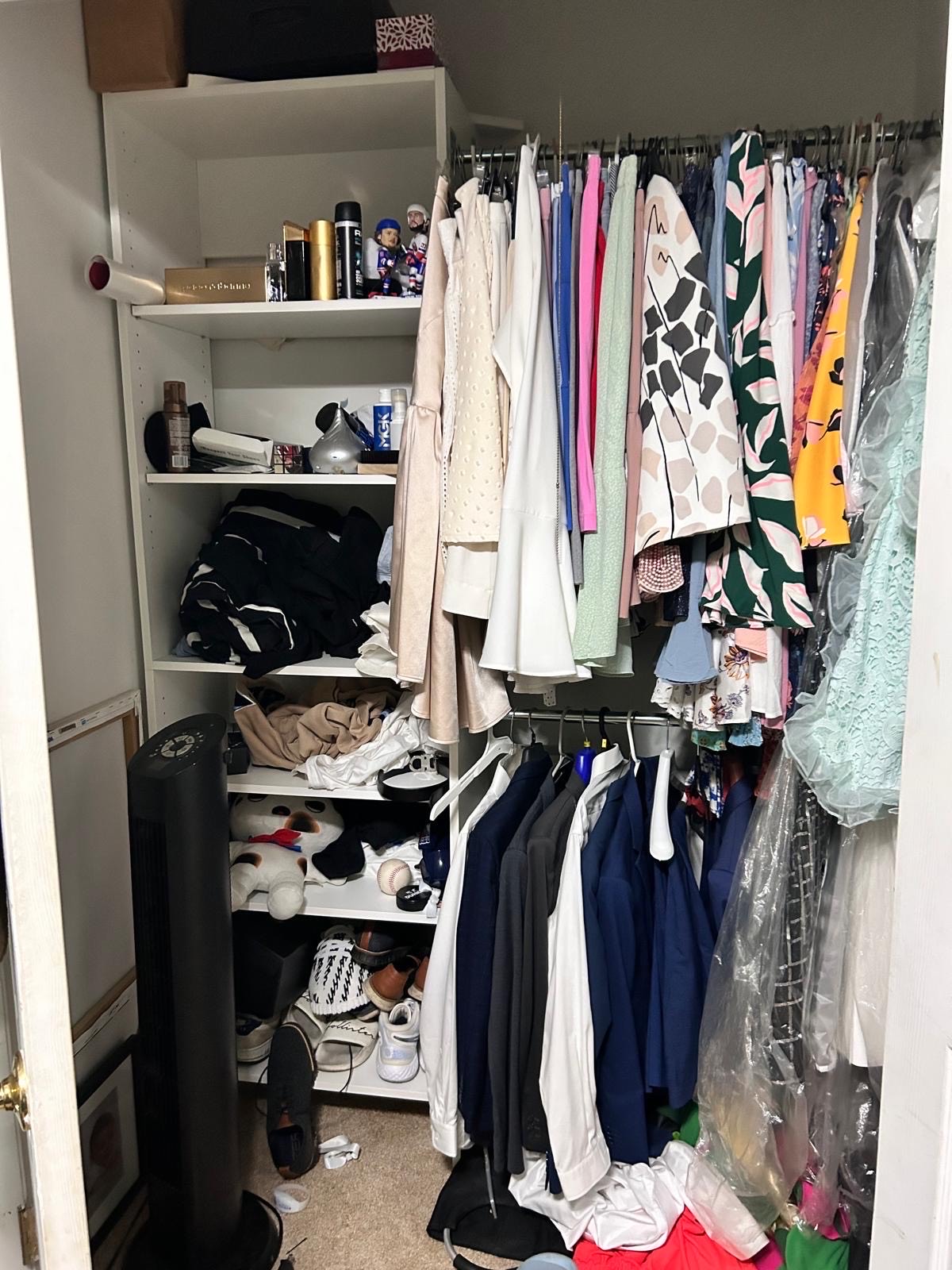
No Contractor Required
After hearing “redo your closet” enough times, it’s easy to assume there’s no other option. But more often than not, the fix isn’t construction – it’s strategy.
In one chosson–kallah apartment we worked in, the client wanted more shelving but didn’t want to invest in custom work. So instead of changing the closet itself, we worked within it.
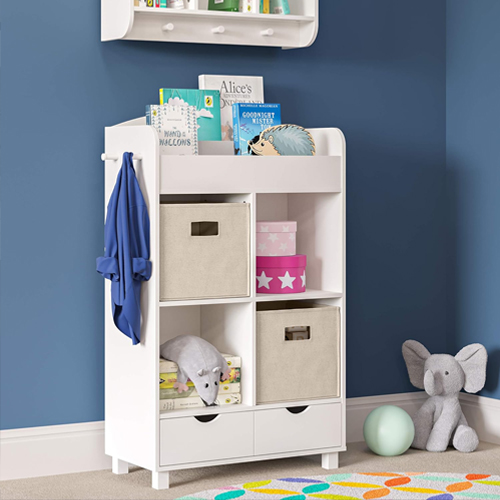
We brought in simple cube shelving and placed it directly inside the closet, taking advantage of vertical areas that weren’t doing much before. Some cubes received cloth bins, others were left open. What had been one open, underused section became clear zones. Folded clothing finally had boundaries. Accessories had a place. Nothing about the structure of the closet changed – but how it worked absolutely did.
Which, to be fair, is usually the goal.
This approach works especially well in apartments and rentals, where flexibility matters. It’s not about cutting corners. It’s about making smart choices that work for the space you actually have – and the life that’s happening inside it.
Shoe Racks That Do More
Closets don’t always need a full redo to work better. Often, a few well-chosen additions are enough to change how the space functions.
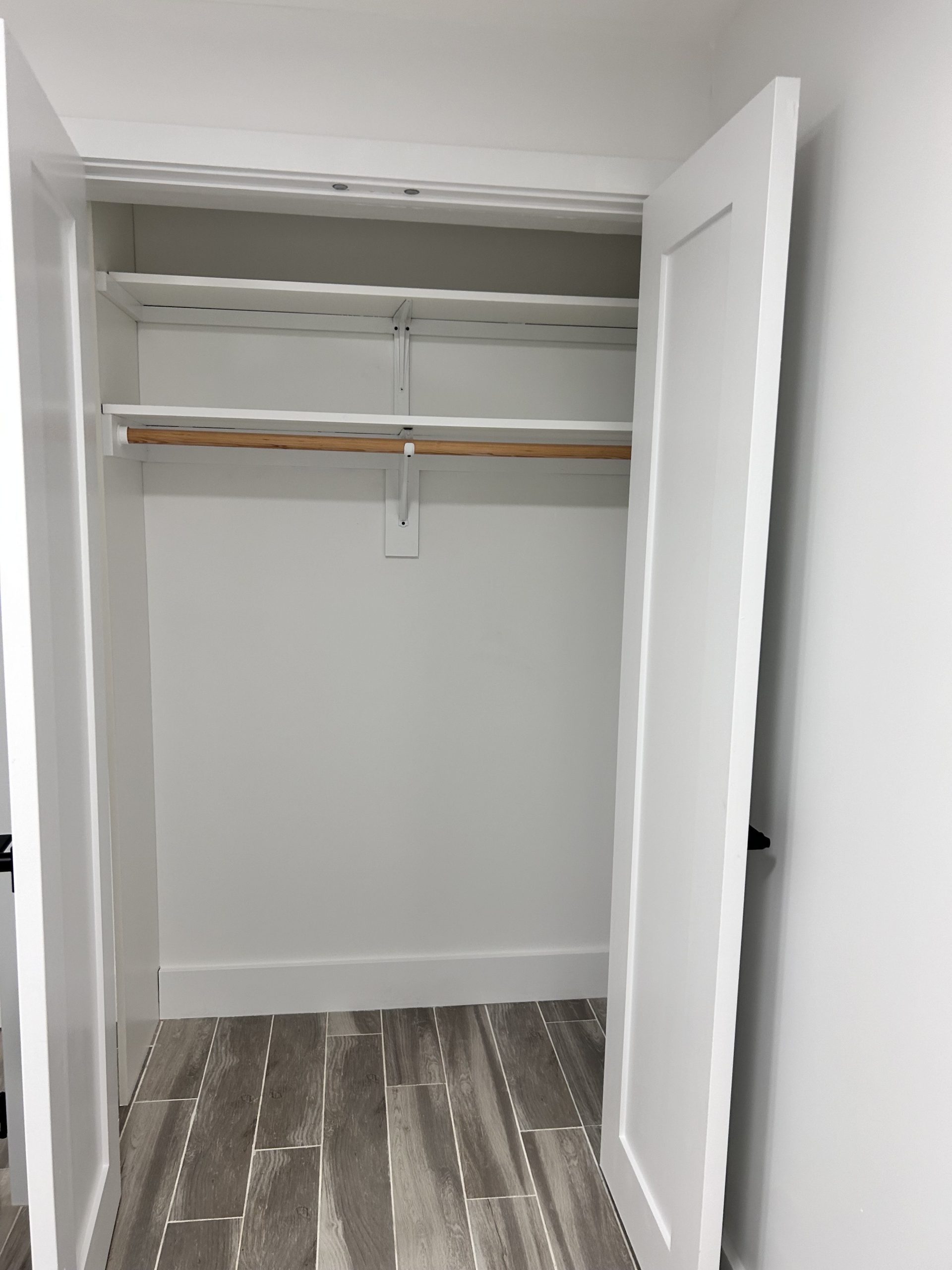
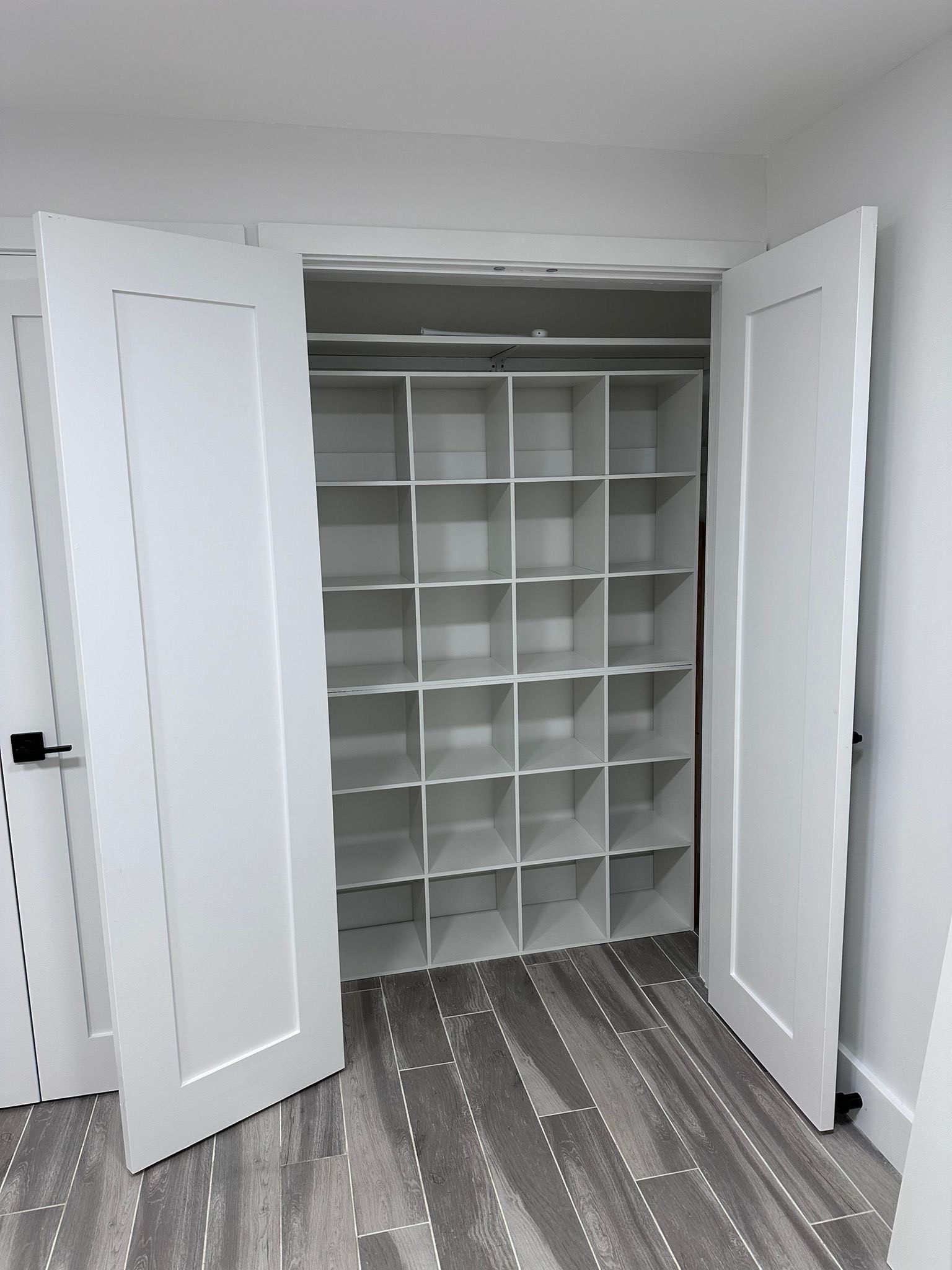
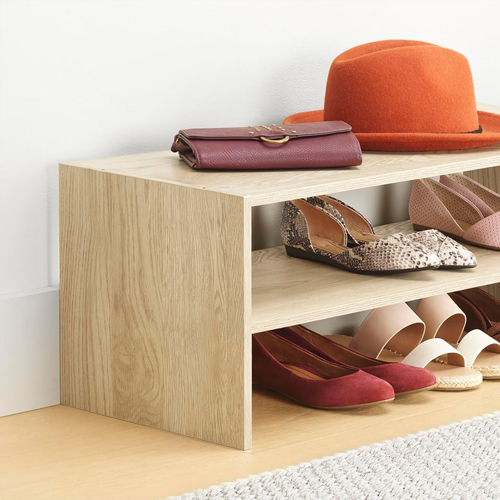
White wooden shoe racks are a great example. In closets with white or wood shelving, they blend right in and don’t feel temporary or added on. Each rack essentially acts like an extra shelf – adding structure and usable space without changing the closet itself.
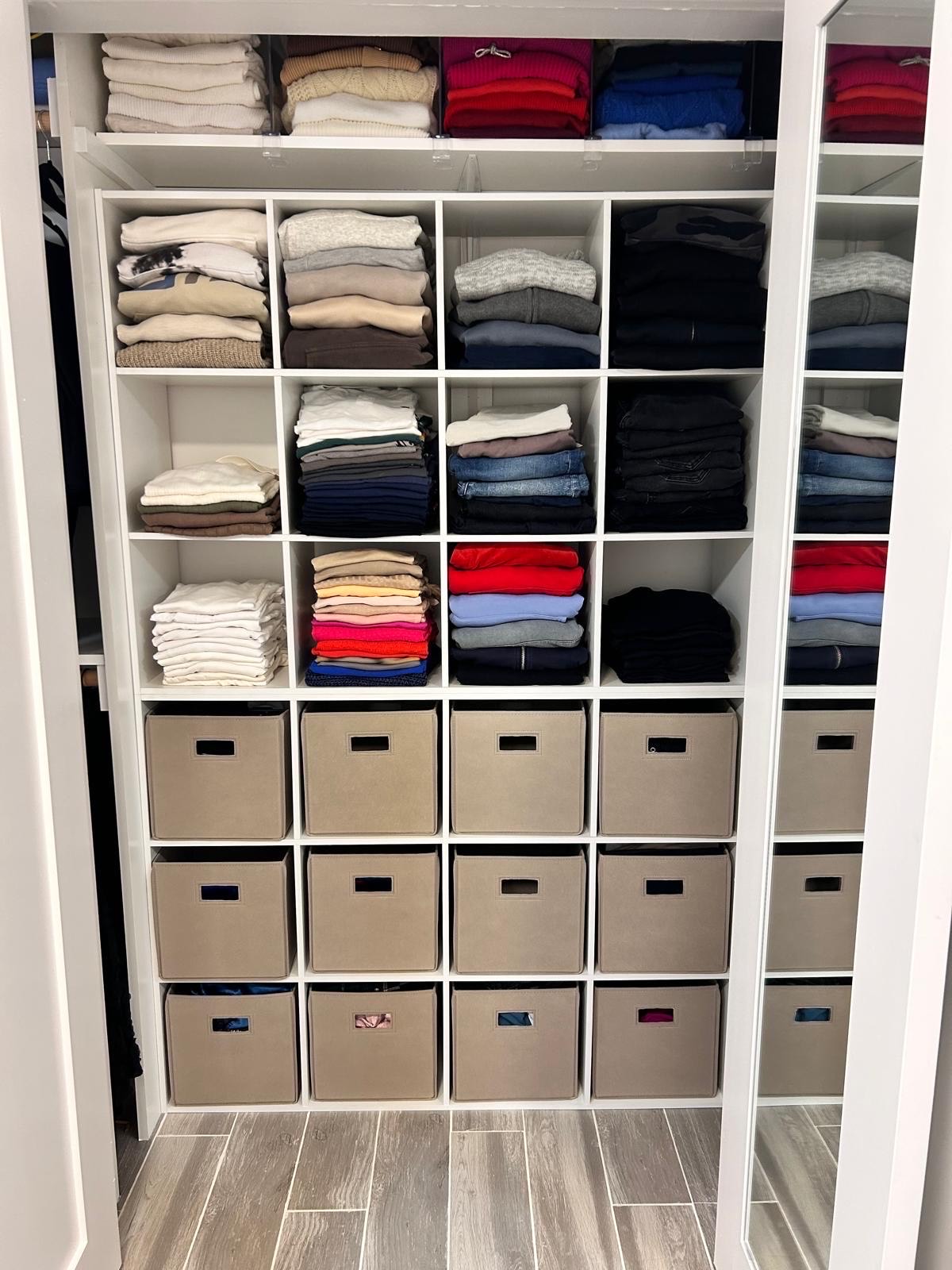
In this closet, we stacked two shoe racks to create more usable storage. The bottom rack was used for shoes – nothing revolutionary there. The top rack, though, pulled a little extra weight.
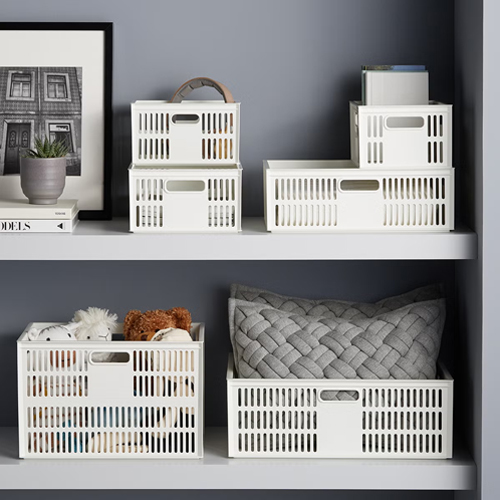
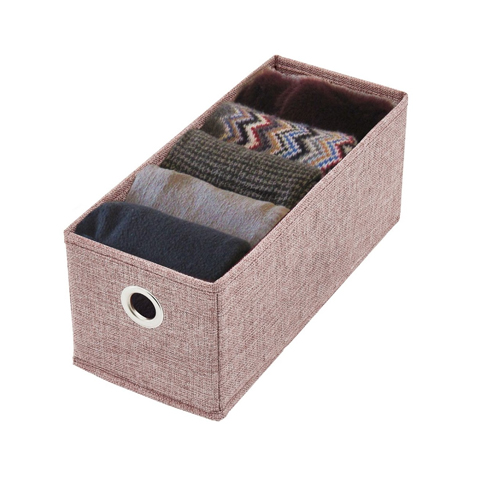
We slid bins into the upper rack – the Chancellor bins from The Container Store fit perfectly – and used them like drawers. In a closet that didn’t have drawers at all, we suddenly had contained storage for undergarments, yarmulkes, and other small items that don’t do well living out in the open.
The footprint stayed the same, but the closet became much easier to live with. Which is always a win, especially in a small closet.
When the Space Calls the Shots
There are moments when organizing means setting the rules aside and paying closer attention to what the space actually needs.
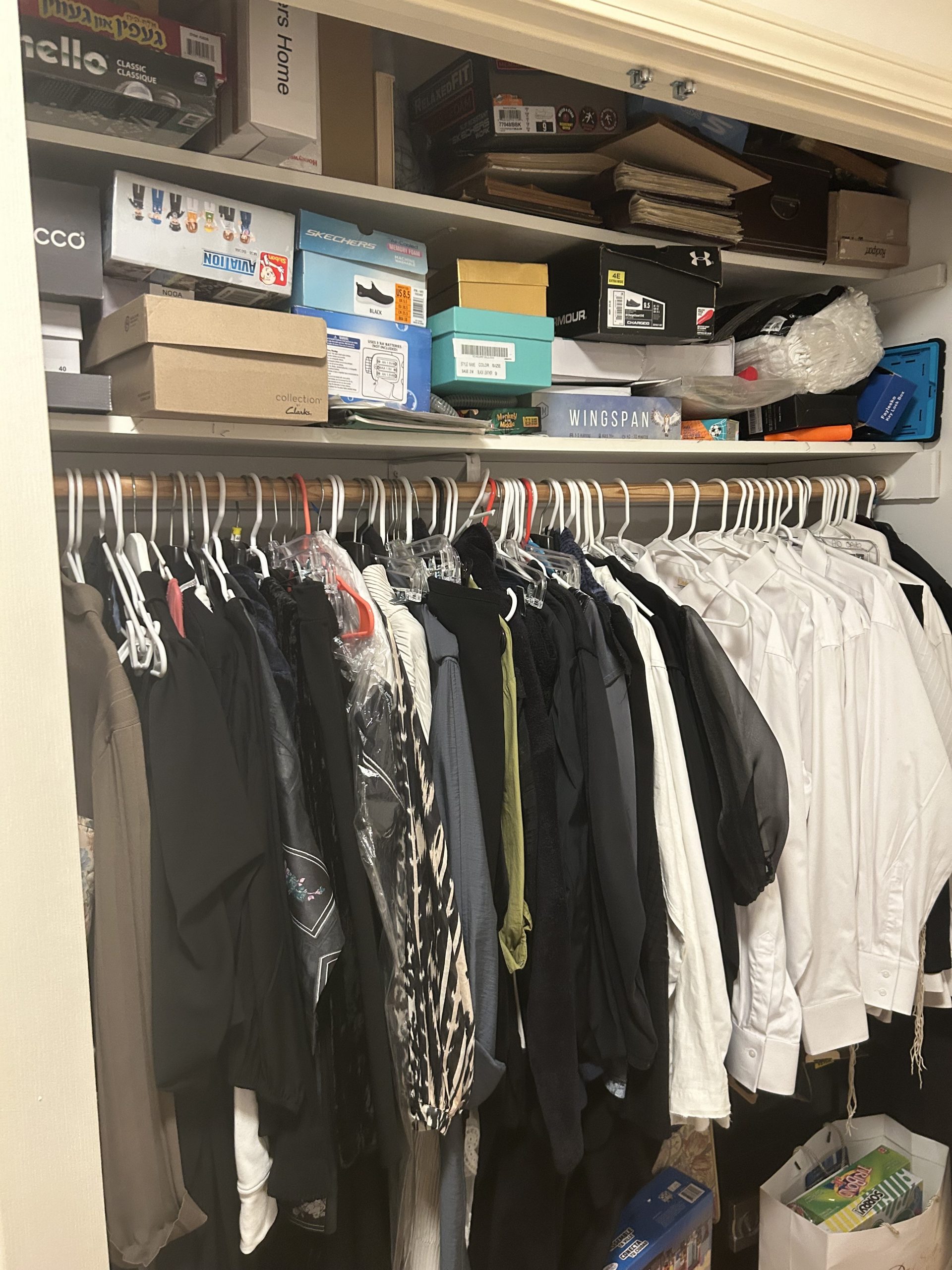
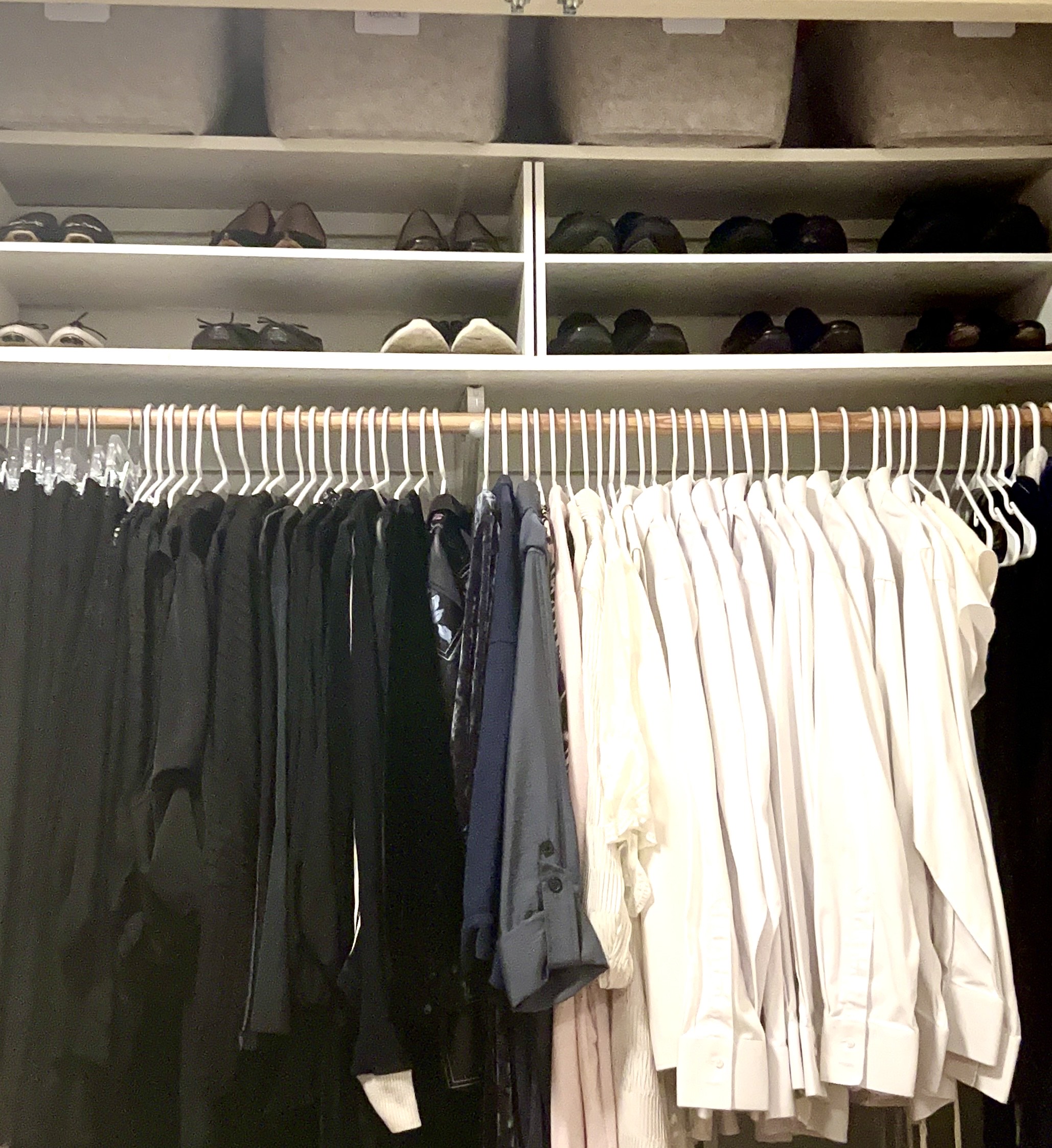
Most of the time, I wouldn’t put shoes on a top shelf. That’s not usually where they belong, and for many people, it wouldn’t make sense. But in this closet, the bottom section was already spoken for – luggage and larger storage items that weren’t going anywhere.
The shoes were already living on the top shelf – just not in a way that was working. They were stacked in shoeboxes, hard to see, and even harder to access. The shoes themselves were clean, well cared for, and worn intentionally, which made a different approach possible.
Instead of fighting the layout, we worked with it. We placed shoe racks on the top shelf, within reach, and used that space intentionally for footwear. Because of the shelf hardware, the racks needed a small adjustment. Flipping them upside down allowed them to sit flat and secure, without forcing the closet to do something it simply wasn’t built to do.
This isn’t something I’d recommend in every home. But in this one, it made sense. The shoes were easier to access, the shelf was clearer, and the closet finally felt manageable.
Sometimes the right solution isn’t the standard one – it’s the one that works.
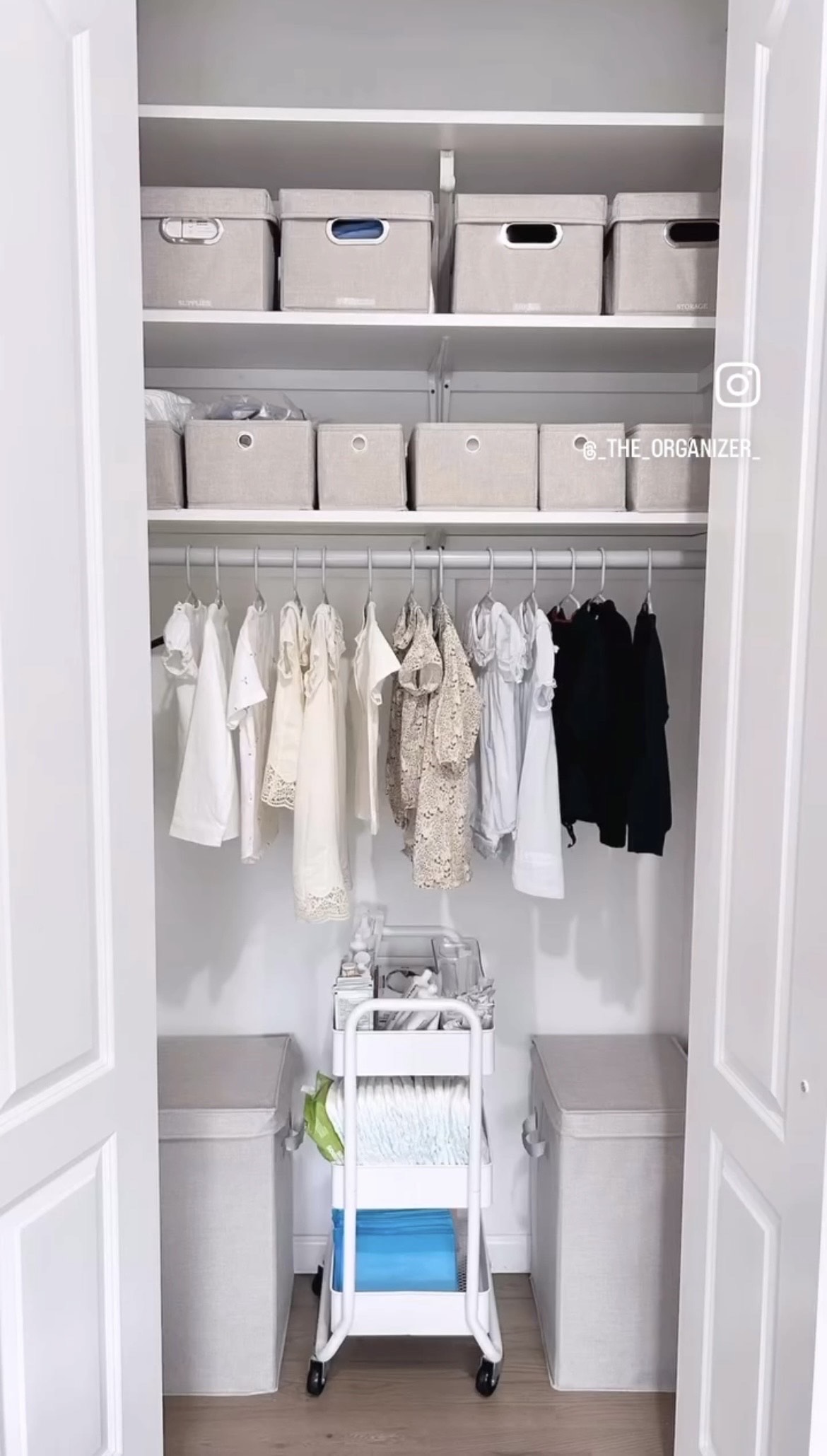
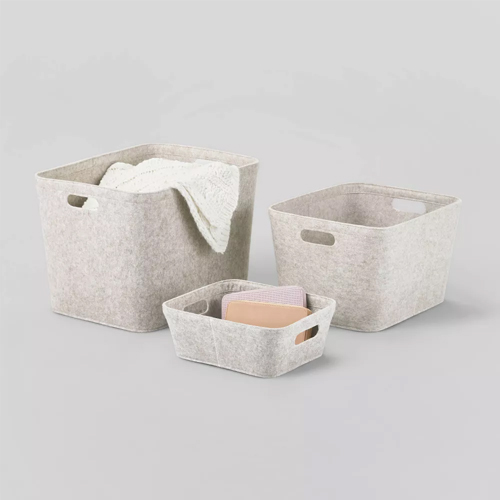
These are the felt baskets featured on the top shelf.
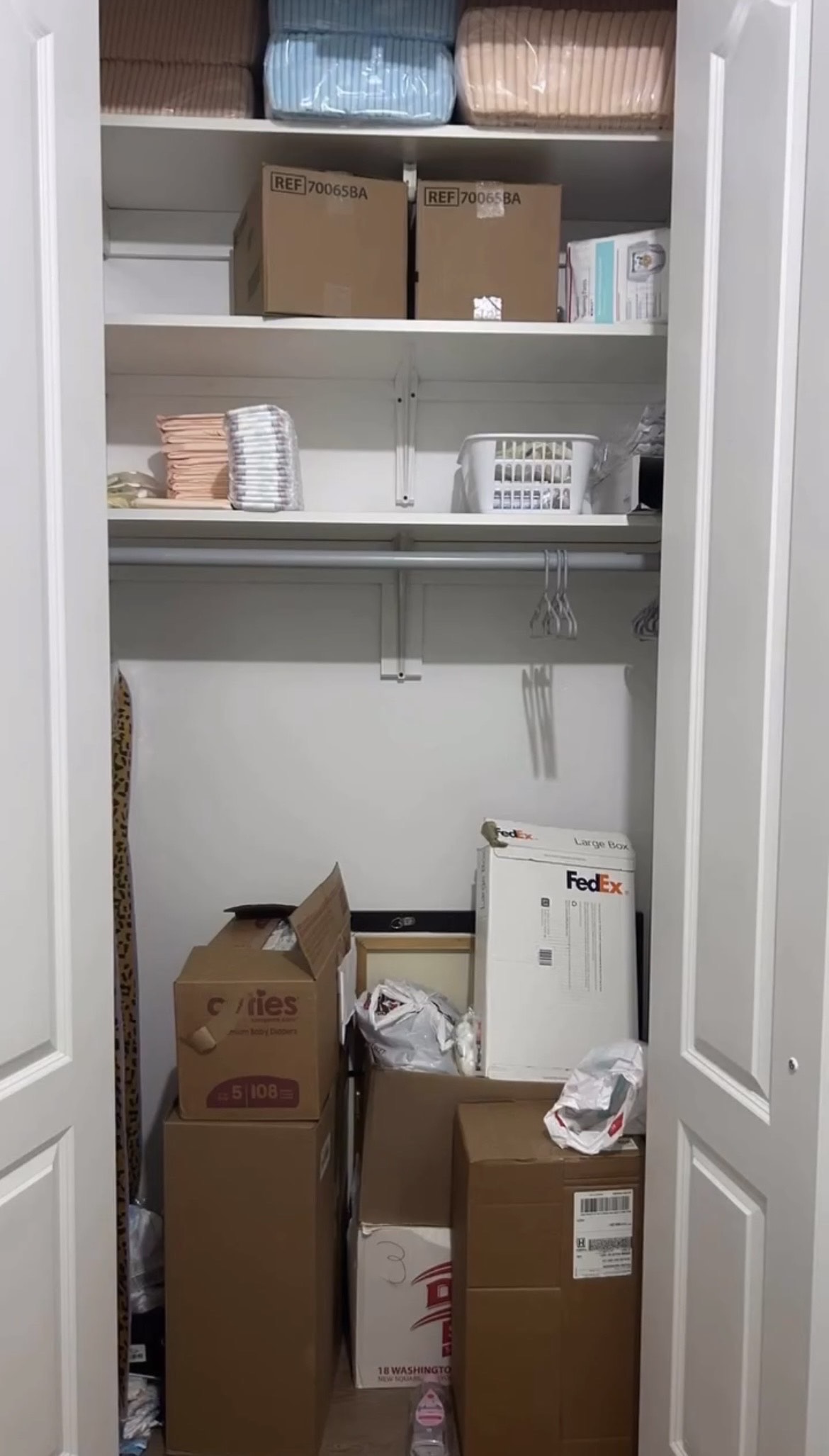
When Drawers Aren’t an Option
Drawers are great. We love drawers. They keep small things contained and make spaces easier to use.
But when a closet doesn’t have drawers – and adding them would mean more work than anyone wants to take on – bins, especially opaque ones, can step in and do the same job.
What makes opaque bins especially useful is that you don’t see inside them. You can slide one out, grab what you need, and slide it right back in – without everything being on full display.
The shelf feels calmer, and smaller categories stay where they belong instead of slowly taking over the entire shelf.
It’s not replacing drawers.
It’s about creating the same function in a different way.
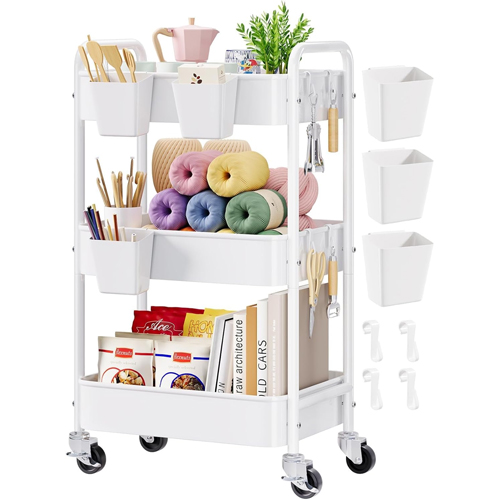
This cart was also used in the closet below.
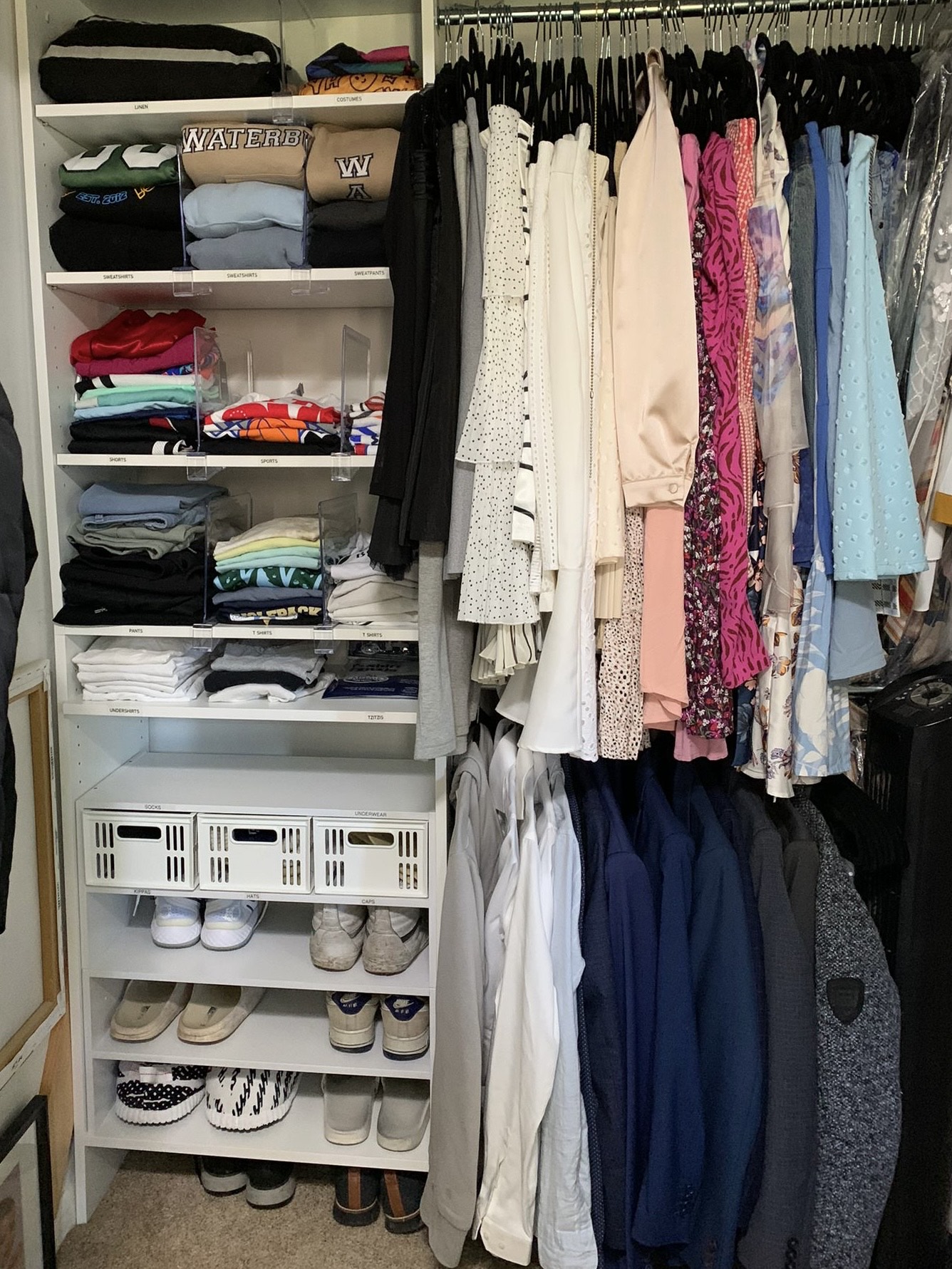
When Shelves Get a Little Too Comfortable
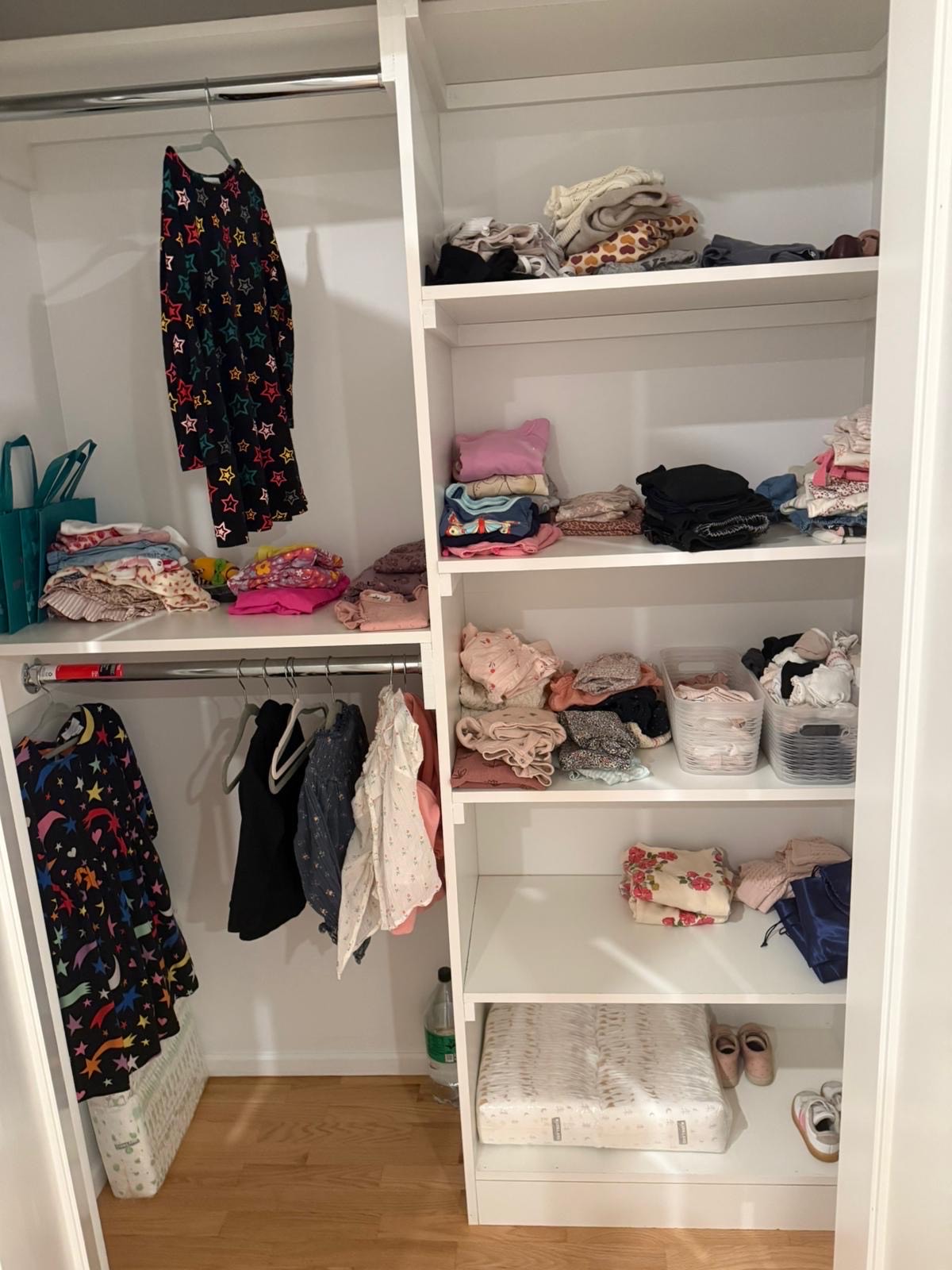
Wide shelves tend to promise a lot.
Plenty of space. Room to spread out. Everything visible at once.
At first, the piles look neat. Clean. Organized.
Then real life shows up.
You grab a shirt from the bottom of a stack. The pile starts to tilt. Clean laundry gets added on top. And before you know it, those neat piles have quietly merged into one large, unstable mountain of clothing.
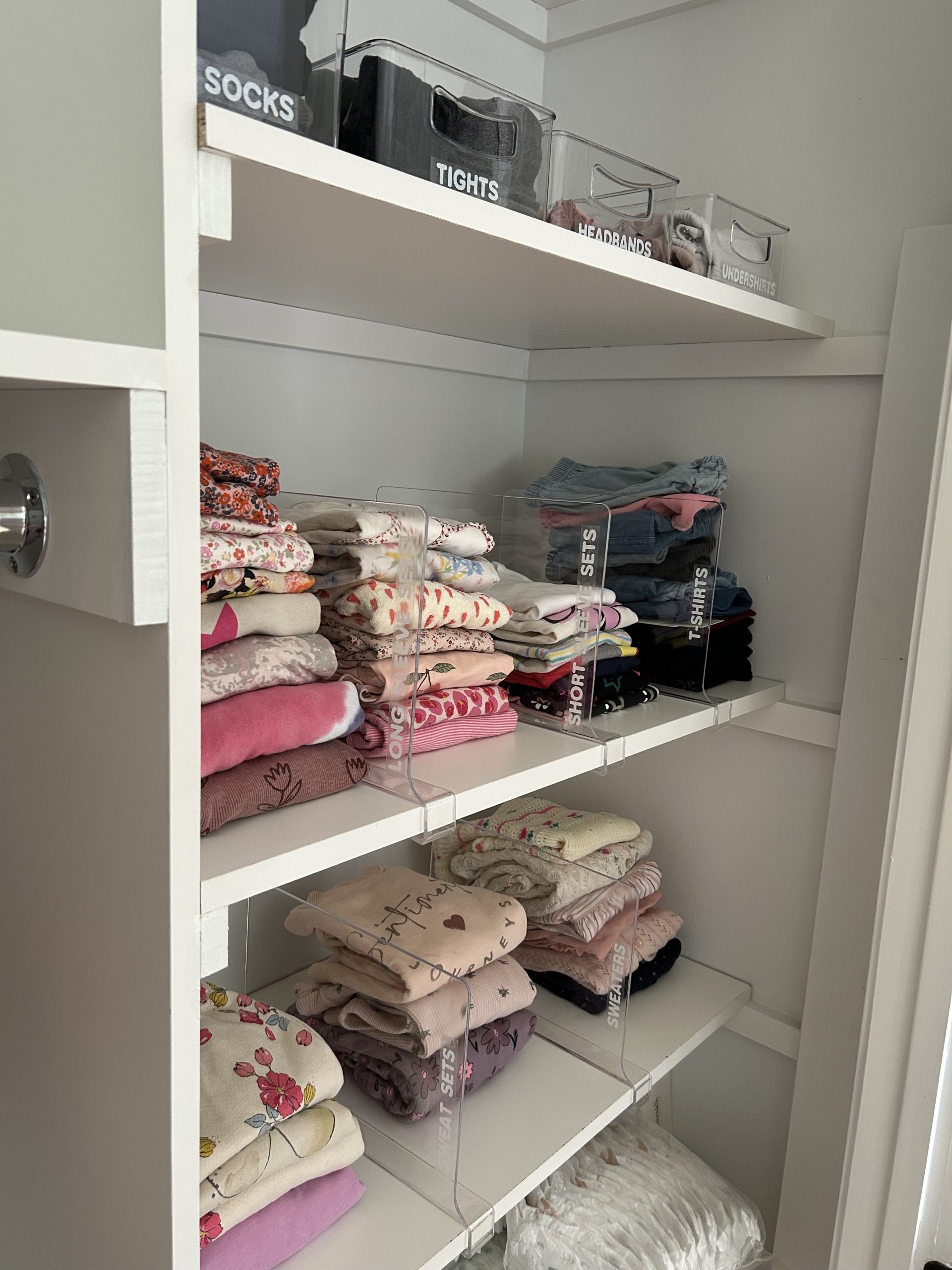
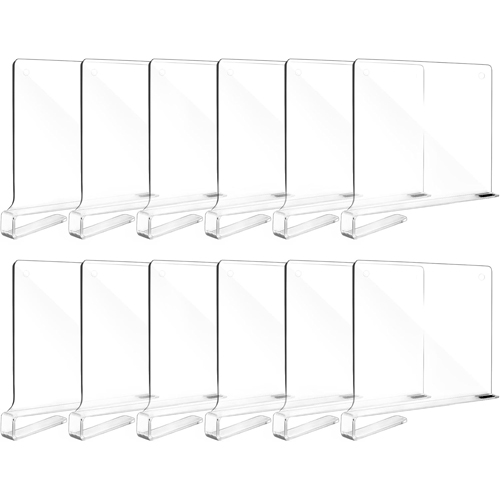
Enter shelf dividers. They break one wide shelf into smaller, more usable sections and give piles a clear place to stop. Everything has a place to land, which makes shelves easier to maintain – not just nicer to look at on day one.
They also happen to make closets look more finished, which is a nice bonus for something that’s really there to save you from refolding the same stack over and over again.
Final Thoughts
You don’t need to bring in a contractor to fix a closet.
Most of the time, it’s about using the space more thoughtfully – and being willing to adjust when the “right” solution doesn’t quite fit.
Sometimes that means rethinking shelves.
Sometimes it means creating drawers where there aren’t any.
And sometimes it means letting go of the rules and doing what works.
The goal is the same either way: a closet that actually works for you.
If it’s easier to live with tonight – and not mysteriously undone by morning – I’d call that a win.
You got this!
Happy Organizing,
Devorah
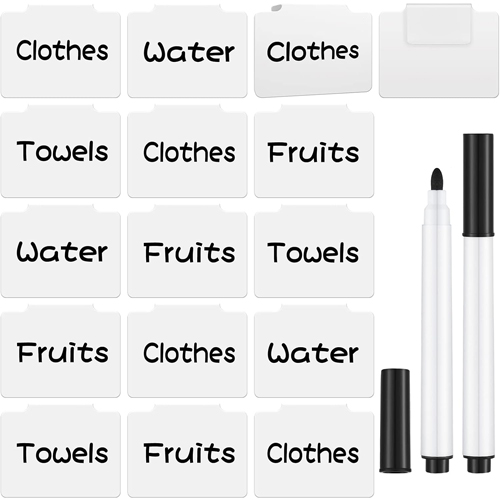
We used the following items in the closets above:



love the real life pictures!! thanks so much!!