


How does it really feel when you don’t have a child to recite Ma Nishtanah?
Editor’s Note: A Time shared this post written by two women who prefer to maintain their privacy. It is based on true experiences. You may also be interested in this post shared by A Time on Hosting with Heart: Navigating Yomim Tovim with Sensitivity.
The boxes of Pesach dishes came down from the attic earlier than usual that year. Not because they were more prepared. Just because they needed something to do with their hands.
Rivky stood in the kitchen, unwrapping layers of newspaper from a crystal wine cup they had received at their wedding. Seven Pesachs married. Seven years of careful washing, kashering, hoping. She ran her finger along the rim and tried not to calculate timelines in her head. Tried not to think how old a child would have been by now, how tall, or whether they would already know the Mah Nishtana.
Ari walked in holding a yellow legal pad. “We have to decide where we’re going,” he said, gently. Not urgently. Just the quiet tone of someone who knew that practical questions were never just practical anymore.
Pesach plans. It sounded so simple.
Her parents had already asked. His mother had texted twice: “No pressure, just need to know how many bedrooms.” The family chat was full of menu planning, high chair logistics, and who was bringing grape juice boxes for the toddlers.
Rivky dried her hands slowly. “What do you think?” she asked, though she already knew that what he thought might not be what he felt.
“If we go to your parents,” Ari said carefully, “at least your sisters won’t ask questions directly.” He didn’t say: They’ll just look at you with that soft, pitying look.
She nodded. Her youngest sister’s baby would be crawling by then. There would be plastic toys scattered across the dining room floor. Someone would inevitably joke, “We need more boys for the Four Sons next year.” It would be harmless. It would be devastating.
“And if we go to your parents?” she asked.
Ari exhaled. “My father will ask me to help the boys hide the afikomen. I don’t know if I can do that this year.”
There it was. The quiet truth.
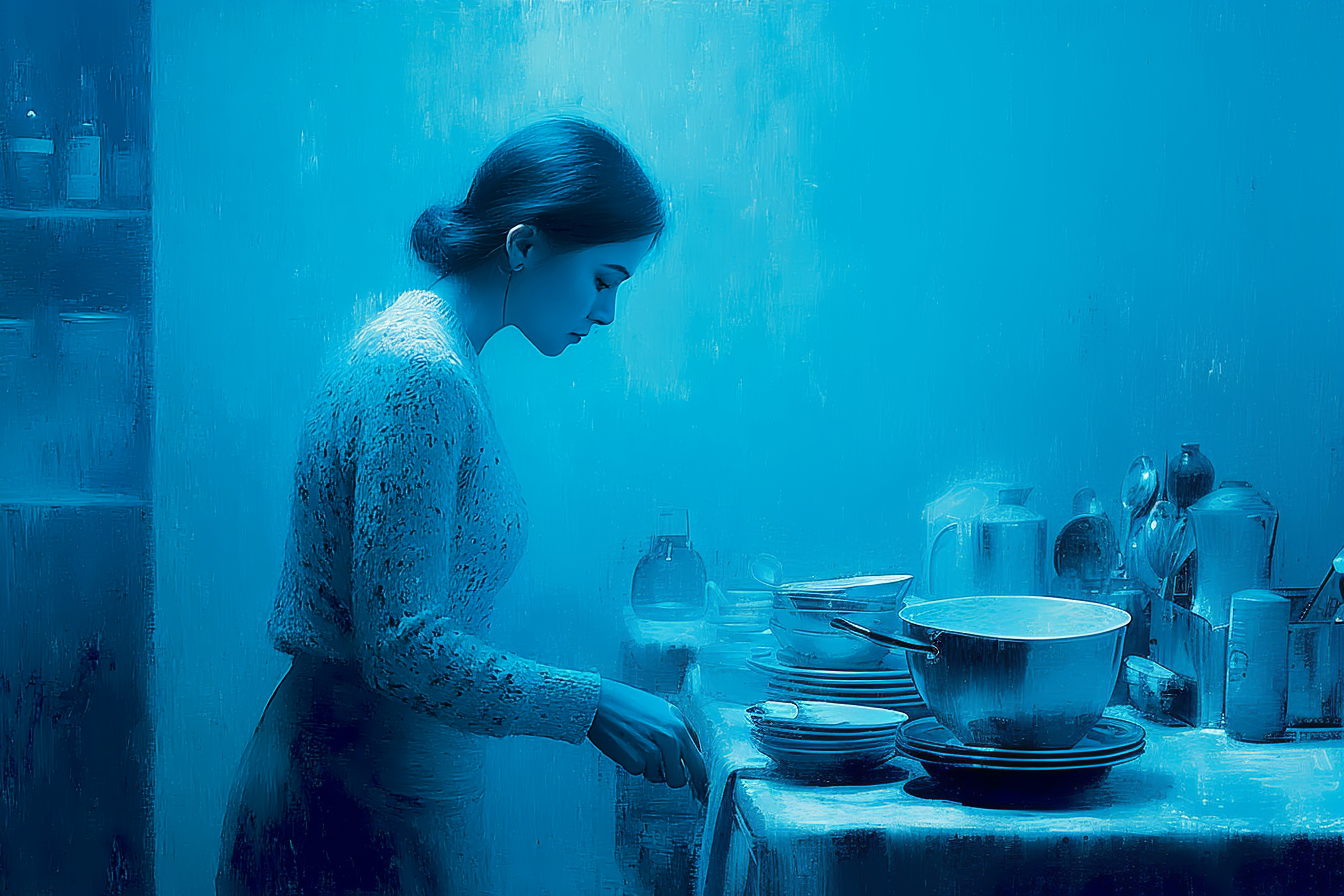
Pesach, especially the sedorim, are made for children. The Haggadah is structured around questions children ask. The table revolves around who can sing the loudest, who hides the afikomen best, who falls asleep before Hallel. The central mitzvah of the night, v’higadeta l’vincha, assumes someone small is leaning forward, waiting for the story.
For years, they had leaned forward too. Just not in the way anyone could see.
There were other options. They could make their own Seder.
The thought lingered between them.
“No comments,” Rivky said softly. “No awkward silences.”
“No high chairs,” Ari added.
The quiet after that felt heavier than anything either family could say.
An empty table is its own kind of loud.
They had imagined a baby in the corner in a portable bassinet. Imagined pausing the Seder to rock, to feed, to smile. Instead, their Pesach preparations included medication schedules discreetly shifted around yom tov, appointments squeezed between bedikas chametz and biyur chametz, whispered phone calls with doctors about “next steps.”
Infertility had a way of attaching itself to everything, even redemption.
Pesach is the story of waiting, of generations crying out in Mitzrayim before anything changed, of promises made long before they were fulfilled. Rivky knew this intellectually. She had taught it in seminary. Slavery, perseverance, geulah.
But sitting at the Seder while nieces recited the Mah Nishtana felt less like redemption and more like exile.
“Maybe we should go away,” Ari said suddenly. “One of those hotel programs. We’ll just blend in.”
She imagined cavernous dining rooms filled with strangers. Hundreds of families. So many children that no one would notice the absence of one more. Anonymity could be its own relief.
Or its own reminder.
“Would that make it easier?” she asked.
“I don’t know,” he admitted. “I just don’t want you to spend the whole night bracing yourself.”
She looked at him then, not as the man holding a legal pad of logistics, but as the partner who had held her through negative test results, who had learned to administer injections, who had whispered tehillim under his breath in sterile waiting rooms.
Pesach is also about partnership. About a nation leaving together. About not walking out of Mitzrayim alone.
“What if we stay home,” she said slowly, “but invite one other couple? Someone who understands.”
He didn’t respond immediately. He was picturing it. A smaller table. Candles flickering without the chaos of toddlers bumping into chairs. Space to read the Haggadah slowly. Space to pause and actually feel the words instead of rushing past them.
“There will still be an empty seat,” he said.
“Yes,” she replied. “But maybe it won’t feel like it’s on display.”
They sat down together, the legal pad between them now forgotten. Outside, a neighbor’s children were practicing the Mah Nishtana, their high voices floating through open windows. For a moment, the sound pierced. Then it softened.
“Do you ever feel guilty,” Ari asked quietly, “that this is so hard? That it’s just a yom tov?”
Rivky shook her head. “It’s not just a yom tov. It’s everything it represents.”

Continuity. Legacy. “Next year.”
They had whispered “L’shana haba’ah b’Yerushalayim” every year with layered meaning. Not just geographic hope, personal hope. Next year with a stroller. Next year with less explaining. Next year with someone tugging at the Haggadah.
Hope, Pesach teaches, is not naïve. It is stubborn.
They would choose something, not because it erased the ache, but because it honored it. Because pretending not to feel would be its own kind of bondage.
That night, after the dishes were rewrapped and the lists put away, Rivky set the crystal wine cup back in its box. She paused, then took it out again.
“Why?” Ari asked gently.
“I don’t want to pack it yet,” she said. “It’s still ours.”
On Seder night, wherever they would be, they would pour four cups; they would lean. They would tell the story of a people who waited in darkness and still walked toward light.
And when they reached the end, when the candles burned low and the room grew quiet, they would look at each other – not at an empty chair, not at anyone else’s children – and whisper the same two words they had whispered every year:
“Next year.”
Not as a guarantee.
But as an act of faith.
ATIME was founded more than 30 years ago to ensure no couple enduring infertility would have to struggle alone. It provides referrals, guidance, resources, and support every step along the road to parenthood. Focusing on the larger picture of women’s health, it also offers a wide range of services for those experiencing challenges related to pregnancy loss and general reproductive health. More information on the topic of this essay can be found at atime.org/webinars. ATIME can be reached at 718-686-8912.


Leave a Reply