
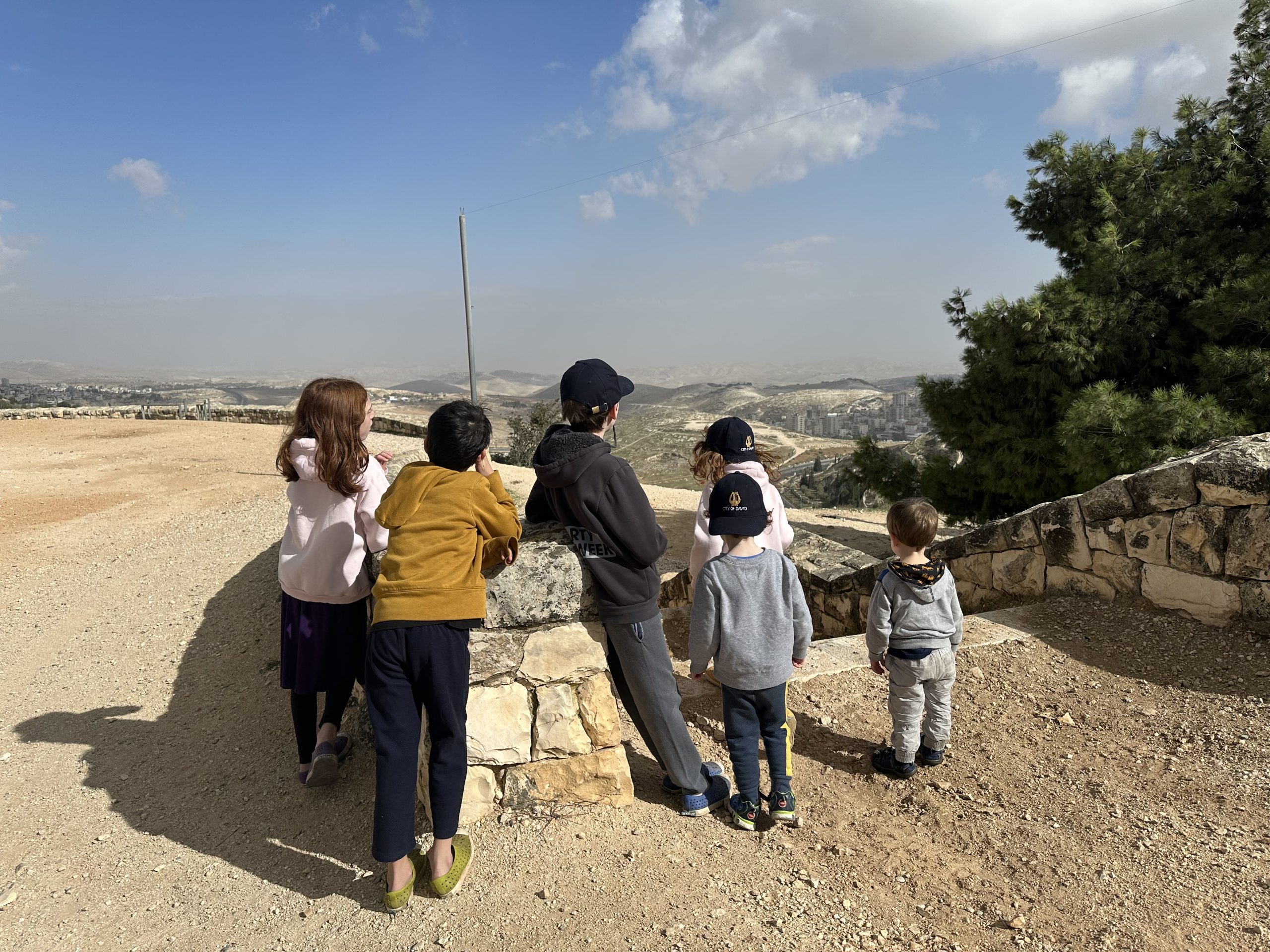
With an itinerary planned over a lifetime, these are the moments and places our family cherished in Eretz Yisrael.
BCP Note: We ask you to read this post with an open mind to a different perspective on the word Zionist. Where Zionism represents a true love of the land, people and history of Eretz Yisrael. The love of “Tzion” that has existed among our people back to the times of our Avos. This post is not about political Zionism, but about the deepest connection we have to our Homeland.
We just spent six weeks exploring Greece and Israel. Because of how the flights worked out, Greece was made possible as an add-on. Israel was the main character.
This part of the trip was centered around a milestone in our family: our daughter’s bat mitzvah. We have been planning and saving for this her entire life, not for a single event or party, but for the chance to spend significant time together as a family in Israel—long enough to explore it, live in it, and experience it fully.
We wanted to mark her bat mitzvah in a way that felt intentional rather than performative. Instead of compressing the moment into one day, we chose to spend that money and effort on time. Ordinary mornings, repetitive errands, Shabbat routines, favorite routes, and places we returned to again and again—enough time for Israel to stop feeling like a destination and start feeling like a home.
Our Goals for This Trip
This trip was also unapologetically Zionist in its intent. We wanted our children to build a positive, lived relationship with Eretz Yisrael. We wanted them to know the land with their feet, their hands, and their daily lives.
For our bat mitzvah girl especially, that meant experiencing Judaism as something physical and inherited rather than abstract or symbolic—prayers said where prayers have been said for thousands of years, holidays observed where they shape the public calendar, Jewish time unfolding in Jewish space. For her siblings, it meant absorbing all of this more quietly, through repetition and proximity, until it felt normal rather than extraordinary.
We wanted our children to understand that the Jewish connection to Israel is not recent, not fragile, and not theoretical. It is ancient and continuous. It shows up in archaeology and geography, in language and liturgy, in the way Jewish history here does not stay safely in the past. In Israel, Jewish history is not something you visit; it is something you inhabit and walk and drive alongside.
At the same time, we wanted them to love Israel in a human way. To associate it with routines and rituals, with favorite bakeries and familiar streets, with long walks, small adventures, and shared meals. To experience Israel not as an argument to be defended, but as a place where Jewish life is fully and unapologetically lived.
That kind of connection cannot be taught in a classroom or absorbed in a weeklong trip. It requires time, boredom, repetition, and days that don’t make great photos. It requires living somewhere long enough for it to stop performing for you.
So we came not to check boxes, but to settle in. To let Israel introduce itself slowly.
What follows is not just an itinerary, but the shape our days took as we tried to give our children something deeper than memories—a sense of belonging to a land, a people, and a story.
Moments During Our Trip
One of my favorite moments of the trip was when my bat mitzvah girl admitted she missed doing homeschool, the routine of reading and doing workbooks. We brought their online classes with us, but she missed science, etc. I told her, “In a way, this entire trip is school, it’s a giant field trip.” My oldest son had an epiphany: “This entire trip has been educational!” What a betrayal. He thought we were having fun.
We didn’t plan this trip quickly, and we didn’t plan it lightly. We saved for it for years—literally our daughter’s entire life—because when we finally brought our children to Israel, we wanted time. Not a highlights reel. Not a rushed checklist. Enough time for the country to unfold slowly, to layer itself into their understanding in a way that would last.
We structured our time deliberately, spending several weeks in Jerusalem before heading north.
Absorbing October 7th
Early in the trip, while still based in Jerusalem, we took our children south.
By the time we arrived, they had already absorbed a great deal about October 7. They had listened to my work with hostage families doing media relations and political advising. They had overheard conversations, interviews, and reporting about the war and its consequences because we both work in journalism (my husband Seth is an editor and writer at a Jewish political magazine called Commentary). Shielding them from reality wasn’t possible—and pretending it hadn’t shaped Israel today wouldn’t have been honest. We wanted them to see it for themselves, with context, with care, and with us.
We visited Sderot, the Nova site, and the surrounding communities. This is what we did, in case other folks want to do the same with older kids and pre-teens.
- Start at Sderot lookout, then go to the fortified playground and a menorah made out of rockets. Then go to the Sderot police memorial.
- Lunch, seating between 1130-1330: Kibbutz Alumim dining room.
- Next, we went to the Nova site in Reim.
- We considered going to the Car cemetery (open until 4pm) in Tkuma, but the day felt heavy enough.
- We had talked so much about the roadside shelter where many hostages were abducted, and where Aner Shapira saved lives. We wanted to see it for ourselves, and as we walked out, my daughter speechlessly told me, “I want to name my son Aner.”
- The coordinates for this shelter for GPS purposes are 31° 23′ 23.9″ N, 34° 27′ 34.97″ E
They didn’t experience it as shock; they experienced it as confirmation of something they already knew: that Jewish history does not stop, and that it still demands responsibility from those living inside it.
From there, we moved backward in time.
Our Accommodations in Yerushalayim (+ Exclusive Discount)
Yerushalayim became our anchor. Staying put for weeks allowed the city to stop feeling overwhelming and start feeling navigable. Shabbat arrived without stress. Familiar streets replaced novelty.
A word here about where we stayed:
Over a year ago, DansDeals (a discount blog I religiously follow), posted a sale for a site called Rentals of Distinction. They have apartments across Jerusalem for rent; apartments that are owned by regular people and rented out when they’re not in use. One of the reviews I saw on the site looked like a familiar name; I reached out to that friend and he confirmed they were legit, and he had a great stay. So we booked an amazing deal, and got an additional deal because we were staying for a full month.
But then, right before we left, we heard there was a problem: the street we were staying on was undergoing major construction at all times of day and night. The manager told me, “It would be awful with all your kids.” (Because kindly, he remembered we were traveling with six small-ish kids.) They offered to move us to another location, a much bigger apartment in a better location, but, he apologized profusely, he’d have to charge me $500 more over the course of our stay. That translated to an extra $125 a week for a much better place, and okay, twist my arm, we said sure, we’d love to move.
I reached out to them when I got home to ask if I could offer my readers a deal, and they kindly agreed. If you contact them and book a stay with them and mention my name at the time of your booking, they can offer:
*Option 1:* 10% off the rental total on select apartments
(Not every apartment will qualify, but most do.)
*Option 2:* One-way transportation – either from or to the airport.
*Option 3:* A standard fridge stock-up.
We had a great stay, and I’d really recommend reaching out if you’re looking to stay somewhere in Jerusalem with your family.
Exploring Yerushalayim
From the stability of having a home base, we explored. We took a wonderful tour of the Machane Yehuda market with Harry Rubenstein and then kept going back to our favorite spots again and again.
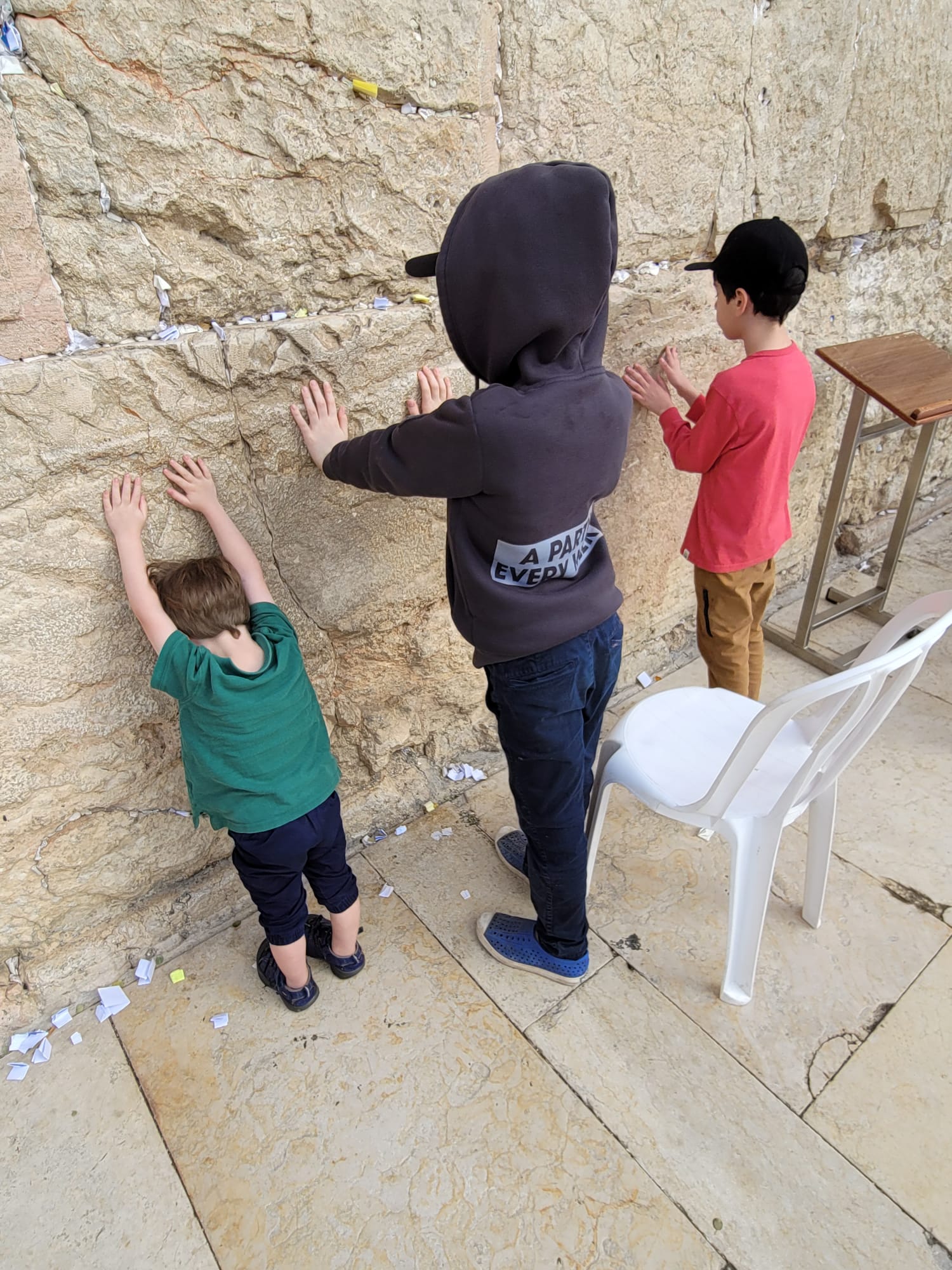
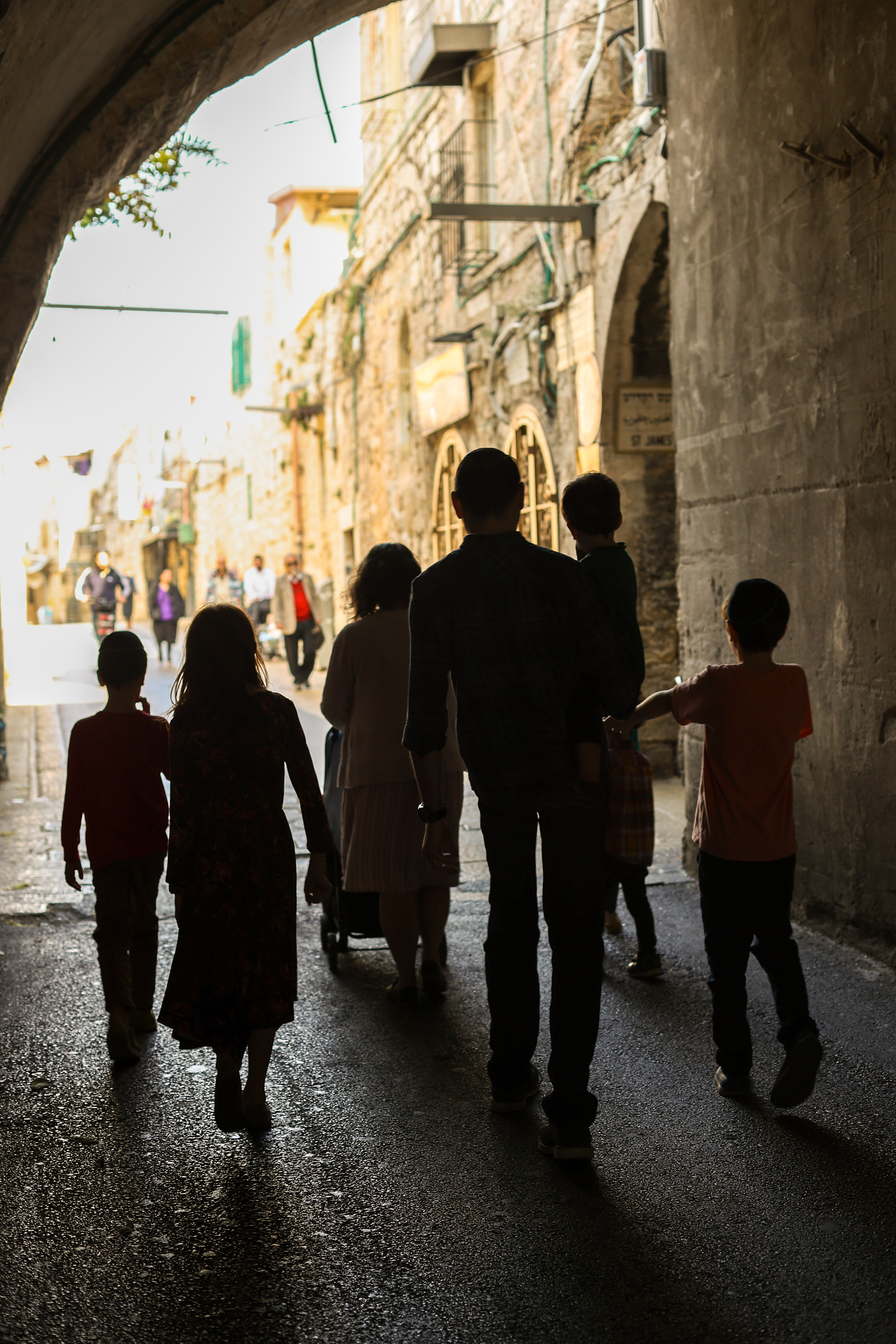
We walked to the Kotel several times and explored the Old City at length. We took family photos with Miri Homa to document this special time together.
We began with Tanach as geography. Walking through the Ir David transformed Tanach from story into terrain. The physicality of it mattered—climbing, walking, descending, getting tired. We had an incredible tour guide and would have done the water tunnels had it been warmer.
Days Trips In and Outside Yerushalashayim
We spent a day and drove to ancient Shiloh, placing the Mishkan not in imagination but in space. We used one of their tour guides and were so much better informed because of it; there’s no way I would suggest going there without one. We had lunch at the nearby Gvaot Winery. This day required a car or a driver, and as we drove, we also got a clear window into the security concerns for Jews living in Yehuda v’Shomron (aka the West Bank). Barbed wire, checkpoints, and warning signs throughout, but we felt safe on our drive.
We took a full-day tour to Chevron and gave weight to the names of our Avos that our children had known their whole lives. This tour was one of the hardest things we did with the kids’ attention spans, and I’m not sure I’d recommend other families with small kids do a full-day tour like this.
At Eretz Breishit, the camel riding was a massive highlight for the kids. We “met” Avraham and learned the importance of welcoming guests and how life was lived in his day. It was a morning activity, and it was probably the best one we did.
We did a full-day drive by ourselves to Masada and visited Yam Hamelach at Ein Bokek Beach (it was cold in December, and we didn’t stay long). This was a day we wished we had brought Franny (more on her later) to give us more narrative and color for the events that happened there.
When attention waned, we shifted deliberately. Judaism is not only textual; it is agricultural, animal-centered, and seasonal. Visiting the Jerusalem Biblical Zoo and the Biblical Museum of Natural History helped our children connect mitzvot, metaphors, and animals they had only encountered on the page. These weren’t filler days, but they were definitely lighter. They were integration days—Torah made physical, creation made visible. The Biblical Zoo was a full day, but be warned that inexplicably, the cafe there isn’t kosher; I wish we had brought lunch. If we had, we’d have done the aquarium there as well. The Biblical Museum in Beit Shemesh was half a morning, and, to be honest, underwhelming, but they had a petting zoo portion that was a hit. We paired it with a trip to see a friend in town and lunch at the food court in the mall, an exciting experience for kids who have grown up Kosher-keeping.
Archaeology came next, once everyone had context. Hands-on experiences mattered most. Sifting dirt at the Temple Mount Sifting Project and digging at Beit Guvrin National Park taught our children how history is known, not just what it claims.
We took an incredible morning tour with Franny Waisman to Herodian, which left such a mark on our kids’ understanding of history. They learned that Jewish presence here isn’t a theory—it leaves evidence. She was the best tour guide we had the entire trip and made a lasting impression on kids and adults alike.
The Temple Mount sifting project was also an education in how enemies of the Jewish state have tried to erase our connection to the land, but how Jews refuse to accept it.
Moving North
Later, we moved north and shifted our home base to Tzippori. Our accommodations at The Castle in Zippori Village are absolutely magical and perfect for families, especially adventurous ones like ours. The Castle itself is a spacious, two-story villa modeled after the ancient Crusader castle overlooking Zippori National Park, with five bedrooms, three bathrooms, a large Jacuzzi, and plenty of living space, easily fitting big families or groups of up to 12 people. What makes it truly special for kids is the amount of space to explore — from roaming freely all around the property to discovering a playground, huge grassy lawns, and even a treehouse filled with toys, plus the delight of gathering fresh eggs from the resident chickens each morning. On-site, there’s also a vineyard and winery to explore. It’s a place where children can run and explore safely, adults can unwind with breathtaking views and peaceful surroundings, and everyone can make memories that will last a lifetime. During the warm-weather months, there’s a pool that doubles as a mikvah, and while they were building it, they uncovered the tomb of an ancient rabbi right outside our door. We got Shabbat takeout nearby from a storefront with dozens of prepared food options.
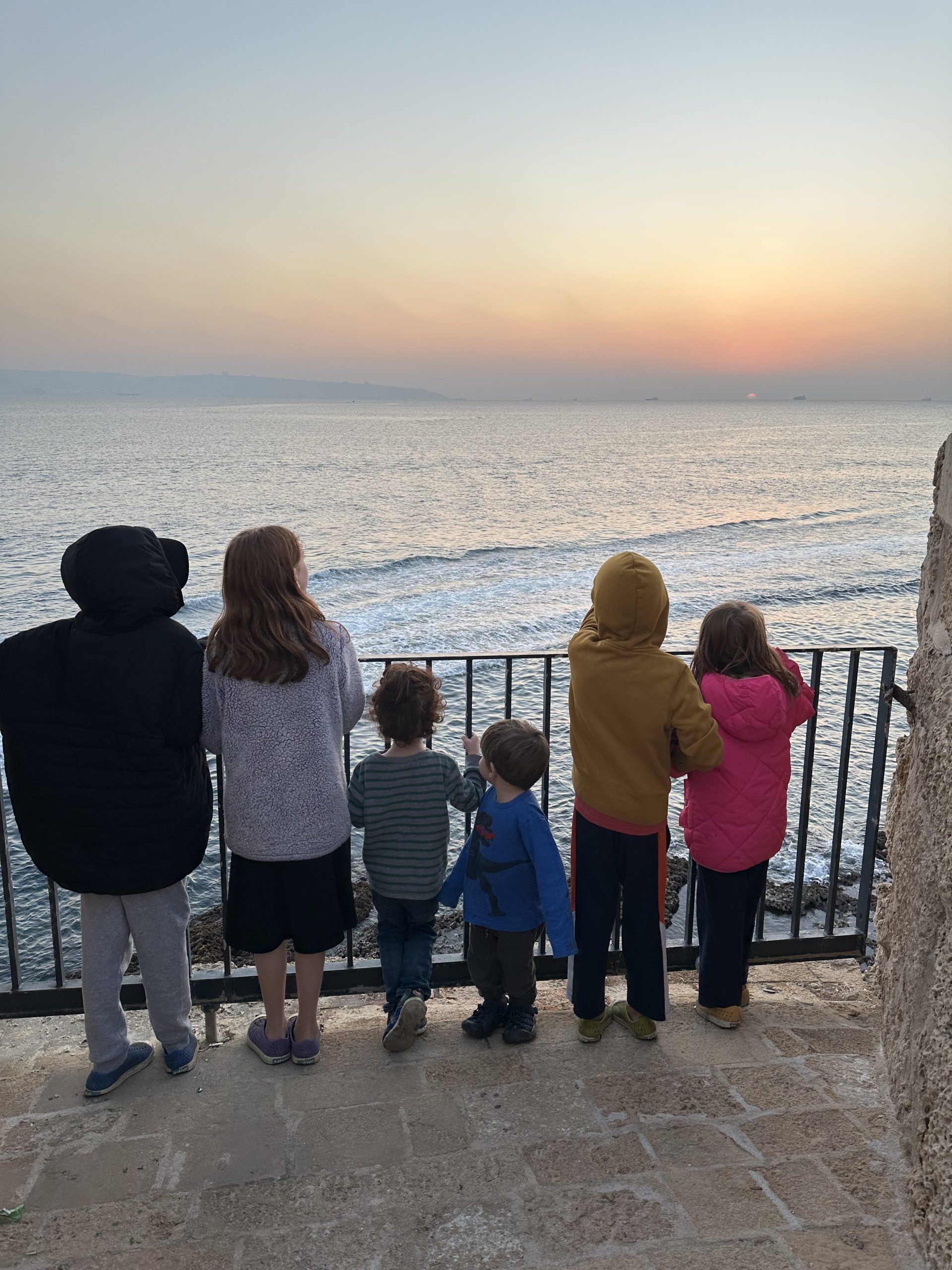
It was on the north shore that the medieval period came into focus. The museum in Akko’s Knights’ Halls was spectacularly executed, and compressed empire, crusade, and survival into something our children could visualize. By then, they already had a timeline in their heads, so this layer felt additive rather than confusing. Jewish history, they could see, had continued even when sovereignty had not. The entry to that site comes with access to others in town, and it’s worth spending time visiting the Turkish Baths and Templar tunnels as well. We had lunch at Roots, which was the culinary highlight of the trip.
In the north, we also visited Caesarea and had another encounter with Herod, who built the seaport site. There were great restaurants on the shore (Aresto was the best dairy restaurant we ate at on the trip), and we had fun exploring it on our own, but it would have been worth having a guide.
Had we planned better, we’d have realized that all of the museums we wanted to visit in Haifa (Maritime and the underground immigration) were closed on Fridays. Instead, we went to Jungle Kef, near Tveria, which was an unexpected delight and a great place for kids to get up close with all kinds of animals.
We spent a day in Tzfat exploring and window shopping, and didn’t plan carefully enough to do workshops offered there in beekeeping or mosaics; all looked worth checking out. We did the Safed Puzzle Room, which was a real highlight for the older kids and parents (the younger kids colored and got in our way, adding an element to our game that was not necessarily helpful).
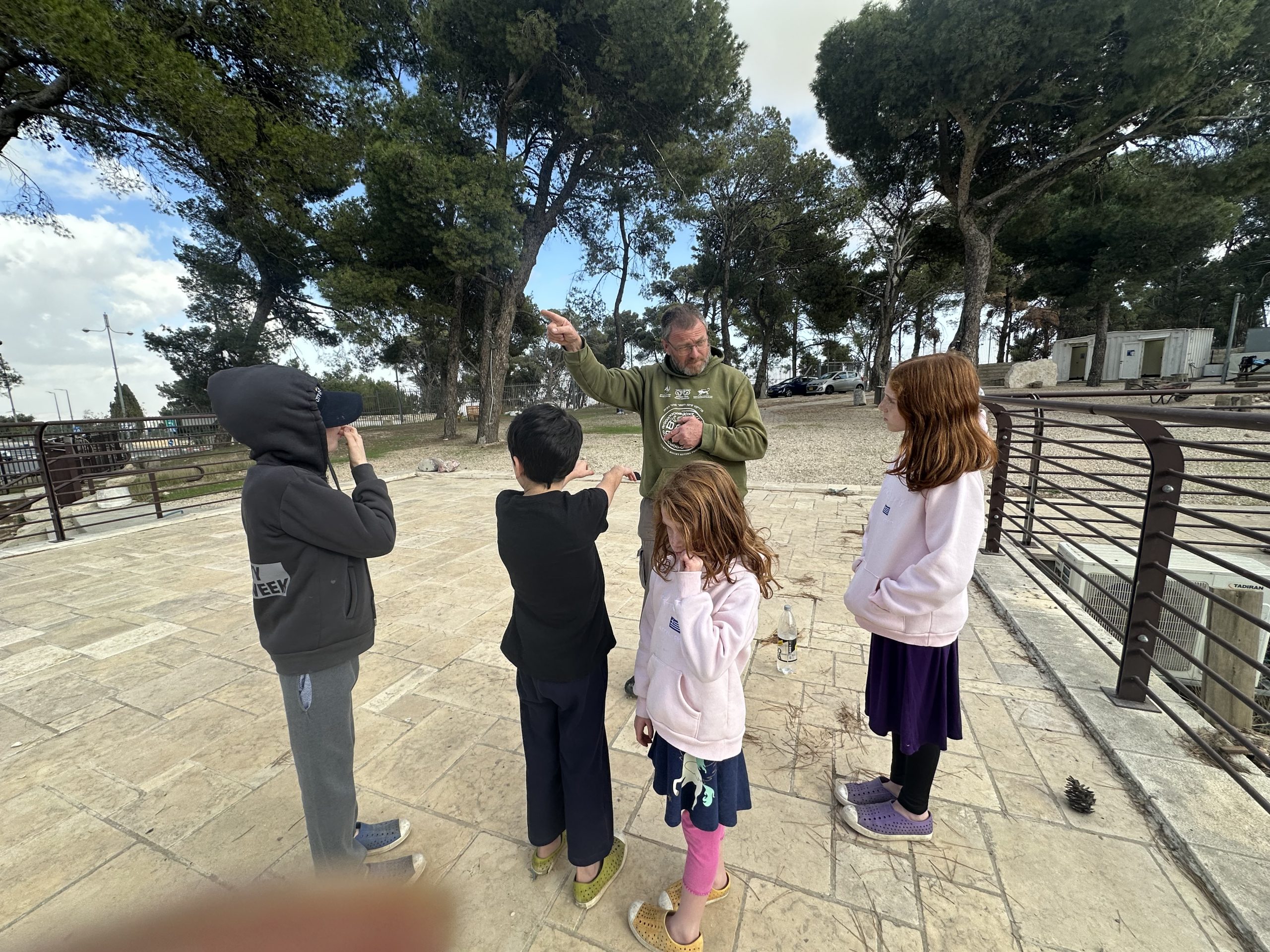
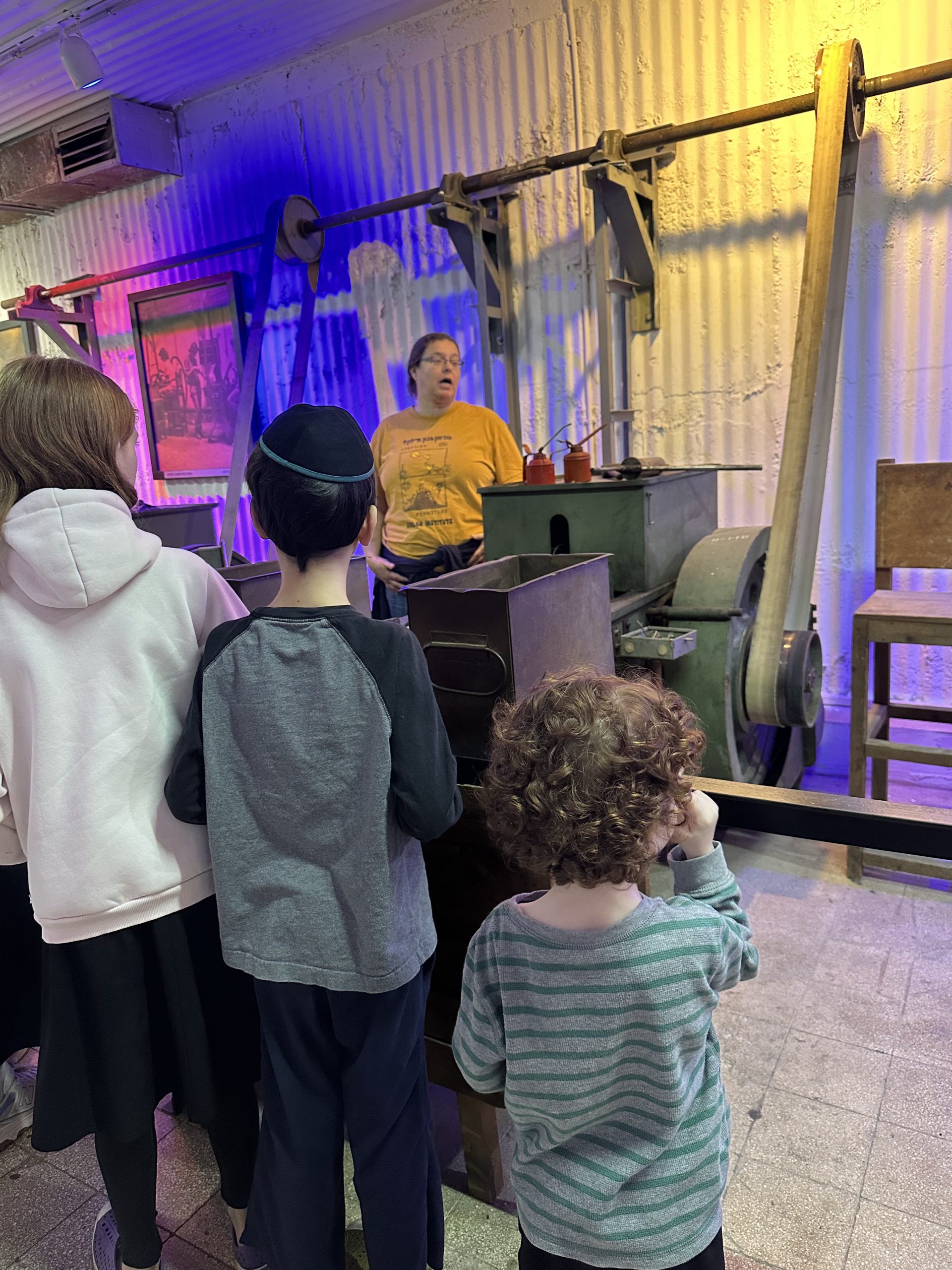
Throughout our time, we focused on the miracle of the founding of the modern state of Israel. Visiting the Herzl Museum, the Ayalon Institute (also known as the bullet factory), and the Underground Prisoners Museum in Akko, which reframed the state’s founding as moral courage rather than inevitability. The story stuck because it was human. Young people took risks so the Jewish state could exist. Our children understood that safety is fought for, not assumed. All three of these museums were exceptionally well done, and I would recommend them all. The Herzl Museum is situated on Har Herzl, and it’s worth visiting a few select soldiers and historical figures there and learning their stories. Two of our kids are named for men buried there, and it was so meaningful to visit them. A note that Yad Vashem is not open to younger visitors, but is also nearby. Both Herzl and Ayalon require advanced booking and planning; the hours and tours are not available as a walk-in.
Throughout the trip, we made room for beauty. Mosaics at Tzippori and Caesarea. A glassblowing workshop in Jerusalem where creation was tactile and joyful. These moments mattered because Jewish history is too often taught as endurance alone. Israel insists otherwise. Jews make beauty. We always have.
Why This Trip Worked for Us
Looking back, what worked wasn’t that we saw everything. We didn’t. What worked was pacing, intention, and honesty—staying in one place long enough to breathe and alternating heavy days with lighter ones. Letting history accumulate rather than overwhelm us and trusting our children with complexity rather than protecting them from it.
We wanted our children to understand that Israel is ancient and modern, beautiful and burdened, miraculous and demanding. That loving it requires knowledge. That belonging to it carries responsibility. And that the story didn’t end in Tanach—or in 1948—or even on October 7.
It’s still being written.
And now, they know where they are in it.