

If you notice something, there’s a way to say it with care. You’re not a know-it-all. You’re just a mother who’s been there.
Here’s the thing no one tells you when you become a mother. When we see something, we are allowed to say something.
Sometimes a pediatrician reassures and moves on. Sometimes you’re told, “It’s okay. Don’t worry about it.” That doesn’t mean you have to leave it at that if something is bothering you. You can opt for a second opinion, see a specialist, or consult with another mom who’s already experienced the path you’re on.
When Experience Speaks
When my oldest was little, my older sister-in-law mentioned that his jaw didn’t look quite right. Not in a scary way, or in a “you’re doing something wrong” way. It was a little loving comment, “My son had something like this — you might want to have an orthodontist take a look.”
She was right, and because she spoke up early, we were able to help him on time. Years later, that “lesson” influenced how I show up for other mothers. For example, my niece was a new mom, exhausted, and called to describe what she thought was “just” nursing drama — the pulling away, the crying, the feeds that never felt settled. I didn’t diagnose anything, and I tried not to panic her. But I could give some guidance, ““Have you ever heard of silent reflux? Ask your pediatrician about it.”
It was something I learned in life, passed down to someone I love — and now she could decide what to do with it.
Things We Sometimes Miss

Many issues fall into this category of things we might not notice in our own children.
• Flat head syndrome that gets brushed off as “it’ll round out.”
• Tongue ties that affect feeding, speech, or sleep — Between Carpools already has an amazing article on tongue tie if you want to read more.
• Reflexes that don’t integrate and can later show up as behavior or learning struggles.
• Jaw, or bite issues that aren’t obvious until someone experienced points them out.
• Torticollis : Sometimes babies hold their head tilted or favor one side. A physical therapist can help with stretches and positioning to improve comfort and mobility.
Sometimes experienced mothers who have been there pick up on something that a mother who never experienced it doesn’t. If we notice, we can gently say something.
To Older Moms
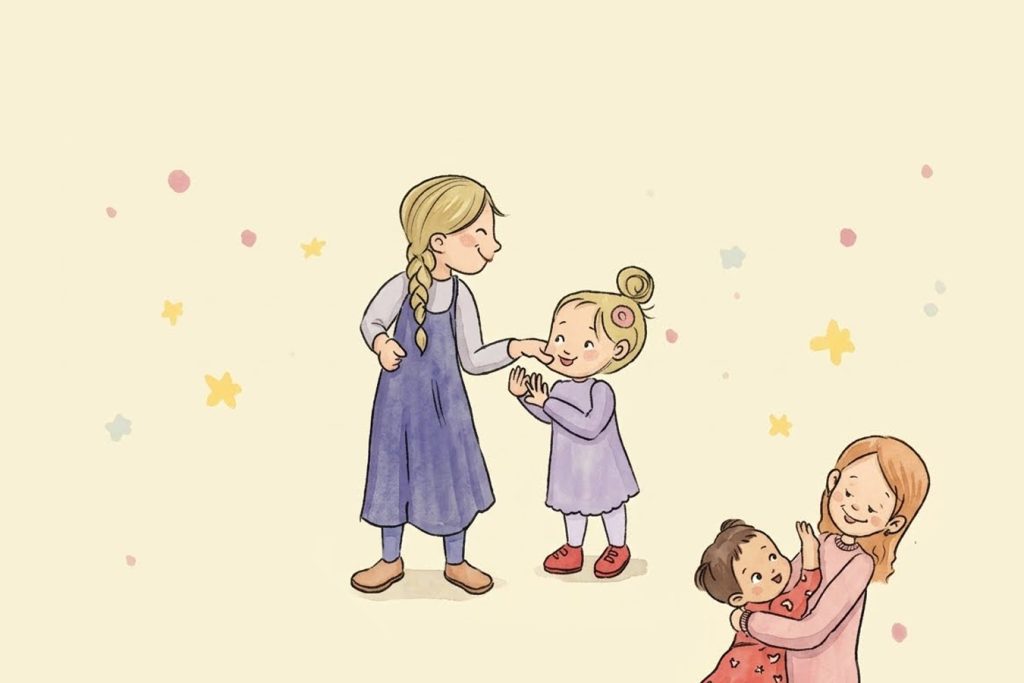
If you’re an older, seasoned mom, an aunt, a sister-in-law, or the friend who’s “been there” this is your reminder that you can speak up — kindly. Be careful not to criticize or undermine, but do share your lived experience. Say it in a way that makes them relate to you, not as a know-it-all.
“I noticed something similar with my kid…”
“Maybe ask a specialist, just to be safe.”
These small comments can make a real difference to a child’s development.
To Younger Moms
When someone who loves you points something out — it’s natural to feel a bit defensive, but it’s still worth listening. You don’t have to act on everything, but you can ask and observe. Trust that the people who love you want the best for your child .
Motherhood is not meant to be done alone, and sometimes the bravest thing we can do is listen. Sometimes the bravest thing we do is speak up with love.
Throughout all you need to take care of during your motherhood journey, always remember that everything is in Hashem’s hands and nothing is more powerful than a mother’s tefillos.










|