
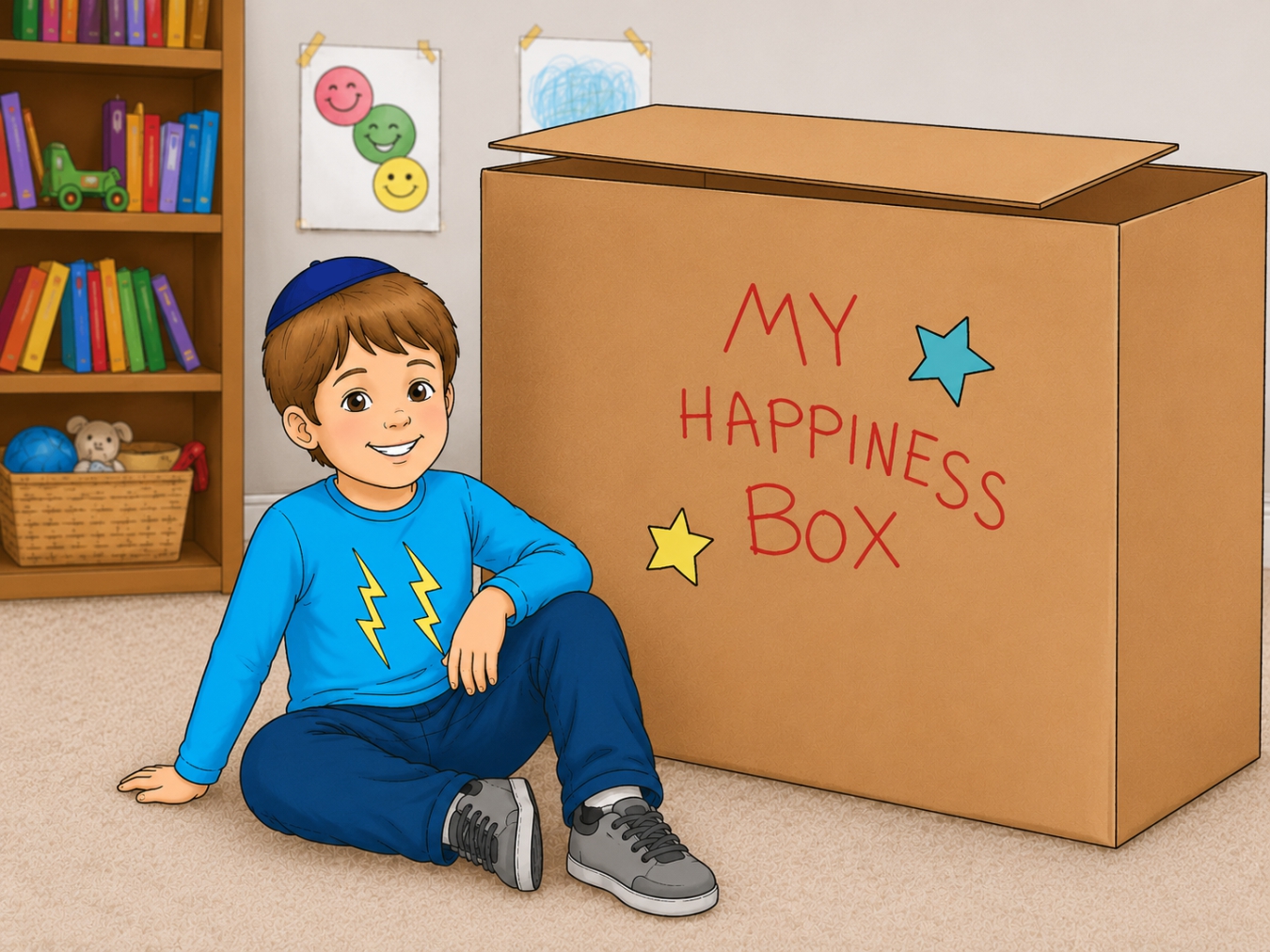
Happiness is always here, right inside of us.
For a long time, I thought about how children first learn happiness—not as a mood, but as a skill.
Long before children can articulate what they feel, they are already learning how to think. And what they learn to notice, becomes a bigger and bigger part of their lives.
One simple story I once wrote decades ago has stayed with many families for exactly that reason. A young boy is unhappy with what he has. Nothing dramatic is missing from his life— it is only the familiar human experience of wanting more, and feeling dissatisfied with what is already present. His father notices this and gives him an unusual tool: a cardboard box, left over from a new washing machine. He calls it the boy’s “Happiness Box.”
The instruction that comes with it is simple: inside the box, he can only think happy thoughts.
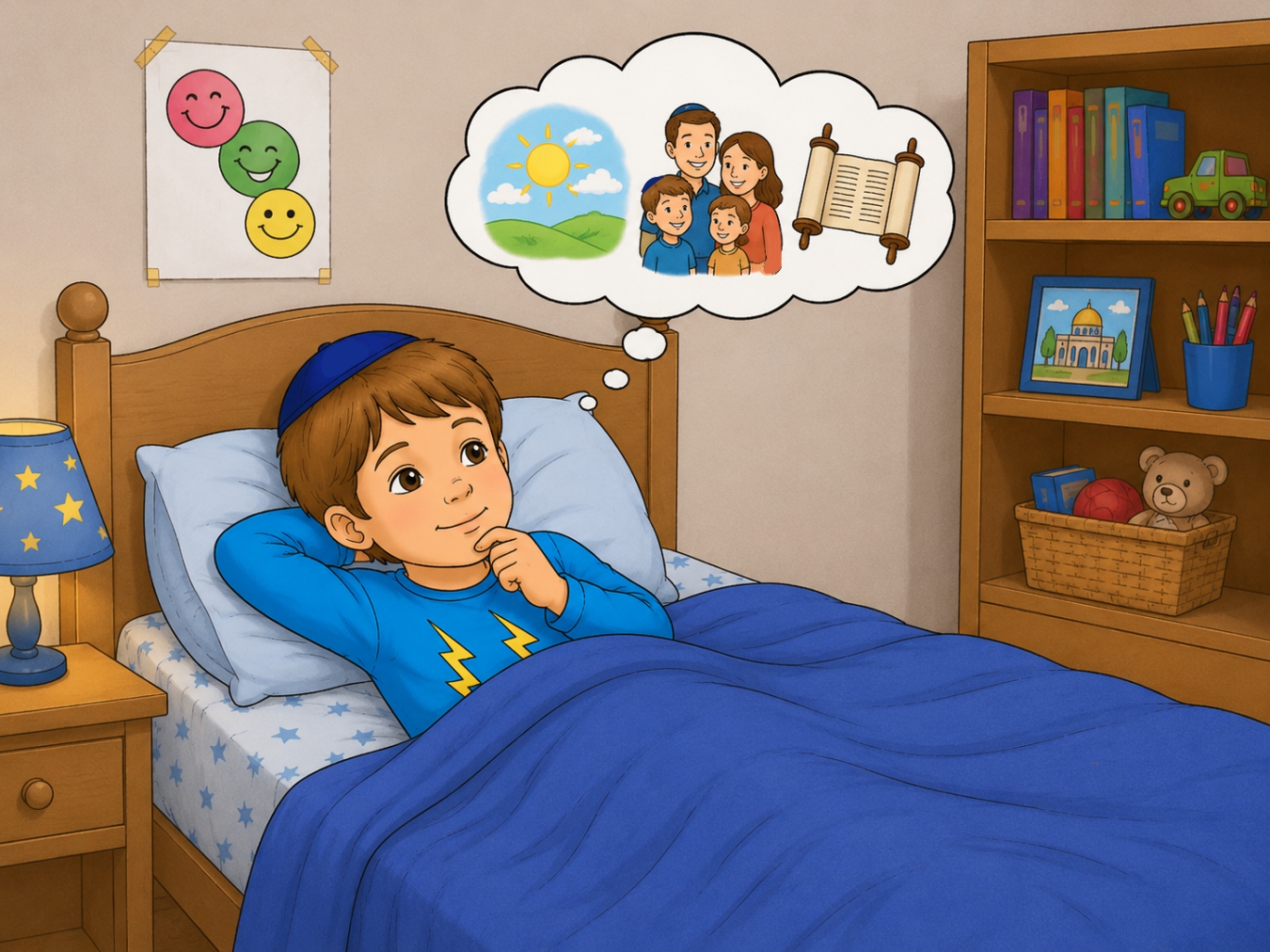
At first, the boy is confused. Happiness cannot be summoned by rule. It does not obey instructions. But he begins with something simple: he tries to notice what is already good in his life.
At first, the thoughts are small. Ordinary things. Easy-to-overlook moments. But one thought leads to another, and slowly something begins to shift. He discovers that happiness is not something he has to search for—it is something he can practice, through noticing.
The box becomes a place he returns to again and again. Not because of what it contains, but because of what it trains him to do.
Then comes the moment of realization. One day, when he is feeling sad and that box is not anywhere near him, he suddenly understands something that had been forming quietly all along:
The box was never the source of happiness. It was the reminder. He realizes that the “Happiness Box” was never really outside him at all.
It was always “above his eyes and below his hair.”
And then comes the simple truth that remains with him: “It’s a Happiness Box if you let it be.”
Gratitude as a Way of Seeing
In Jewish life, gratitude is not a momentary feeling—we get to practice gratitude in a great variety of ways throughout each day. From Modeh Ani upon waking, to the blessings woven throughout the hours, awareness and appreciation opportunities become available to us.
These exercises train our attention.
What a child repeatedly notices becomes what they naturally see.
And what they see becomes how they experience life.
Why Early Training Matters
Modern neuroscience has given language to something Torah life has long understood: the brain is shaped by repetition. Neural pathways strengthen with use. Attention becomes habit.
In other words, gratitude is not only taught—it is trained.
When children learn early to notice what they already have, that pattern can become deeply embedded. Over time, it becomes less of an exercise and more of a way of being.
This is one of the quiet gifts of early childhood learning: not just information, but internal orientation.
A Message That Grows With the Child
What begins as a simple story for young children often reveals itself to be something more enduring.
The idea that happiness is not hidden somewhere “out there,” but formed through attention, is something that can accompany a person at every stage of life.
The box in the story was never magic.
It was a mirror for the mind.
And perhaps that is why The Happiness Box from over thirty years ago continues to resonate. In every generation, we can learn to notice more fully what is already good—and in doing so, discover that happiness is not waiting for the next purchase or achievement.
Joy can be found right here this moment, in our very own Happiness Box – if we let it be.








|