
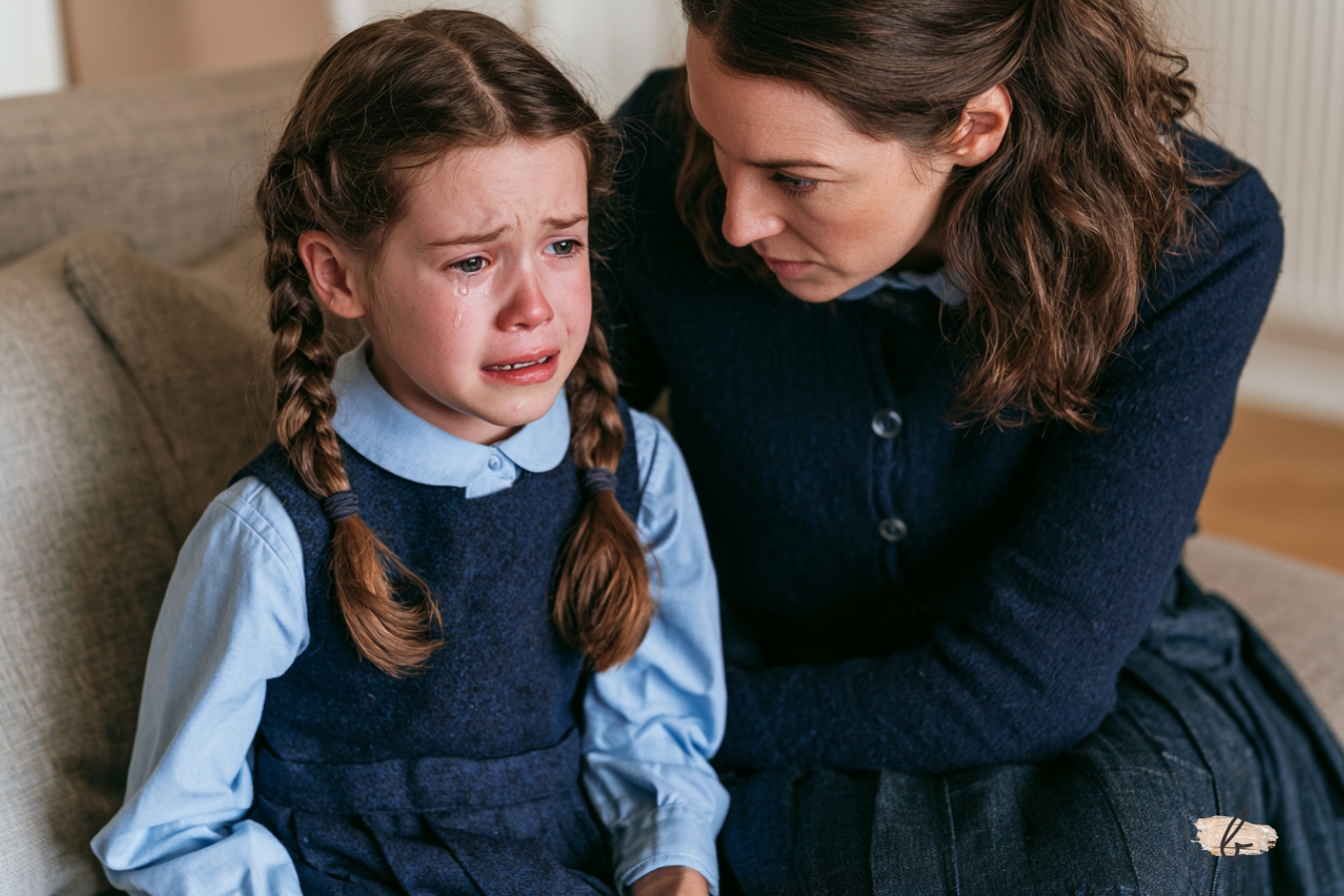
We often try to make them feel better in ways that don’t really help. This is what does.
“I’m never going on the bus again!” – This was Miri’s tearful declaration to Mom. “ Yael called me ‘stupid’ because I caused my team to lose the spelling bee and then everyone started laughing. I HATE her! I hate ALL of them!” The tears kept coming as Miri ran to her room and slammed the door.
Chani froze. She knew that Miri struggled academically and that it was very possible her incorrect answer caused her team to lose a contest. It wouldn’t be the first time. But watching her daughter fall apart because of something that so clearly wasn’t her fault – it was too much. Although she might not have been the brightest in the class, Miri was definitely the best of all those girls! She was good hearted, generous, kind to a fault. She’d help anyone any time of day or night. How dare some nasty kid put her daughter down like this! How could anyone do this to such an innocent, wonderful girl like Miri?
As the anger and indignation started to pour through her veins, Chani came back to life. “I’m going to do something about this!” she thought. “I’m going to get on that bus and give them what for! Nobody is going to do this to my child and get away with it!” Chani started planning her campaign – how she was going to get permission to speak to the girls, what anti-bullying advocates she could round up to join her presentation, what resources were at her disposal. Should she make it a schoolwide endeavor? She needed to think this through – keep it small and focused or go all the way? So many mean kids. So many big mouths that need to be stopped in their tracks! Chani’s mind was racing, filled with visions and ideas, when all of a sudden, she remembered Miri. “Oh no! Has Miri been in her room crying all this time?” Chani realized that a good twenty minutes must have passed since Miri first burst through the door. “Oh no! I have to go see if she’s all right!”
Now let’s think this through together. Let’s imagine that Chani runs up the stairs to Miri’s room only to find the door locked (okay, we don’t know why a 9-year-old has a locking bedroom door, but she does, alright?). Chani pounds on it, shouting her daughter’s name but Miri, still sobbing heavily, screams at her mother to go away. “You don’t even care!” the distressed kid shouts. Now Chani, doubled over in guilt, tries to explain: “No I do care honey – I really care! I was just trying to figure out what I’m going to do to make sure this never happens again. I’m so sorry honey, I should have come up to you right away. Please let me in, sweetie. Please open the door for Mommy!” And then let’s imagine that this anger and explaining routine goes on for another 10 minutes or so, and eventually, a sullen, sulky Miri opens the door.
What would you have Mom say at this point? Should she 1) reassure her daughter that she’s not stupid (although, as we said earlier, she does have academic challenges….) or 2) point out how awful her ‘friends” are (leaving her feeling even more friendless than she already feels….)? Or 3) talk about “bullying” and “abuse” (ensuring that Miri views herself as a helpless victim….) and promise, through her upcoming campaign, to put an end to it (a promise Chani shouldn’t be making because she can’t actually control the world…)? Or 4) talk about her own bad childhood experiences? Or what?
Now let’s go through these possible responses together:
1. Reassuring her that she’s not stupid is not going to address the issue at hand: pain
2. Pointing out the bad behavior of her friends is also not going to remove the pain
3. Identifying the abusive nature of the event will also not ease the pain
4. Talking about her own painful experiences will not lift her daughter’s pain
5. What will address the pain? Acknowledging and accepting it.
One of the hardest parts of parenting is watching our children go through pain. We do everything we can to make their pain go away – everything except confront it and confront our helplessness to prevent it.
Rejection is part of everyone’s life experience and is certainly a universal part of the childhood journey. Knowing how to respond to it is an essential parenting skill to cultivate. Although there is much more to be said about what that skill entails, it starts with parental courage – the courage to say, “That really, really hurts.” Because starting with the bare truth is the only way in.








|