
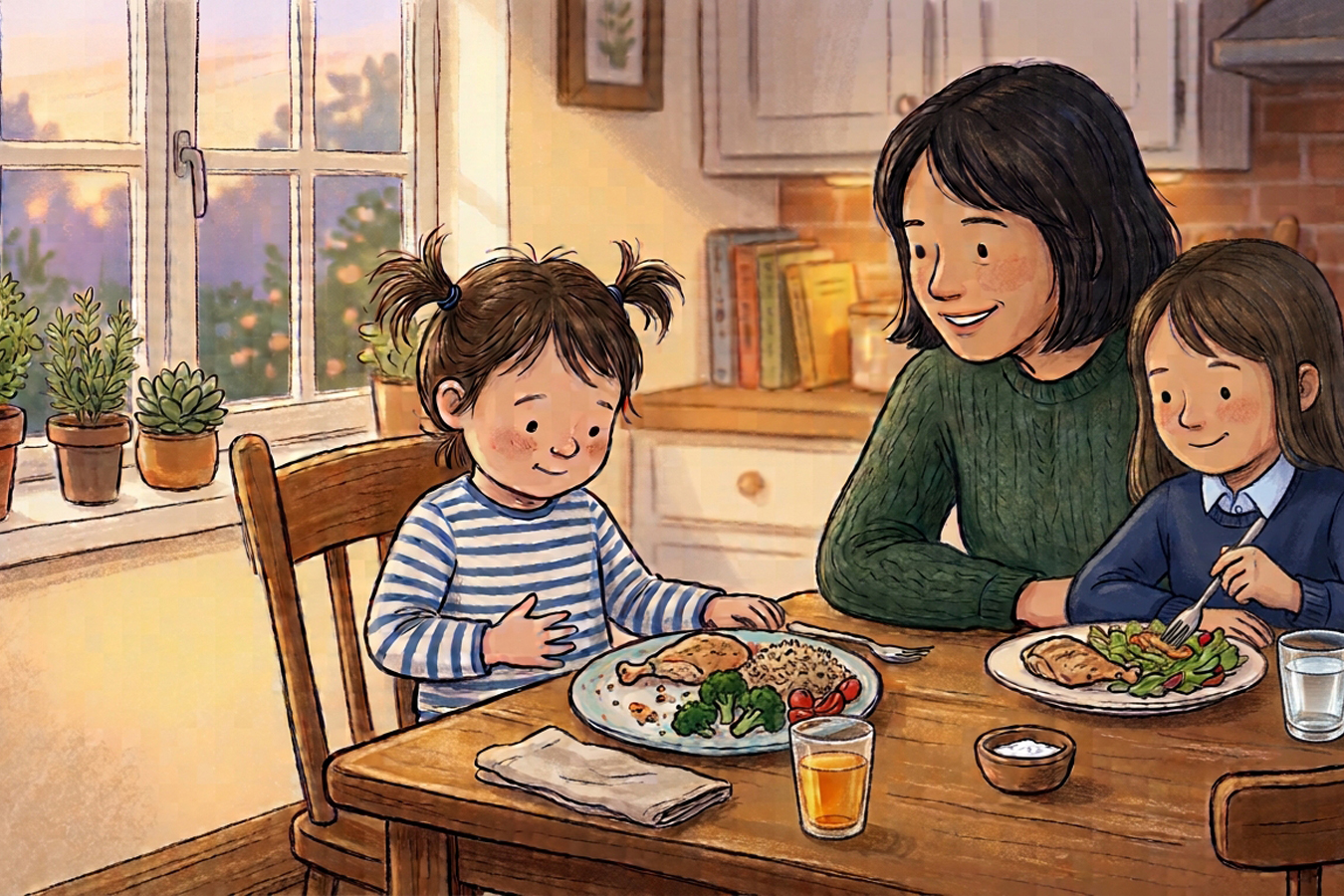
You don’t want to be the food policeman. But you do want to educate your children about food and healthy balance. Learn how you can do it below.
It’s 5:15 p.m. You’ve spent the afternoon running carpool, helping with homework, and trying to get supper on the table. Your child sits down, takes two bites, and announces, “I’m full!”
Twenty minutes later? They’re asking for a snack.
Or maybe your child has already eaten supper and is back in the kitchen looking for something else to eat. Are they still hungry? Bored? Just looking for something yummy?
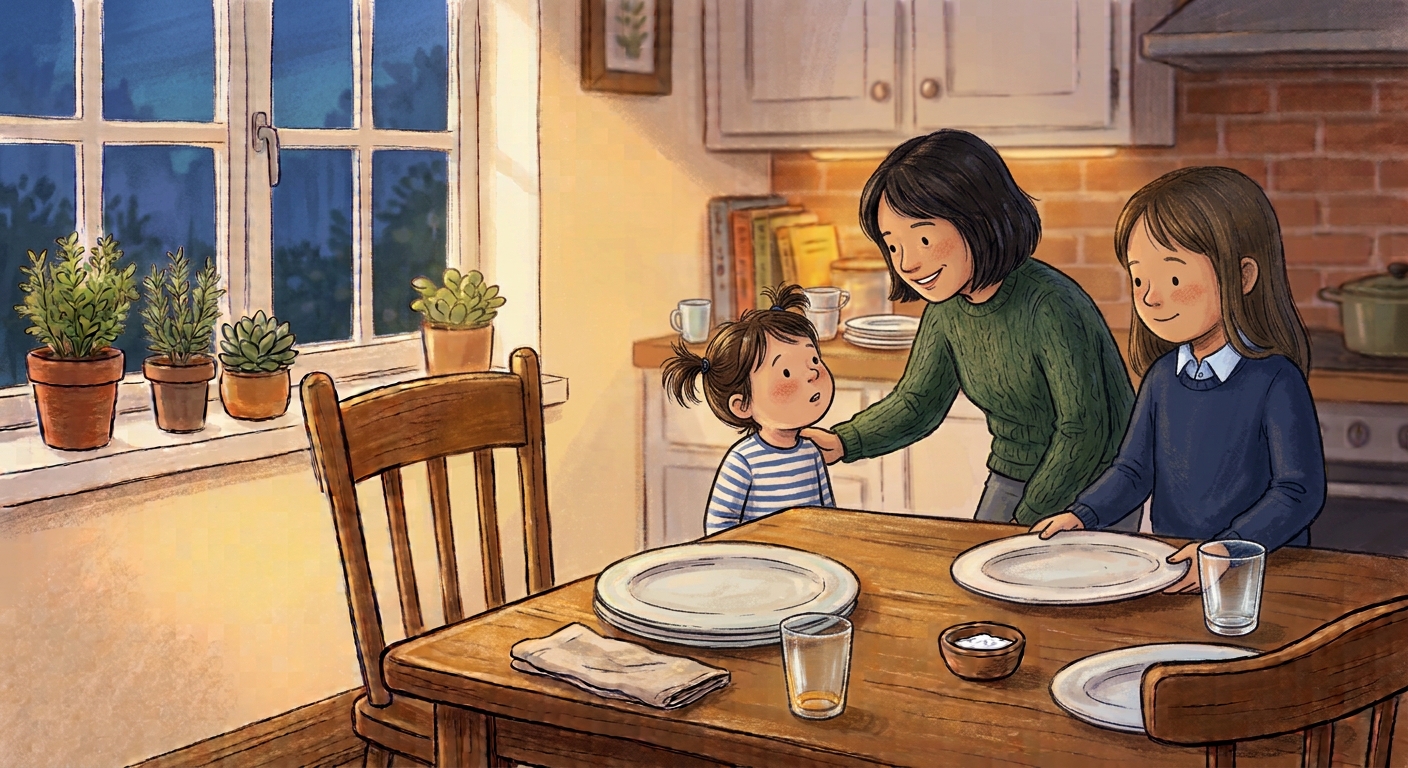
As parents, we want our children to eat well, get the nutrition they need, and develop healthy habits. But we also don’t want every meal to become a negotiation.
One of the most valuable skills we can teach our children is how to recognize their body’s hunger and fullness cues. And it starts with giving them opportunities to practice, without making food another thing they have to get right.
Our Job Is to Provide the Structure
As parents, we decide what foods to offer, when meals and snacks generally happen, and where we eat. But we can’t determine exactly how much food our child needs at every meal.
Some days, children are hungrier than others. Growth spurts, activity, sleep, and what they’ve eaten earlier in the day can all affect appetite.
Instead of insisting that a child finish their plate or take three more bites, we can allow them to decide when they’ve had enough.
That doesn’t mean we stop encouraging them to try new foods. It means separating trying a food from deciding how much to eat.
“You don’t have to finish everything on your plate. You can listen to your tummy and stop when you’re comfortably full.”
It may feel strange to leave the decision up to them, especially when you’ve prepared a nutritious meal. But learning to recognize fullness is a skill, and children need practice developing it.
How Do We Teach Children to Recognize Hunger?
Children don’t automatically know how to identify every signal their bodies send. We can help them learn by talking about hunger and fullness in simple, everyday ways.
1. Help them notice their body’s signals.
Instead of focusing only on whether your child has eaten enough, occasionally ask gentle questions.
“Does your tummy feel empty, or are you starting to feel satisfied?”
“Do you feel comfortably full, or do you feel like you need a little more?”
You can also talk about how hunger feels. Maybe their tummy rumbles, they have less energy, or they start thinking about food. Fullness might feel like their tummy is comfortably satisfied and they no longer feel the need to eat.
Keep these conversations casual. We don’t want children to feel as though they need to give the right answer before they’re allowed another serving.
2. Teach them to pause, not to ignore hunger.
Some children eat quickly and don’t notice they’re full until they’ve finished a large portion. Others eat while distracted and have trouble recognizing how much they’ve eaten.
Encourage a brief pause during a meal. They can put down their fork, take a breath, and check in with themselves.
“Let’s take a little break and see how our tummies feel. Do you want more, or are you comfortable?”
This isn’t about limiting portions or making children wait when they’re hungry. It’s simply an opportunity to notice their body’s signals.
3. Talk about hunger and boredom without making food the enemy.
A child comes home from school, drops their bag, and immediately starts looking for snacks. Sometimes they’re genuinely hungry after a long school day. Other times, eating has become their go-to activity whenever they’re home and looking for something to do.
Rather than saying, “You’re not hungry; you’re just bored,” try helping them explore what they need.
“You’re looking for something to do. Are you feeling hungry, or would you like to find something fun to do first?”
You might suggest playing outside, starting a craft, calling a friend, or joining you in the kitchen. If they’re still hungry, offer a snack.
The important distinction is that we can help children recognize boredom without dismissing their hunger. Food can be enjoyable, and it’s okay to eat because something tastes good, too. We don’t need to turn every snack into a test of whether they’re hungry enough.
What If They’re Hungry Again 20 Minutes After Supper?
This is where having a predictable routine can make life easier.
If your child barely touched supper and is hungry shortly afterward, you don’t need to get into an argument about how they said they were full.
You can calmly say, “Dinner is finished, but if you’re still hungry, we have yogurt, fruit, or a sandwich.”
Choose a few simple options that work for your family rather than preparing a completely different meal every time.
If this happens frequently, look at the bigger picture. Is supper being served too early? Is the afternoon snack affecting their appetite? Are they getting enough satisfying food throughout the day?
Regular meals and planned snacks help children learn what to expect, while still allowing flexibility when they’re hungry outside the usual schedule.
Let Go of the Clean-Plate Rule
“Finish your vegetables, and then you can have dessert.”
It’s such a familiar phrase, but it can teach children to focus on external rules rather than their own appetite. It can also make dessert seem more valuable because it’s something they have to earn.
Instead, offer a balanced meal, include foods your child enjoys, and let them decide how much to eat. You can serve dessert as part of your family’s routine without making it a reward for finishing dinner.
The same approach works at the Shabbos table. There may be challah, kugel, chicken, side dishes, and dessert, but children don’t need to eat a certain amount of one food before they’re allowed another. We can provide variety and structure without controlling every bite.
The Goal Isn’t Perfect Eating
There will be days when your child eats very little at supper and days when they ask for seconds and thirds. There will be afternoons when they’re genuinely hungry and others when they’re looking for something to do.
We don’t have to solve every situation or turn every eating opportunity into a lesson.
Our role is to provide regular meals, satisfying snacks, nutritious choices, and a calm environment. Their role is to gradually learn to recognize what their bodies need.
When we ask fewer questions about how much they ate and give them more opportunities to notice how they feel, we help them develop a skill that will serve them long after they’ve outgrown our kitchen tables.
We provide the structure. They learn to listen to their bodies. And mealtimes can become a little more peaceful along the way.





|