
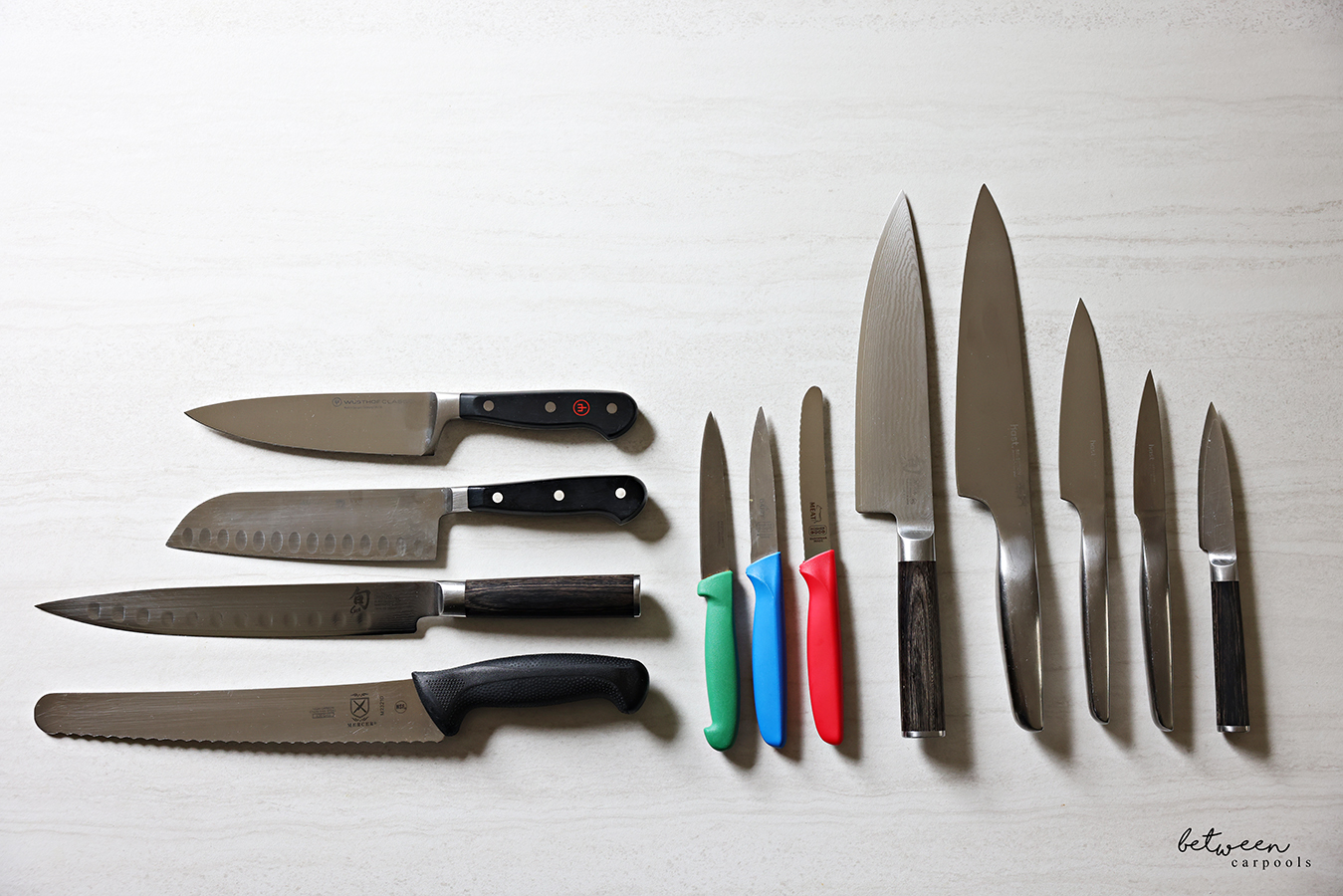
Whether you’re buying a new knife for Rosh Hashanah, or simply gearing up for the cooking marathon ahead, the right knife will come in handy.
There is a minhag, found mostly in the Chassidic community, of purchasing a new knife for Rosh Hashanah. It is said to be a segulah for parnassah, so it can only be a good thing! Also, we can all use a new knife once in a while, so why not buy it in time for the biggest cooking marathon of the year?
Knives run the gamut of price points, from single to triple digits. But the best knife is the one you are most comfortable using. It needs to fit your hand and your culinary needs. And your budget.
But, let’s start with the basics. What are the essential knives needed in a kitchen?
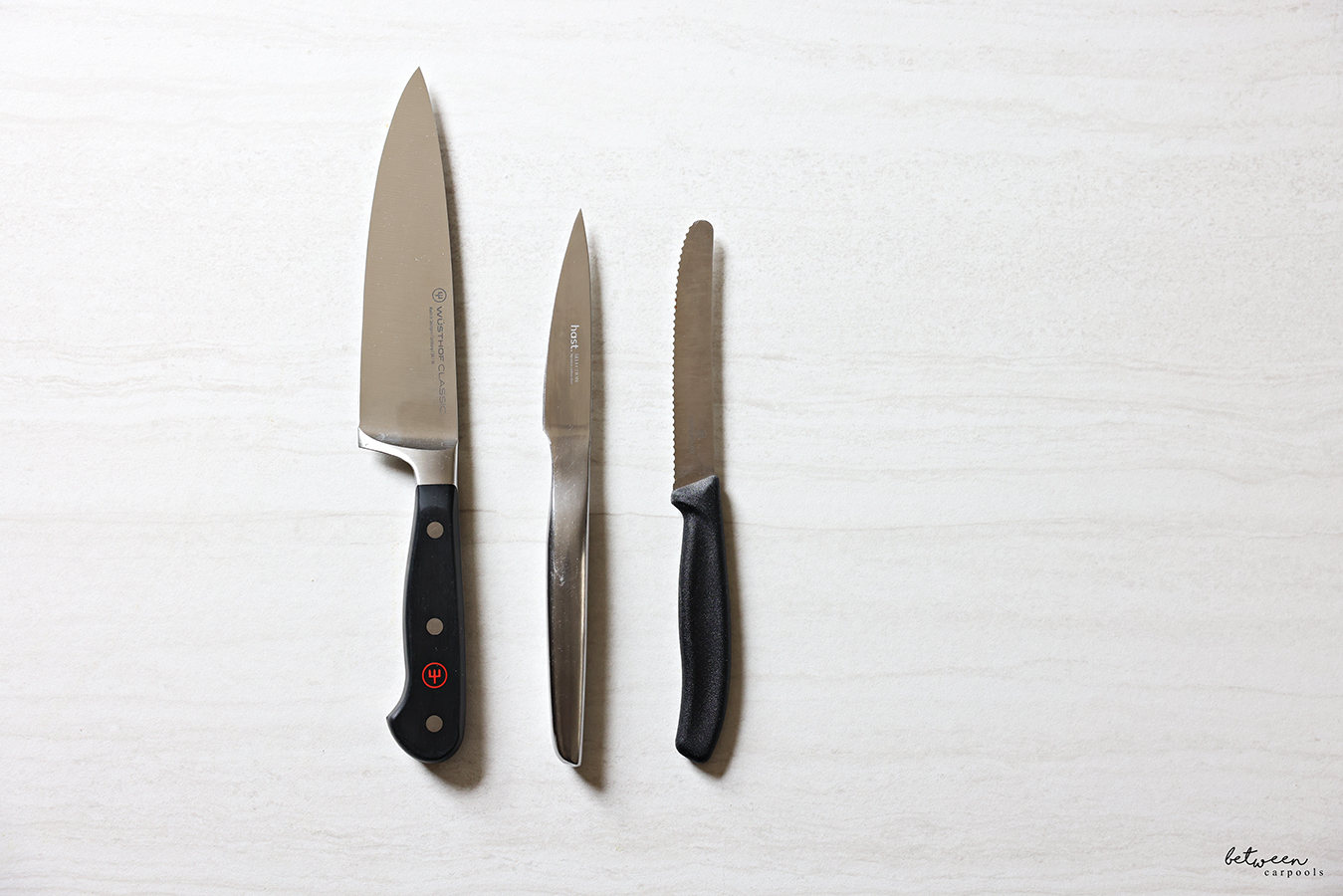
The above three types of knives are the bare minimum that you need. These are the three knives that you will use the most and that will get all the jobs done.
- The Paring Knife: This is a small knife used for cutting off stems and blemishes, for peeling when not using a peeler, and any work that’s done while holding the food in your hand.
- The Serrated Utility Knife: This is also what we call the “tomato knife” because it cuts well into foods that have a soft interior and tougher skin. It’s a great medium size that has lots of uses beyond slicing tomatoes, including slicing citrus and other soft fruits, bread rolls, bagels, and sandwiches. The serrations help it grip and cut without squishing the food.
- The Chef’s Knife: This is best for everyday, all-purpose chopping. This will be the workhorse in your kitchen. It’s the knife that you pull out when you’re about to chop an onion, or vegetables for a soup.
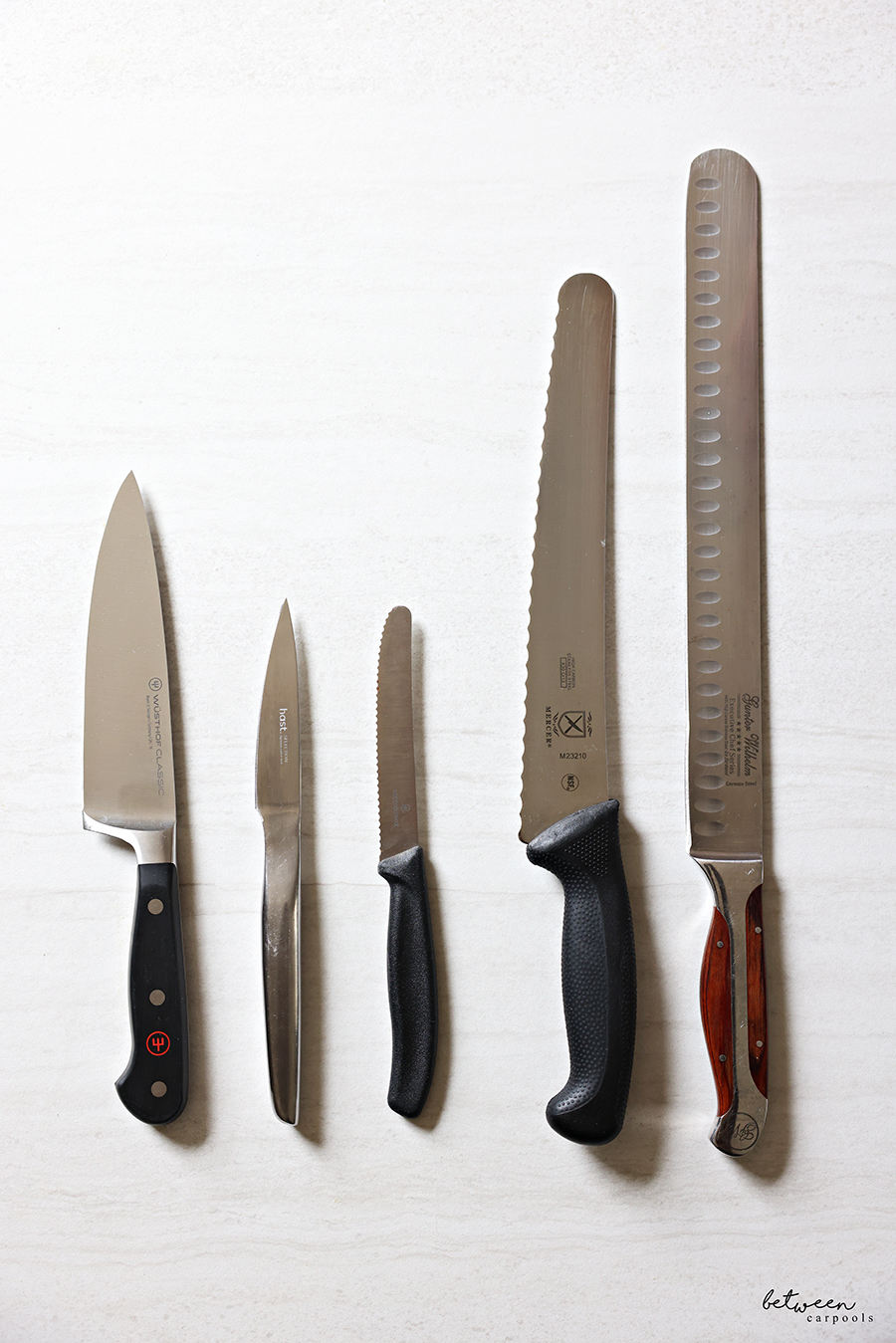
These five are the basic knives you need. While you can manage with the three listed above, we do recommend adding:
4. A meat slicer
5. A bread/sourdough slicer to the mix. You won’t use them as often, but you will be grateful to own them. Read more here on the topic of bread knives here:Which Knife Is Best for Slicing Sourdough?
Now let’s share our top picks! We’ve included both our recommended top-of-the-line knife picks for those looking for a long term investment and also our favorite value picks and dupes! All the picks here are tried and true.
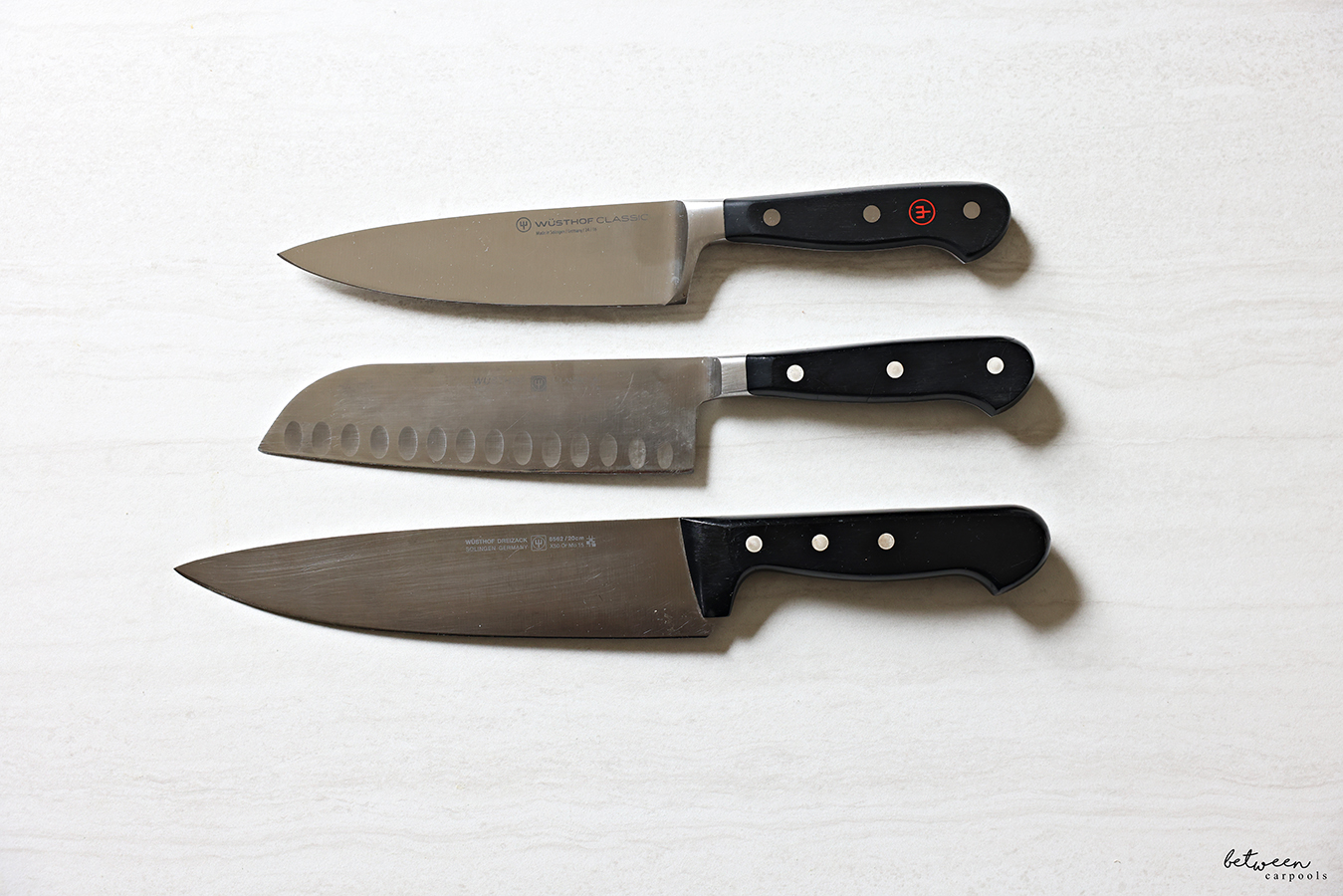
More About the Chef’s Knife (Knife #3). Choose a length and weight that is comfortable for you. A heavier knife will give you more control, but it needs to be comfortable in your hand. The Santoku (rounded top and ridges along the blade) is an alternative that some prefer.
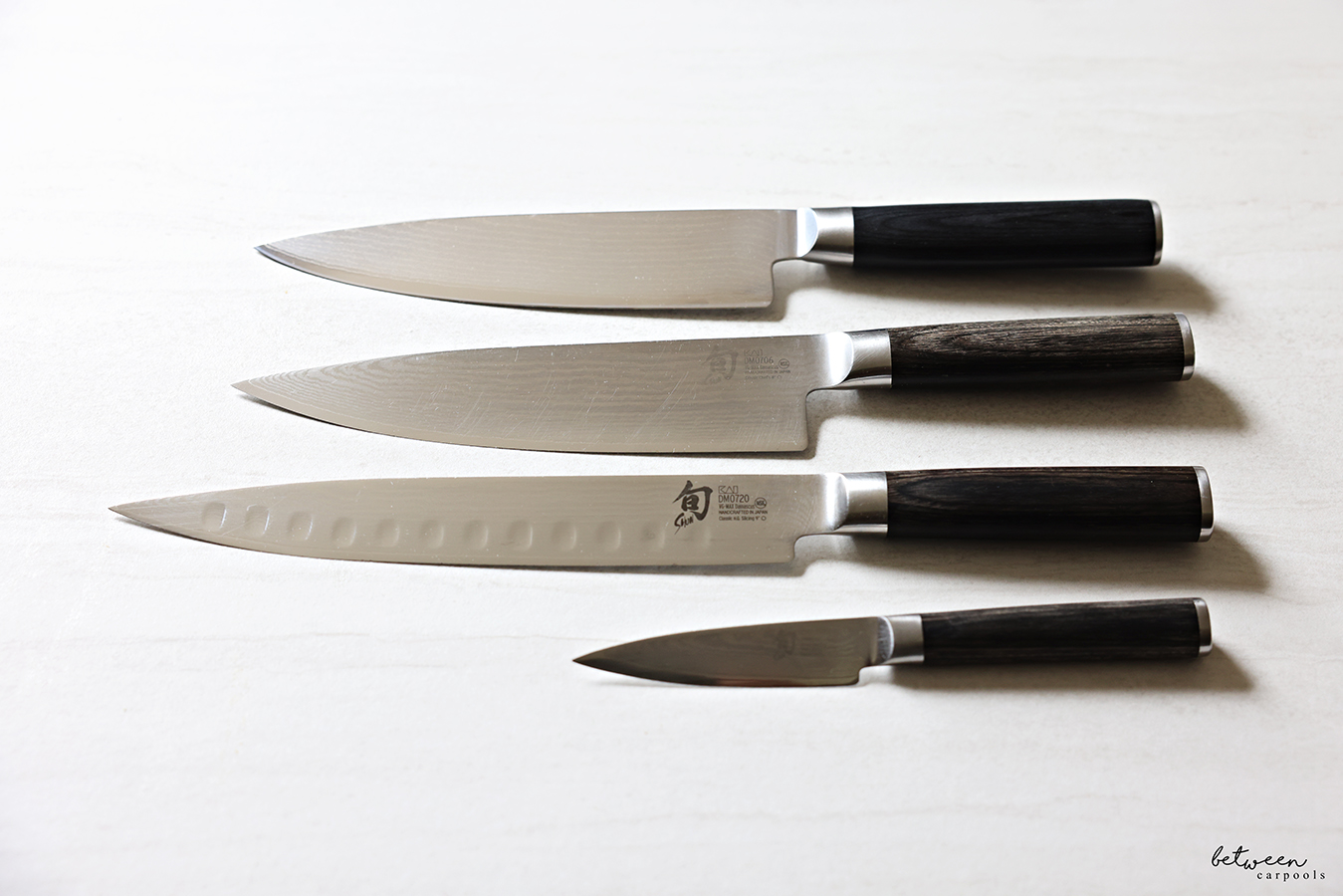
Best Quality
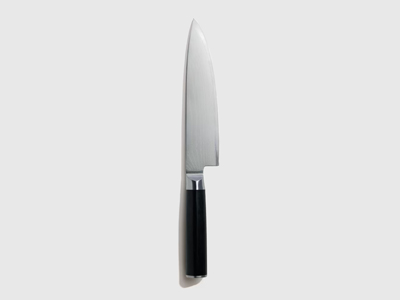
With knives, you generally do get what you pay for. There’s a reason high-end knives, like these Shun knives, cost significantly more than what you’ll pick up at a store like Target. They’re an investment, for sure. We did find the Quince dupe to be very very good, and a fair competition to the original. (To be transparent, the Quince has only been tested for a short amount of time, vs. the Shun which we’ve had for many years.)
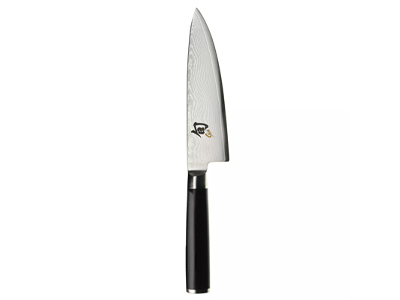
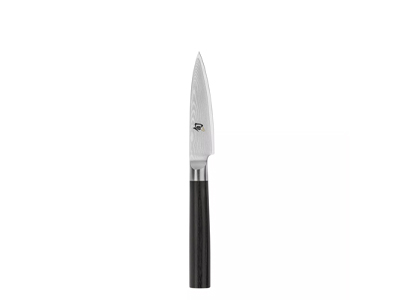
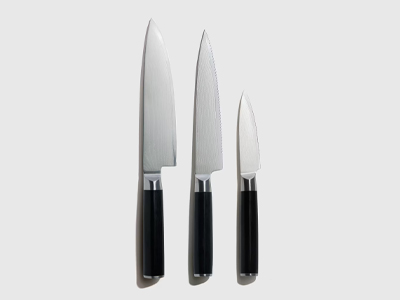
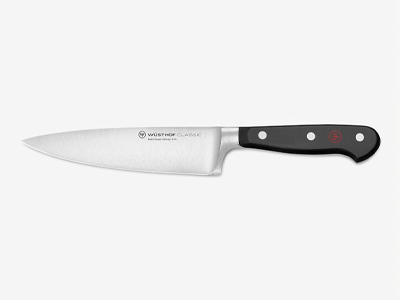
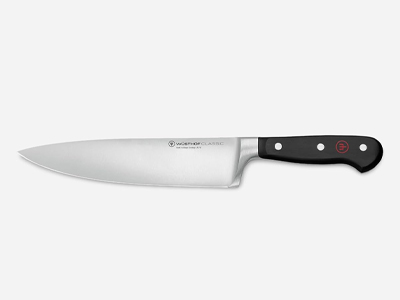
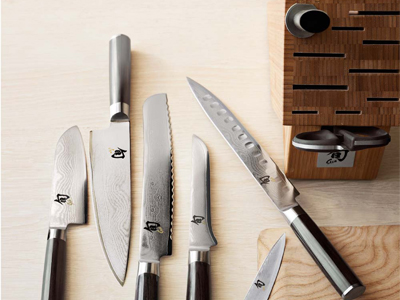
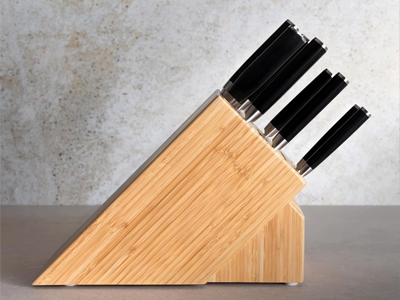
Shun Complete Set with Block
This one has a different assortment (different knives and no kitchen shears
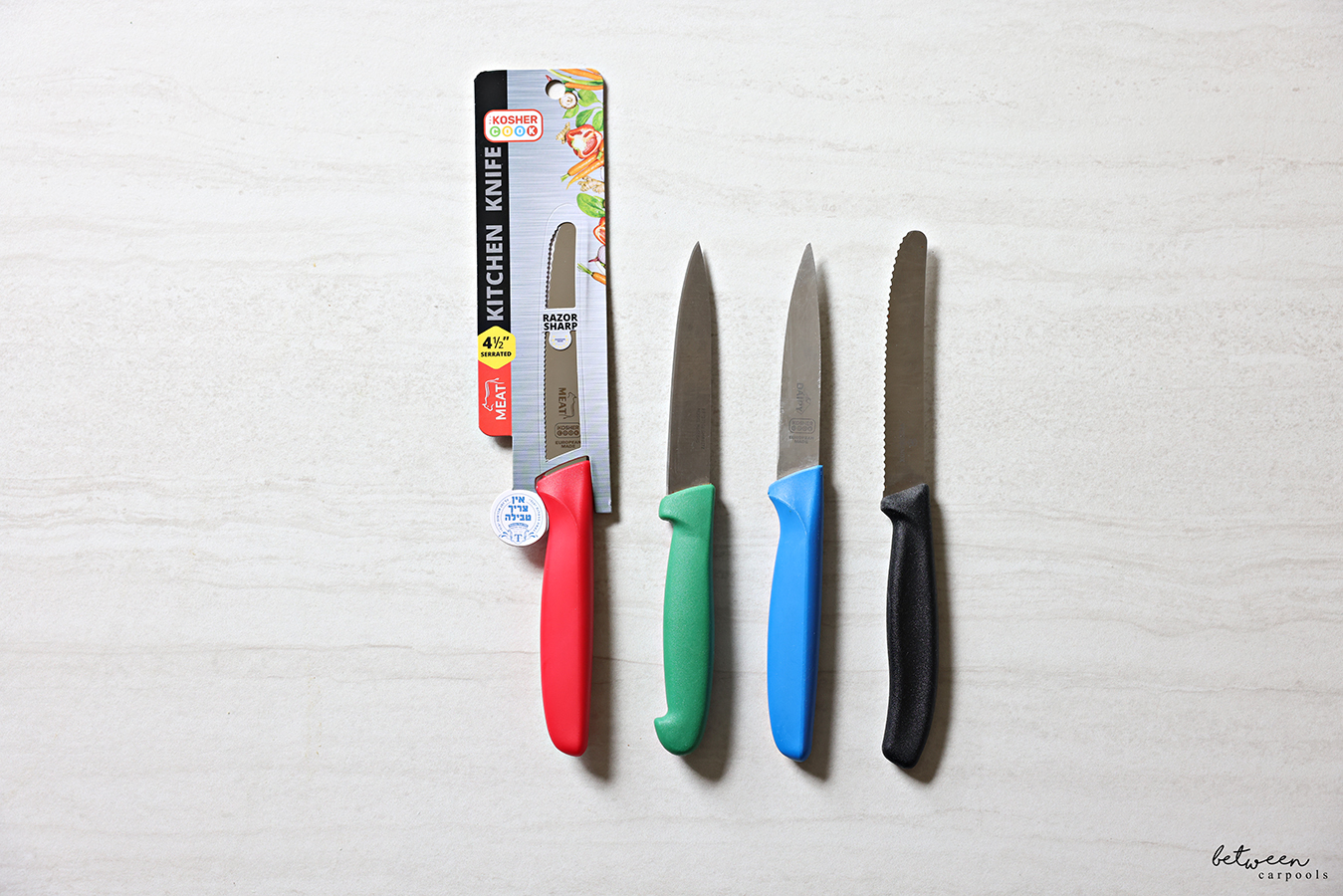
Best Value + Practical
The main advantage to the colored “kosher knives” is that they’re easy to keep track of. Pick a color for meat, dairy, and parve and there’s less of a chance of mixing them up.
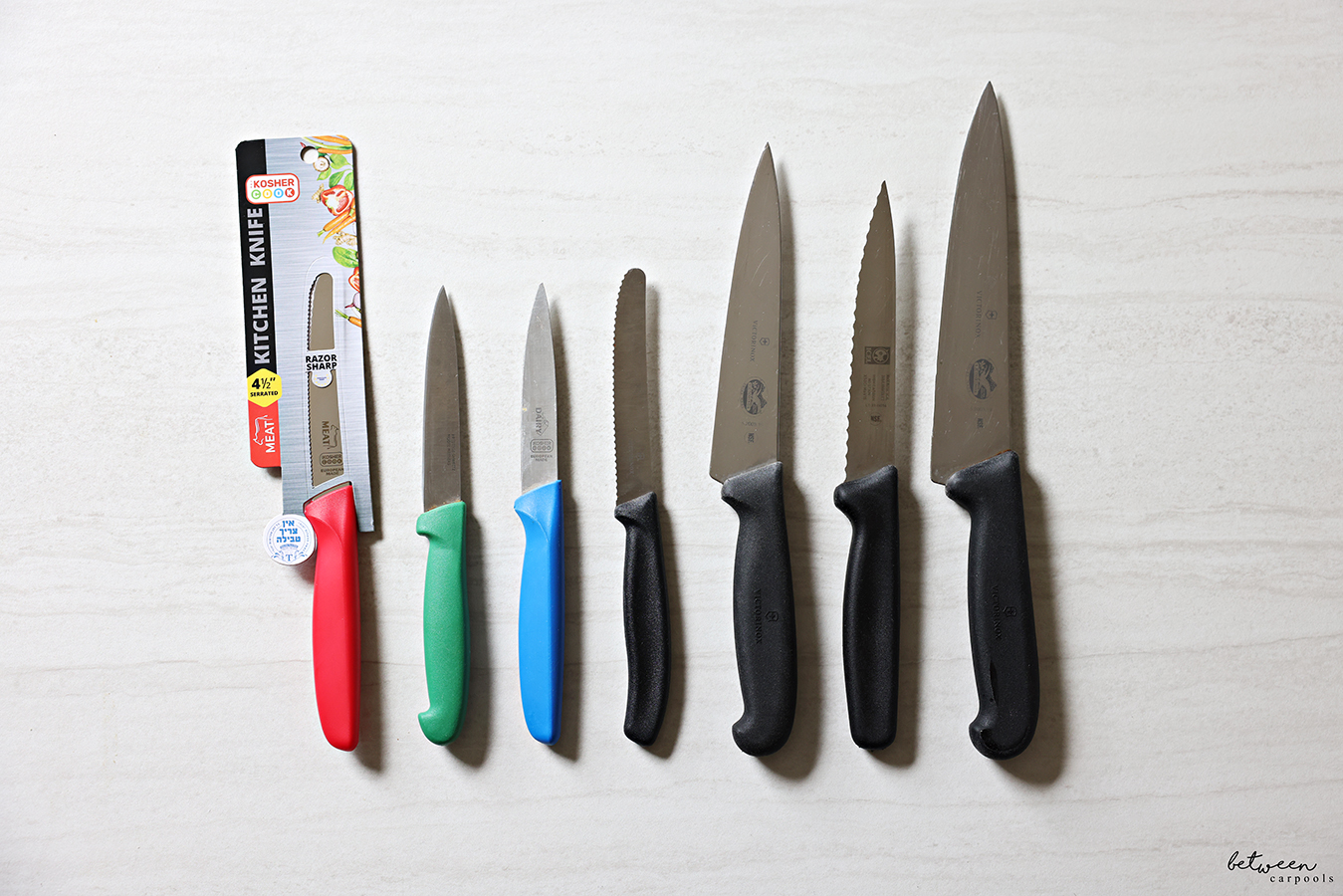
These knives come in several colors, sizes, and styles, and they get the job done. We also like them because they’re inexpensive enough, that once they grow dull, you can simply toss and replace vs. sharpen. We find that Kosher Cook knives are similar in quality to Icel and Victorinox knives, plus they don’t need toiveling so that adds another convenience.
3 Pack of Kosher Knives
More Kosher Cook Knives, in every color and size.
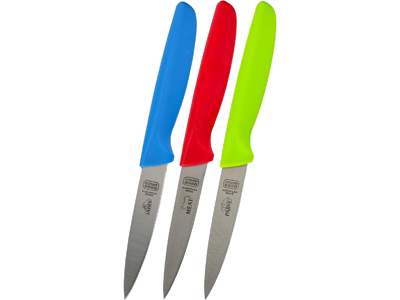
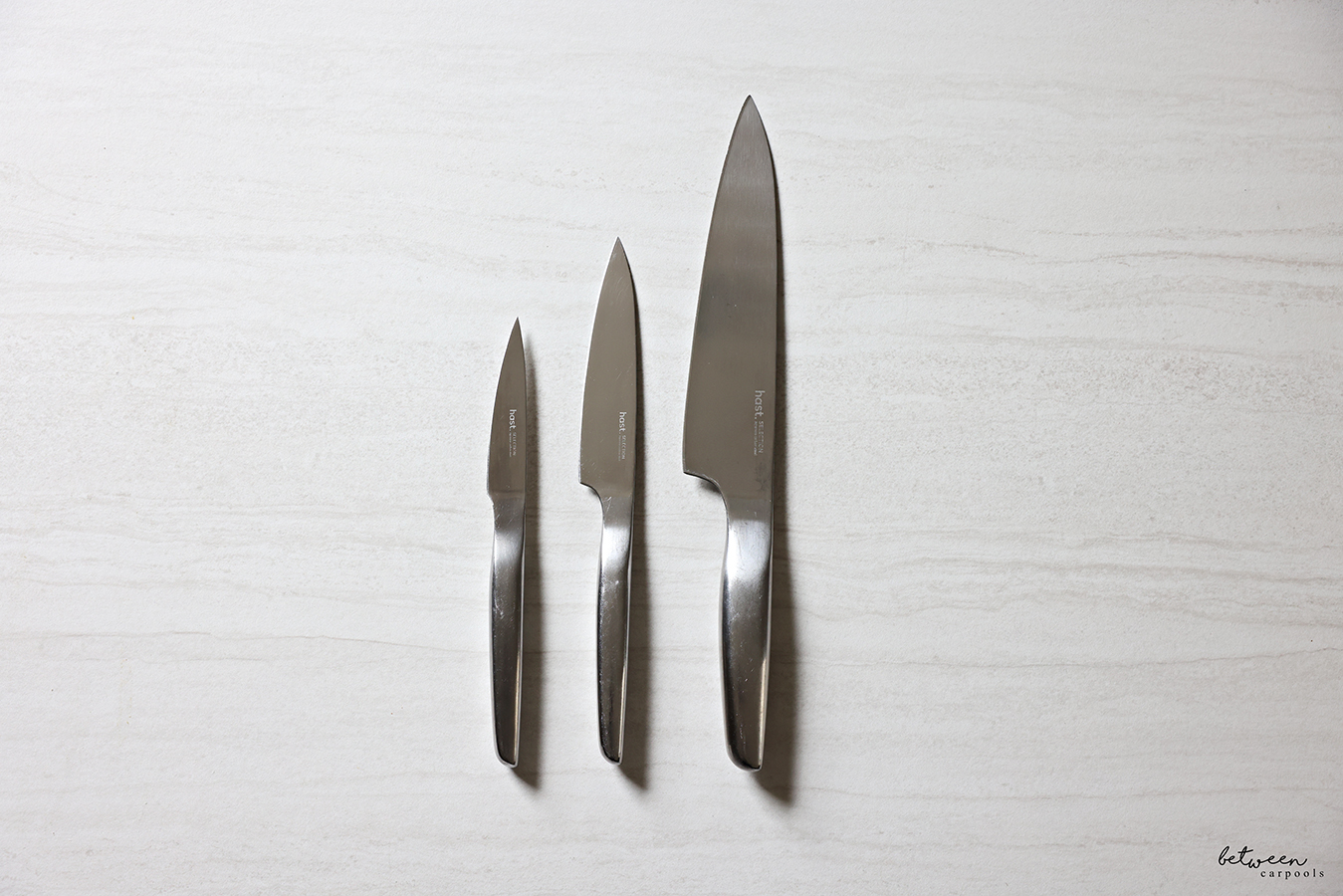
Another Great Option: Hast Knives
We have been using the Hast knives for years now, and we love these 3 particularly
The Paring Knife, the Utility Knife, the 8-inch Chef Knife (see this post for more on that). The Hast Chef Knife is lighter than most, which is perfect for those who find a classic chef’s knife to be too heavy.
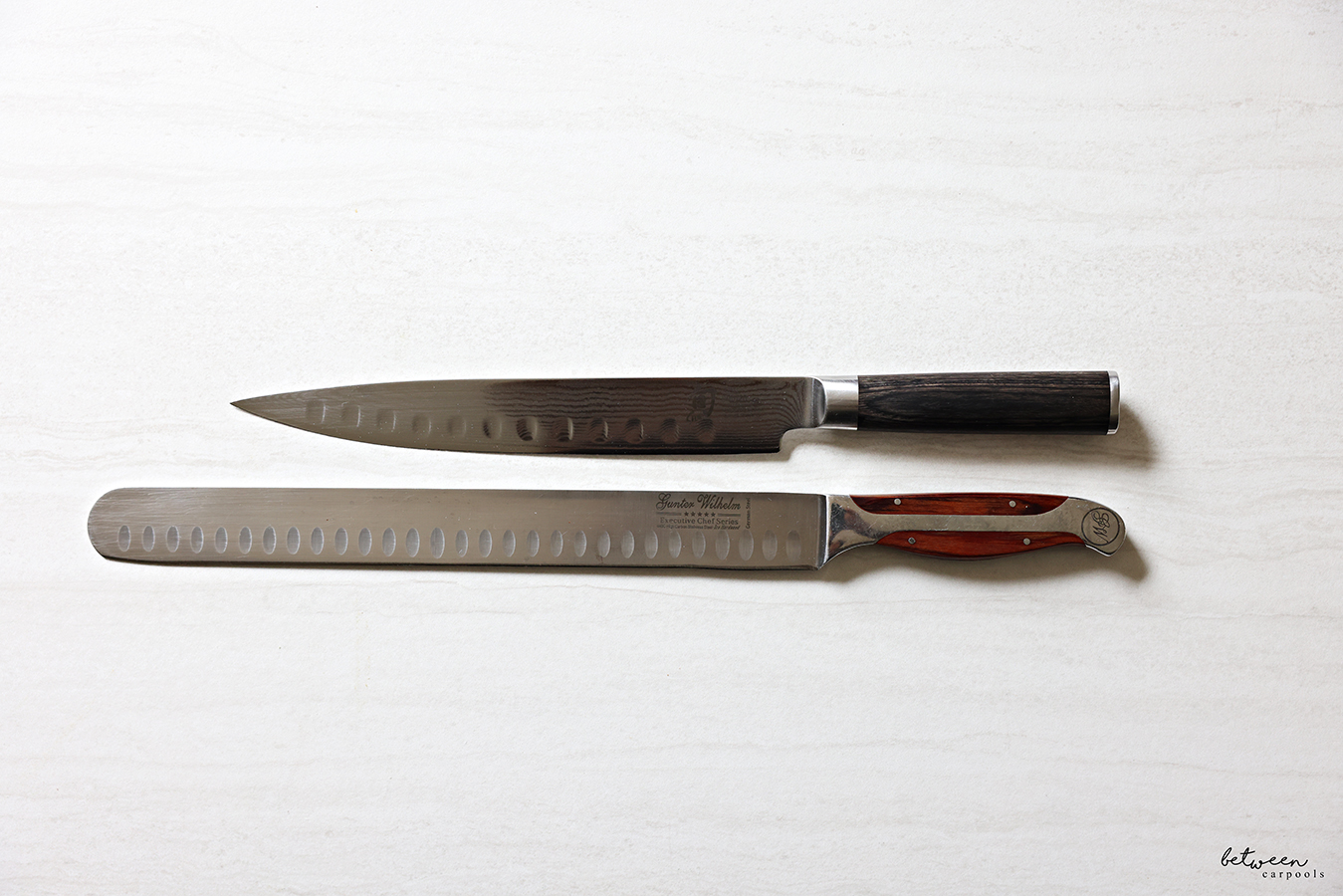
The Meat Slicer
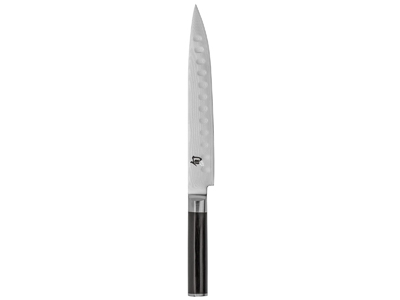
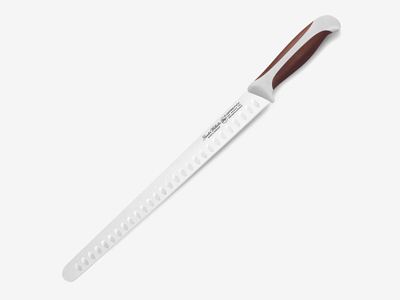
A long meat slicer (Knife #4) is very important if you serve roasts often. The longer blade will give you cleaner cuts every time. A pointed edge slicer is better for cutting around bones, while a rounded edge brisket knife is better for cutting a “falling apart” roast.
Knife Sheathes
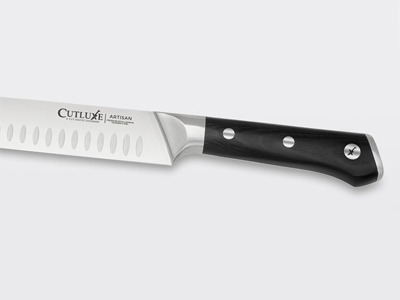
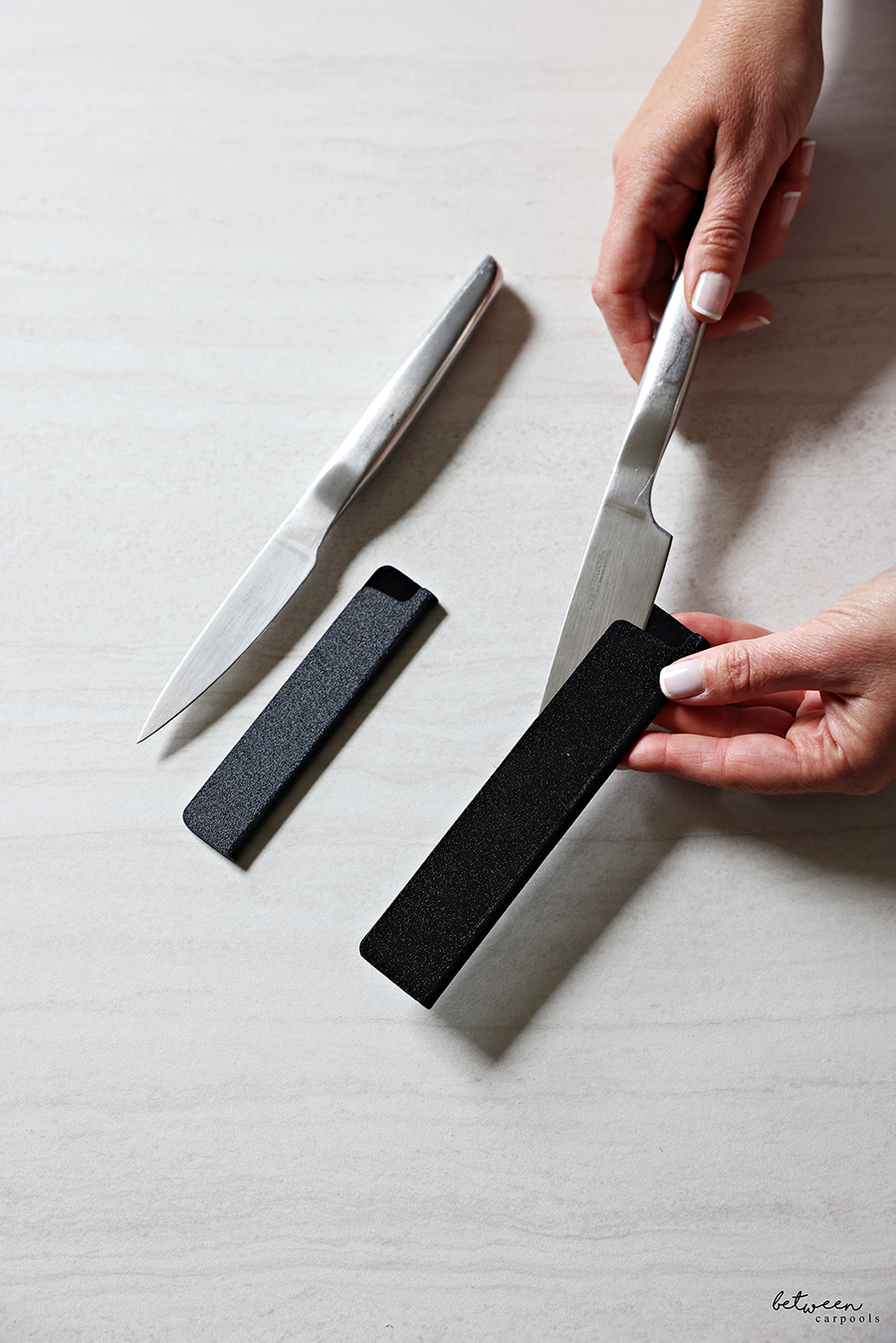
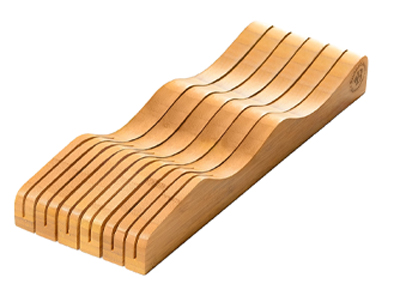
If you don’t store your knives in a knife block, using these or similar knife sheathes will protect the blades – and your hands! We do like to use a knife block, though, as they are the best way to protect your investment. There are many types–including this in-drawer version.
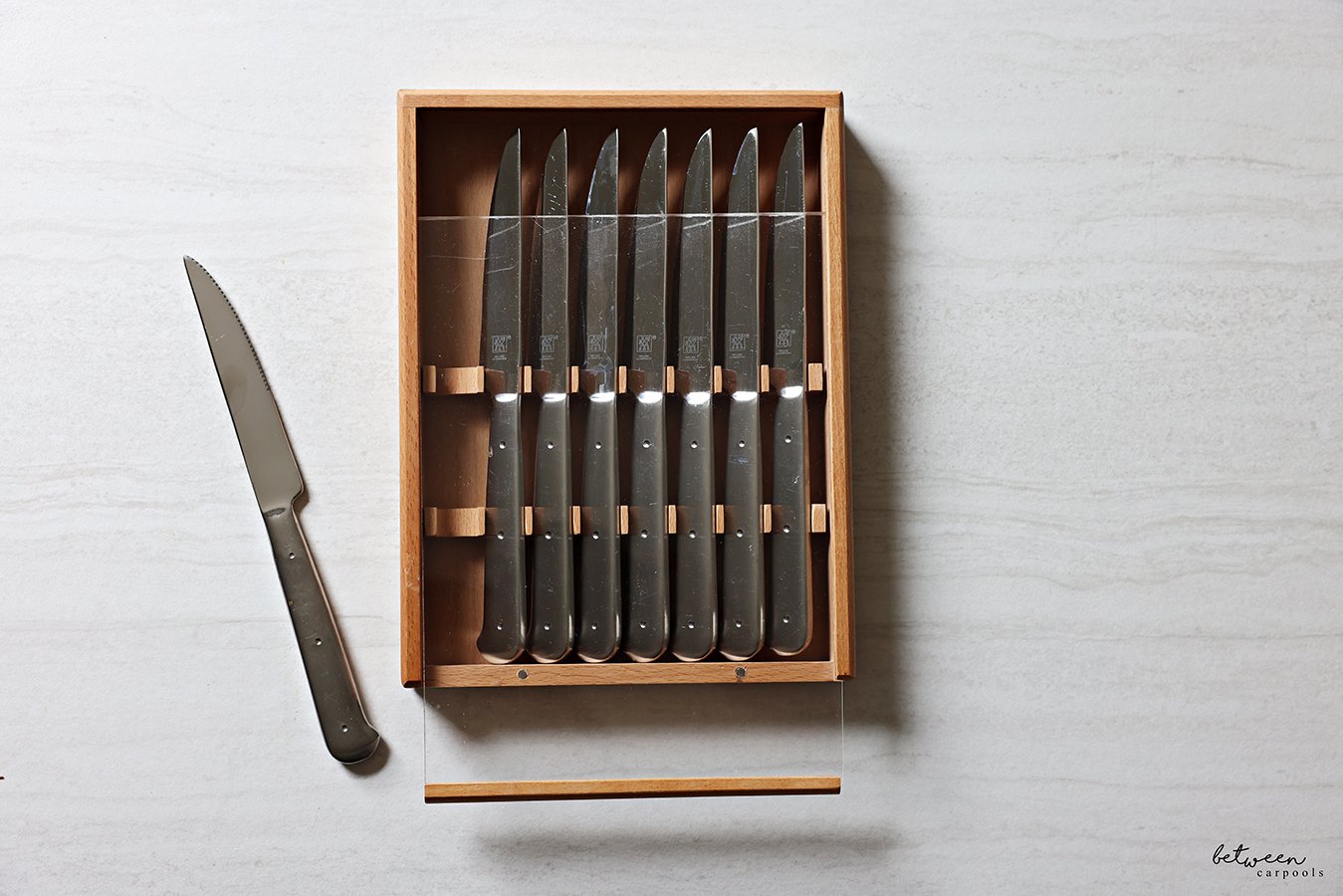
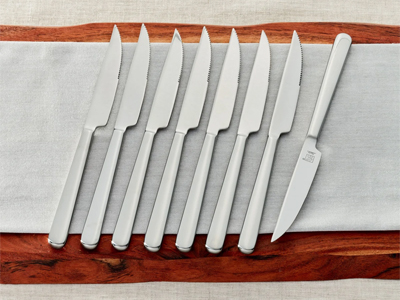
One last type of knife we didn’t mention is the steak knife. Unless you serve steaks very often, there’s no need to invest in very expensive steak knives, but having a set will come in handy if you’re hosting or just serving several people at once. We love this type of stainless steel set that looks appropriate on a Yom Tov table. The box makes it a very presentable hostess gift!
One more thing
We have been using Sharpen Up 365 for a while now, especially before a heavy cooking Yom Tov season, to sharpen our knives. The process is incredibly easy and convenient. Sharpen Up 365 sends you a box along with specially designed bags and clear instructions for packing your knives safely and securely. Once everything is packed up, you simply drop the box in the mail. Before you know it, your knives are returned to you freshly sharpened and cooking becomes such a pleasure again.
“For me, it’s become a little pre Yom Tov ritual. Before I even think of a menu, I send out my knives and look forward to getting them back. Honestly, opening that box feels a little like getting a set of brand-new knives all over again.” says Renee.
This is a Jewish owned company, with a heschsher, read more on that on their website.










|