
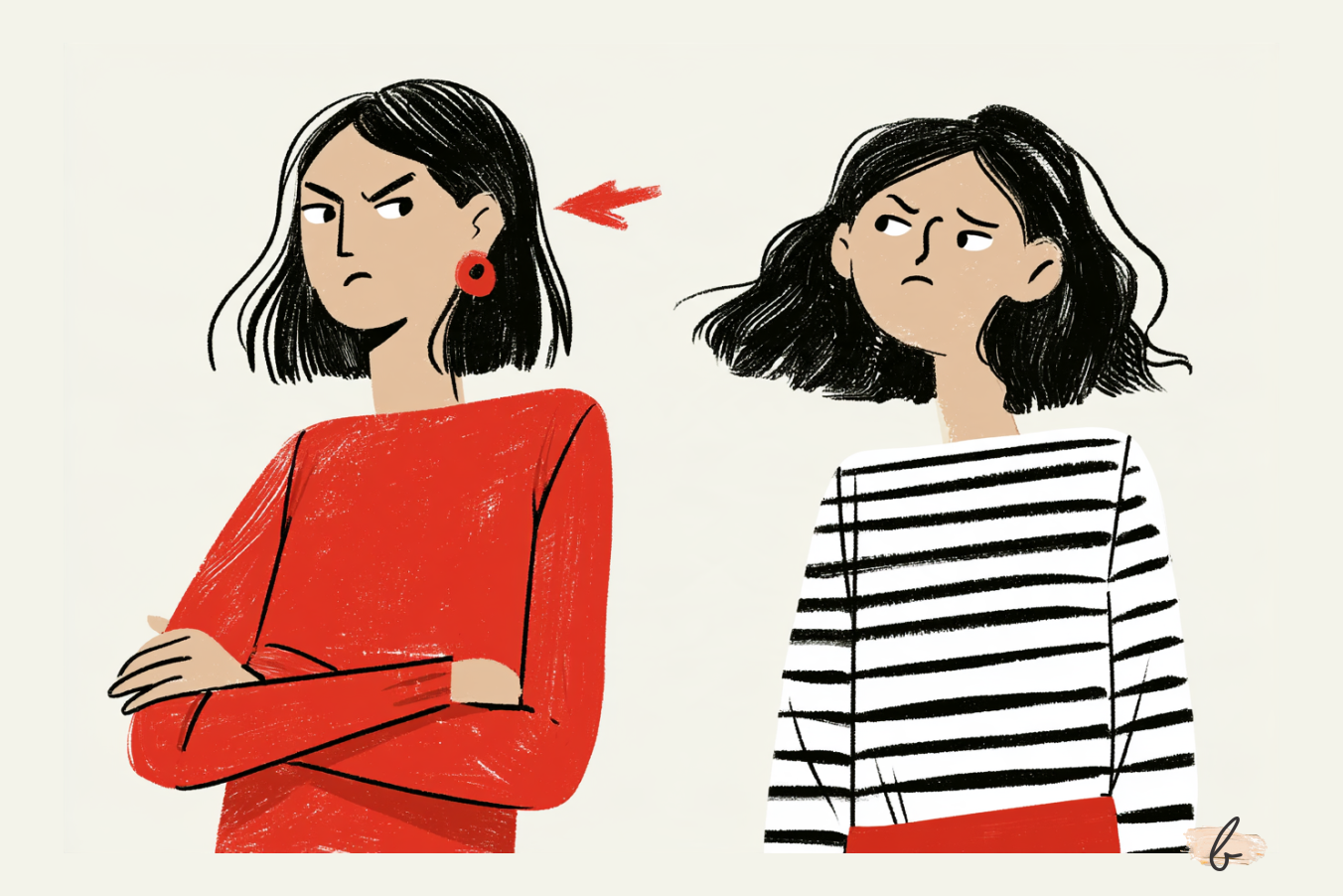
When keeping the peace leaves you anxious, resentful, and doubting yourself, it may be time for boundaries. What one woman learned about dealing with the difficult people she loves.
When I was younger, I thought difficult people had nothing to do with me. They could be difficult, I could be me, and we could all get along and live happily ever after.
There are difficult people you can minimize your interactions with. But what about the ones who are part of your daily or weekly life? The ones you can’t avoid?
Those are the ones I’m talking about. Some of them I loved, and with my tendency to see the best in people, I saw them as people I love with flaws. Sometimes I pitied them. I thought they didn’t mean to be difficult, and that they were so much more than their difficult nature.
Intellectually, I knew I couldn’t change people. But I thought that if I were kind, loving, and patient enough, it would be impossible for them to stay difficult. I remembered the pasuk in Mishlei, “K’mayim hapanim lapanim, kein lev ha’adam la’adam.” Just as water reflects a face, one heart reflects another. I would work on loving these people in my heart, and I believed that alone would change the situation.
And so I stayed. I forgave quickly. I gave in. I tried to be the bigger person. I forgave again. I let people be themselves. And sometimes, people stepped all over me.
Somewhere along the way, I developed some not-so-great coping skills. I protected myself with a shell. I started saying, “I don’t care.” Because if I care, I get pulled in. If I care, I get upset. So I don’t care. And I said it so often I started to believe it.
Except that this doesn’t-care attitude isn’t really me. I do care. I care about relationships. I care about people. I have opinions about things. And no, I don’t always want to bend over backward and make my life, my children’s lives, or my husband’s life more difficult just to keep someone else happy.
I had lost the ability to ask myself a simple question: What do I want? Did it even matter what I wanted? I wanted peace. I didn’t care. So whatever the other person wanted was fine. And eventually, I had no idea what I actually wanted anymore.
I couldn’t make everyone happy. Trust me, I tried. And the more I tried, the more people seemed to be unhappy with me.
I can’t pinpoint the day it happened, but slowly, resentment started to build. I was becoming bitter, and that bitterness hardened.
And the hardest part? Some of these difficult people loved me. They cared about me. But that didn’t stop them from criticizing, demanding, guilting, manipulating, or making me question myself. Their love for me didn’t automatically make their behavior easier to live with.
I started overthinking everything. I didn’t label myself as anxious. But some days I would think and think. How did I become the bad guy in this story? Maybe I need to do something. Maybe I need to apologize. Maybe if I explain myself better, things will be okay.
Some days, I thought I needed to cut these people out of my life. Do something drastic. Teach them that I was done! Other days, I thought I needed to demand that they change.
And then I circled back. How can I fix this? What did I do that makes them behave this way?
But a life filled with bitterness and resentment is not a way to live. Realistically, I didn’t want to cut people out of my life. I didn’t want to break up families or relationships. And people don’t change just because you ask them to (shocker!).
So I realized the only person I can change is me. It wasn’t natural. Some of the changes felt like the opposite of who I was and the middos I wanted to embody.
You Can’t Be Kind Enough for Two People
For a long time, I thought being a good person meant being understanding, forgiving quickly, and giving people another chance. My friend Ruchy once told me that’s being nice in the moment, but it’s not kind long term.
I could be understanding of someone’s struggles without agreeing to be on the receiving end of their behavior. I can love someone and still not like how they treat me.
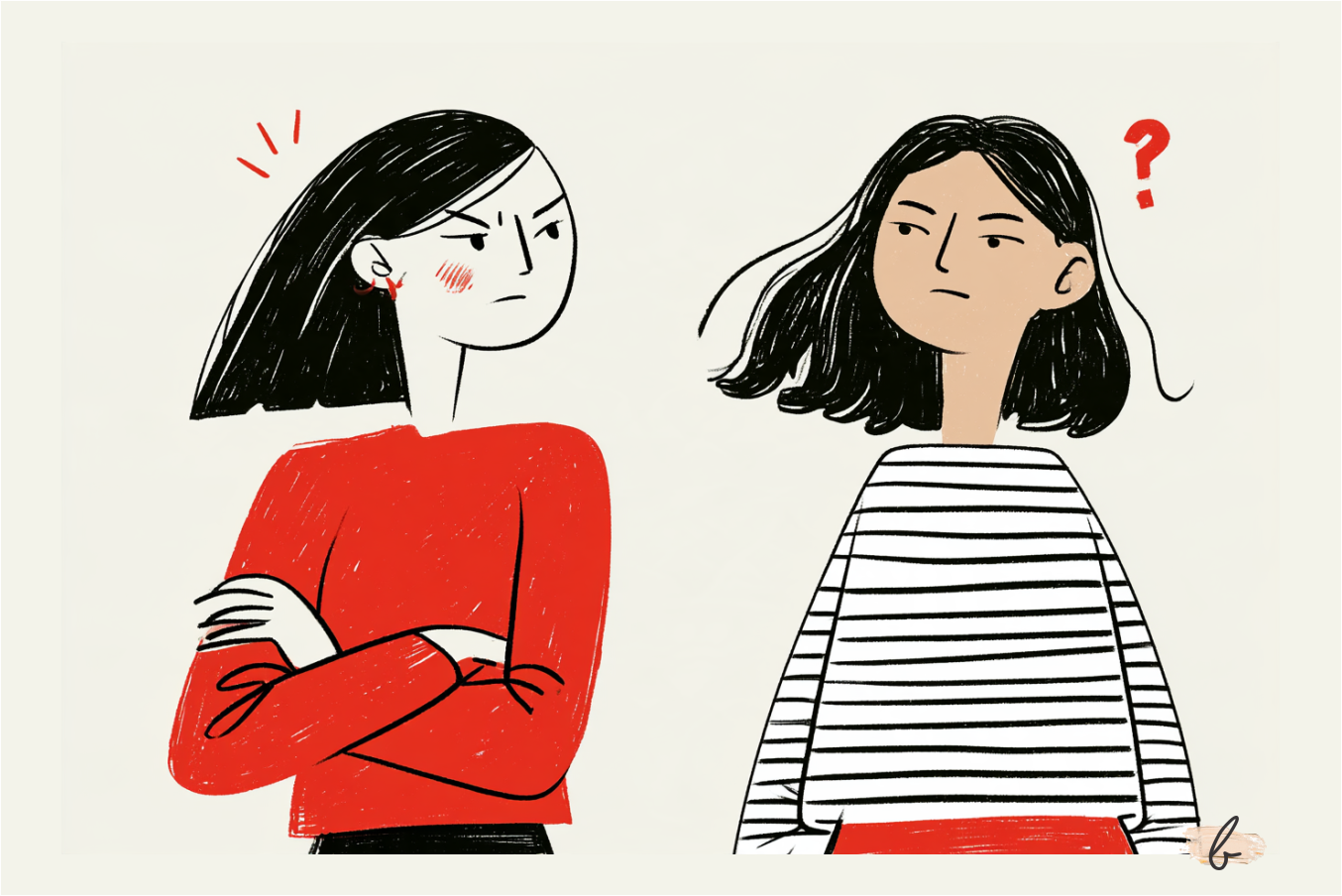
Resentment was my clue. I kept saying yes while wanting to say no, and I couldn’t keep blaming other people for taking what I kept giving them.
What I needed were standards, or as people call them, boundaries. I used to think setting boundaries meant being harsh, selfish, or unkind. But it’s still kind to say, “I’m going to put down the phone when you talk like this.” It’s also still kind to say, “I’m not comfortable with this.”
The changes didn’t happen in a day. Or a week. It took months. When I started saying these things, it came across as anger. I said it with the bitterness of someone who’s been holding this in for a long time. That did NOT go over well. I just came across as difficult as them. And so the next time, I tried again. And again. Until I was able to say it as a statement without the heavy feeling behind it.
Why was there so much heaviness behind it? Once I started caring again, the feelings came rushing back. When you don’t care, you shut feelings down. When you start caring again, they can feel suffocating. My friend Rivka reminded me that thoughts are just thoughts, and even strong feelings pass. You can feel upset now and feel completely different later.
Knowing what I needed to change didn’t mean I knew how to change it. For a while, it was hard to see how things would ever feel different.
Here’s what change can look like. These aren’t my stories, but I’ve heard them from so many women over the years. I’m sure you can add your own.
What Setting Boundaries Can Look Like
Your sister-in-law ignores you at the Chanukah party.
Again.
It’s the third time this year, and you’re not sure why. You can ask her once if something is wrong. If you did something, own it and move on. If she won’t say, you don’t have to spend the evening chasing her or trying to win her over. Enjoy the other family members. Be polite without making it your job to fix the relationship alone. And you don’t need to stay up all night replaying it. (Raise your hand if this is you )
Your husband is yelling at you.
You don’t have to yell back. You don’t have to make him understand your point right then and there. You can calmly say, “I’m going to step out of the room. I’m happy to listen and discuss this with you after we take a 20-minute break.” You can want to work things out and still decide that you aren’t going to have the conversation while someone is yelling. Taking a break isn’t the same as giving up on the relationship.
This is about people who are hard to live with. If you feel unsafe, a boundary isn’t enough. Please reach out for help.
Your sister calls to tell you how your other sister is upset with you.
You get pulled into a conversation about what your sister said, what she meant, and what you should do to make her happy. You can say, “If she’s upset with me, she can call me directly and we can discuss it. We don’t need to turn this into a three-way conversation.” You don’t have to get involved in every conflict, explain yourself to people who aren’t part of the situation, or take responsibility for feelings that someone else hasn’t even discussed with you.
The 3 C’s of Dealing With Difficult People
My friend Chaya gave me a way to remember all of this: the 3 C’s, a rule of thumb from Al-Anon. You didn’t cause their behavior, you can’t control it, and you can’t cure it. Your part is how you respond.
You don’t have to do this alone, and you don’t have to lose yourself first. There are therapists who specialize in this, books, and friends who’ve been through it. Reach out and find the support you need.
I’m still learning. It’s still hard for me to tolerate people’s disappointment in me. I don’t think this is about becoming less kind, less forgiving, or less understanding. It’s about recognizing that I can be kind without making myself responsible for everyone’s happiness.
I can care about people without letting their moods determine mine. I can forgive someone without pretending that nothing happened. I can want a relationship to work without being the only person working on it. And I can be the kind of person I want to be without disappearing in the process.
The Hidden Point System in Our Relationships, on keeping score.
Should Your Husband Be Your Best Friend?
Thank you to C, who is the reason this article exists. For all the listening, the insight, and for always being there. I am so grateful for you.






|