
They’re the black hole in the kitchen and you’re not really quite sure how to optimize them.
Dear Devorah
My corner cabinet feels like a black hole. Things disappear, I forget what I own, and every time I open it, I get annoyed. Is there any realistic way to make a corner cabinet work?
– Lost in the Corner
Dear Lost
Let’s start with the truth: most of us hate corner cabinets. They’re designed to “optimize” space, but in real life they usually do the opposite. They hide things, they swallow things, and they make you feel like you have way less control over your kitchen than you actually do.
So I’m going to say something that may offend the organizing police: We are probably not going to optimize this space – and that’s on purpose. Because knowing what you have matters far more than squeezing in one extra item you’ll never see again.
Corner cabinets are one of the most common problem areas I see in kitchens – even in homes that are otherwise beautifully organized. They’re awkwardly shaped, hard to access, and they don’t forgive clutter or indecision. A system that works perfectly in a standard cabinet often completely falls apart in a corner.
That’s why I approach this space differently than almost anywhere else in the kitchen.
- I don’t expect it to hold everything. I don’t expect it to look perfect. And I don’t expect it to stay pristine forever.
The goal here is much simpler: The goal here is much simpler: reduce frustration, eliminate guesswork, and make sure you’re not constantly losing track of what you already own.
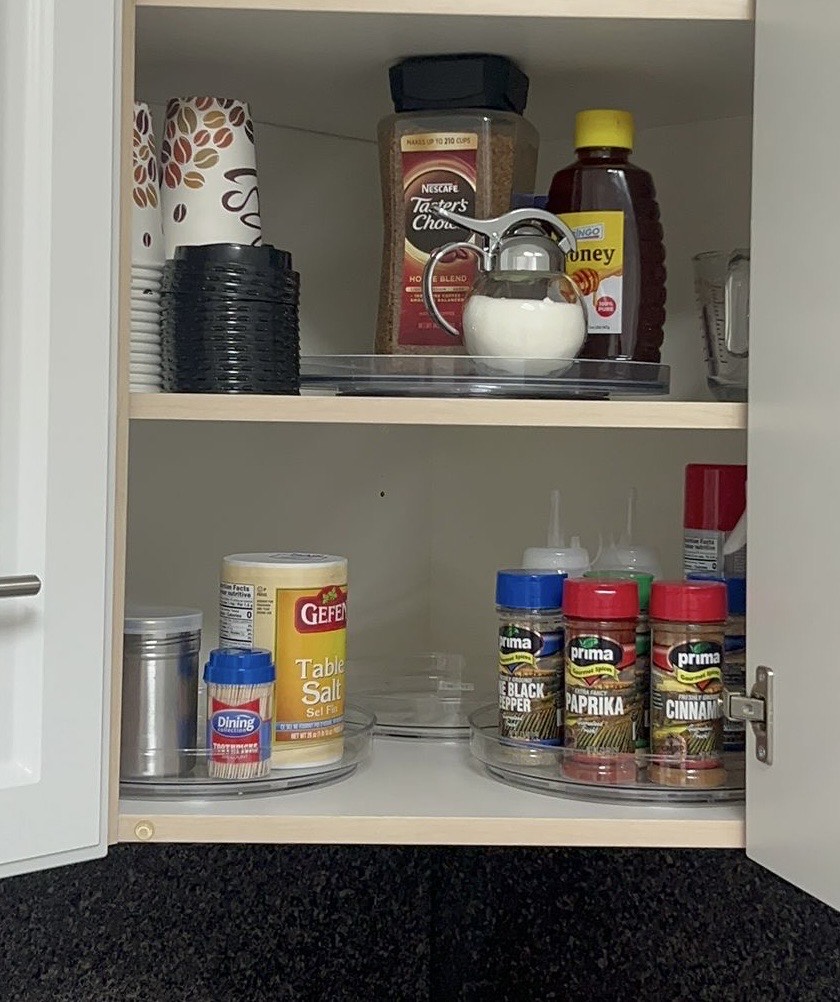
Corner cabinets are one of those places where I care far more about visibility than capacity.

Here’s how I approach them.
Lower Corner Cabinets: Big, Bulky, Impossible to Lose
Lower corner cabinets work best when you put things in them that simply cannot disappear.
This is the ideal spot for:
- Large appliances (mixers, food processors, crockpots)
- Big pots and pans
- Bulky cookware
The rule here is simple: big items only. When everything in the cabinet is large, nothing gets lost in the back.
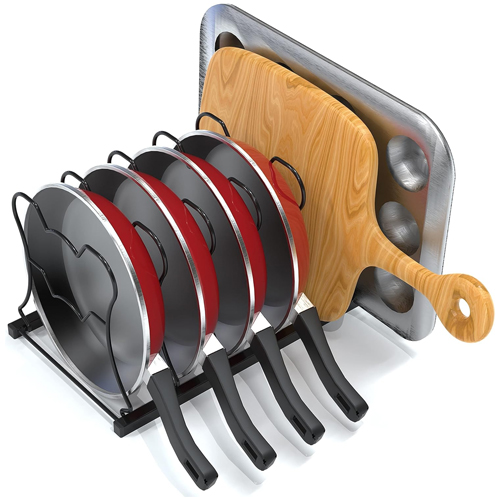
If you’re using this space for pots and pans, keep it easy. Stack lids directly on the pots they belong to, or use a lid rack – but either way, make sure the lids have a designated spot. Corner cabinets have a talent for swallowing lids, and once they start drifting toward the back, you’ll never know what you actually own.
And that’s how you end up using your soup pot lid on a frying pan.
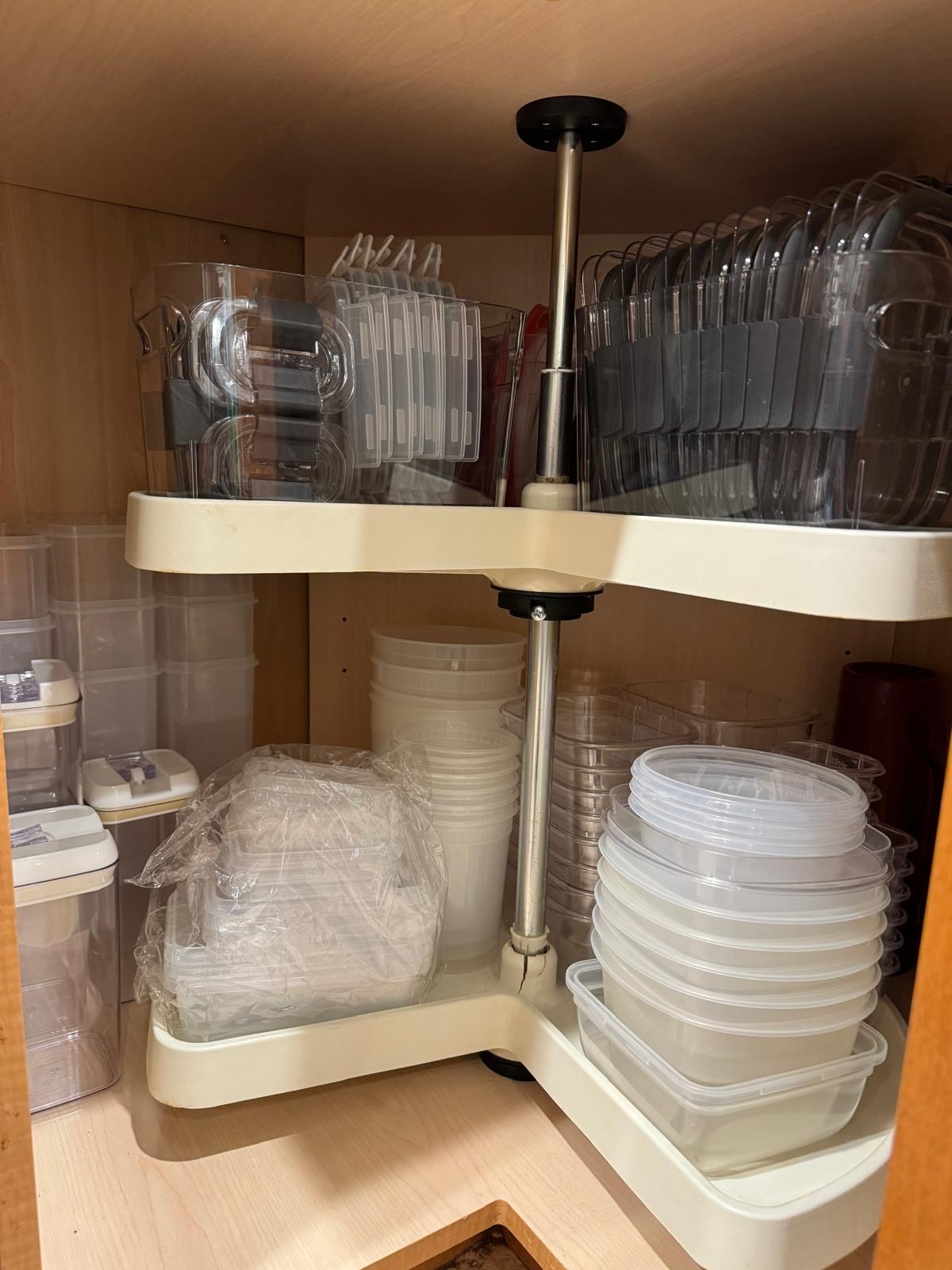
This isn’t the place for small categories or over-organizing. Big items, clear homes, and a setup that doesn’t allow things to slowly disappear is what makes this cabinet work.
Upper Corner Cabinets: Visibility First
Upper corner cabinets are tricky – not because they’re deep, but because they’re tall. You can’t see what’s in the back, and realistically, you’re not going to know what you have up there until you start cleaning for Pesach.
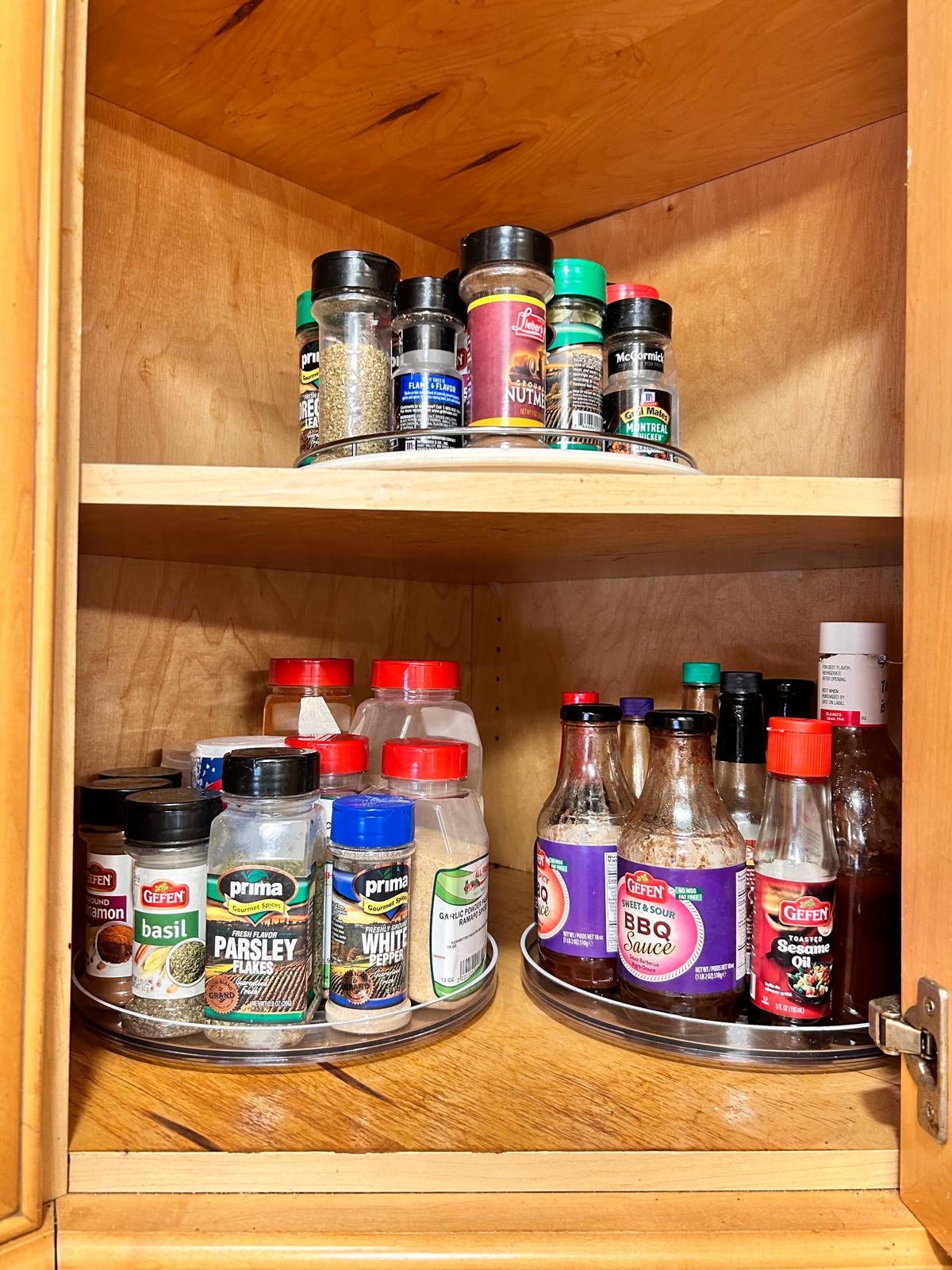
That’s why these cabinets need to be handled intentionally.
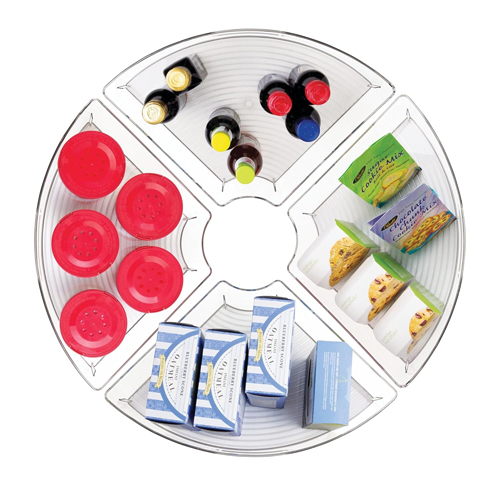
Turntables like these usually work best. I’ll often use one in the center, with one or two smaller ones farther back. On the turntables, I divide items into clear categories. Things you use more often stay toward the front; items you reach for less frequently can sit to the sides.
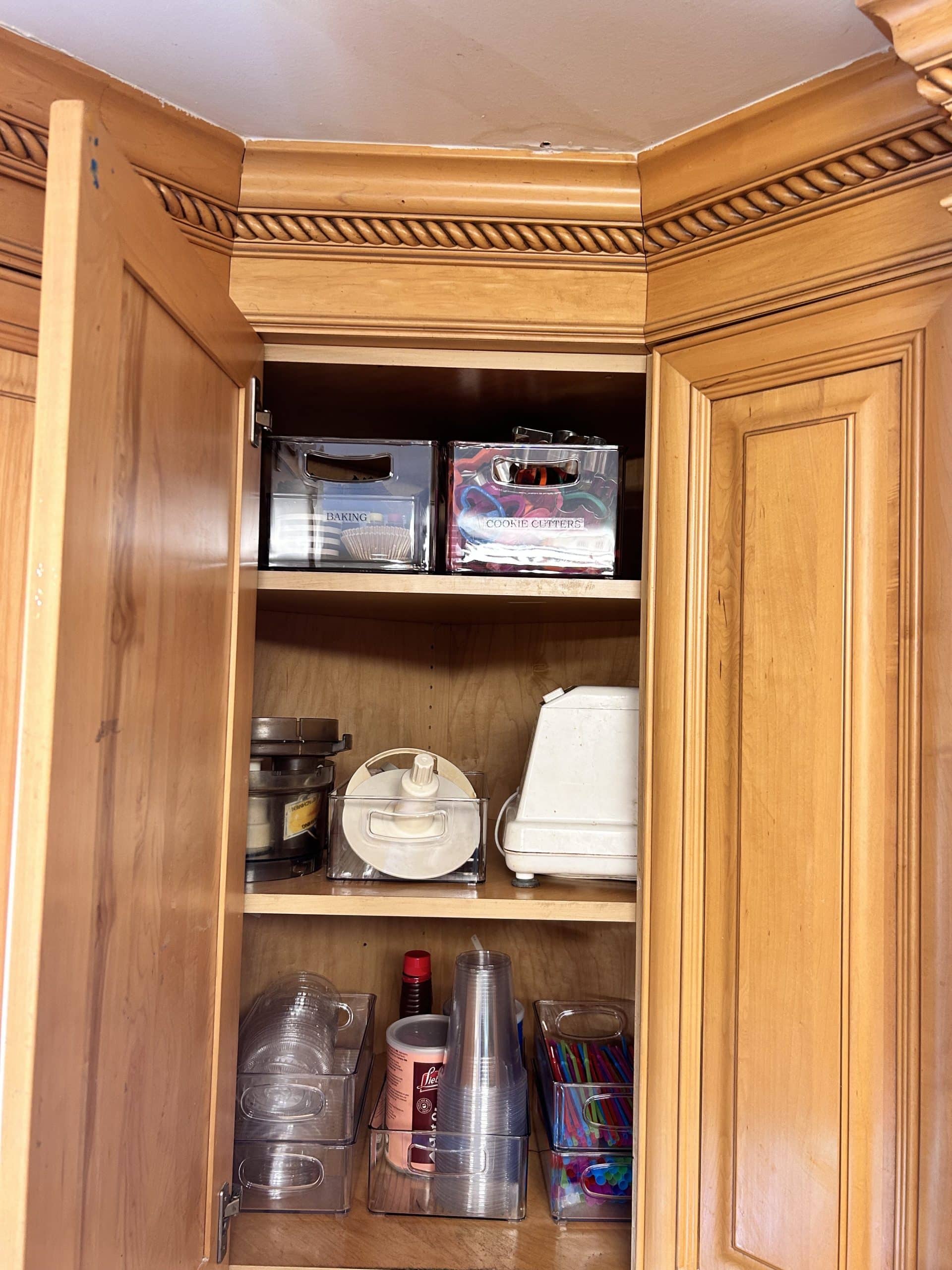
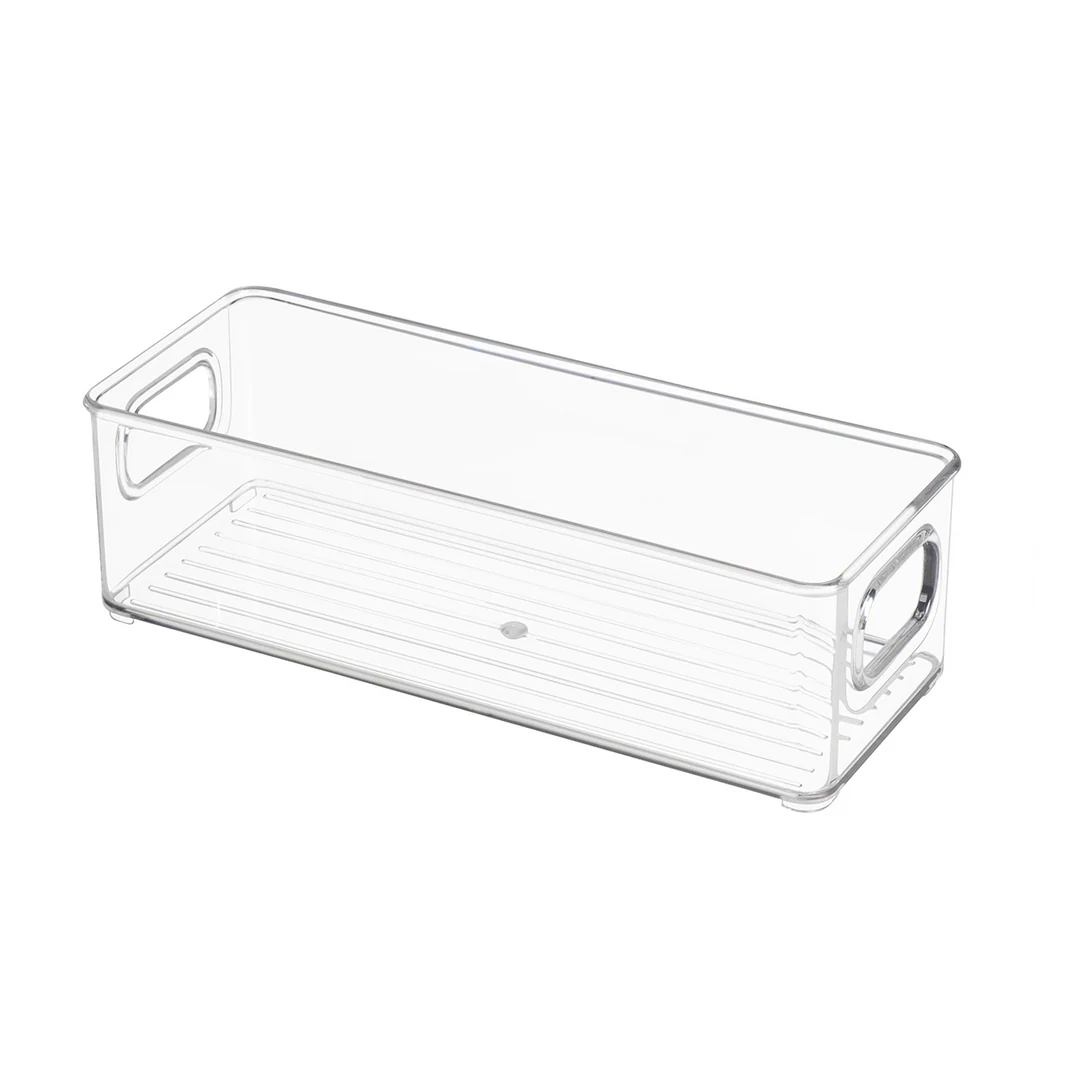
Another option is using narrow bins that come in different depths so they look the same in the front, but you can use a deeper one in the center, and choose shorter ones for the side so they all fit and maximize space. They’re easy to pull out to access the contents of the entire bin. These Fridge Bins from The Organizing Warehouse come in four different depths. Measure and choose accordingly.
The goal isn’t to fill every inch – it’s to see what you have.
Even in small kitchens, over-optimizing this space usually backfires. If you pack it too tightly, you won’t know what’s there, which defeats the purpose. In corner cabinets, visibility matters more than volume. Always.
If You Want to Get Creative
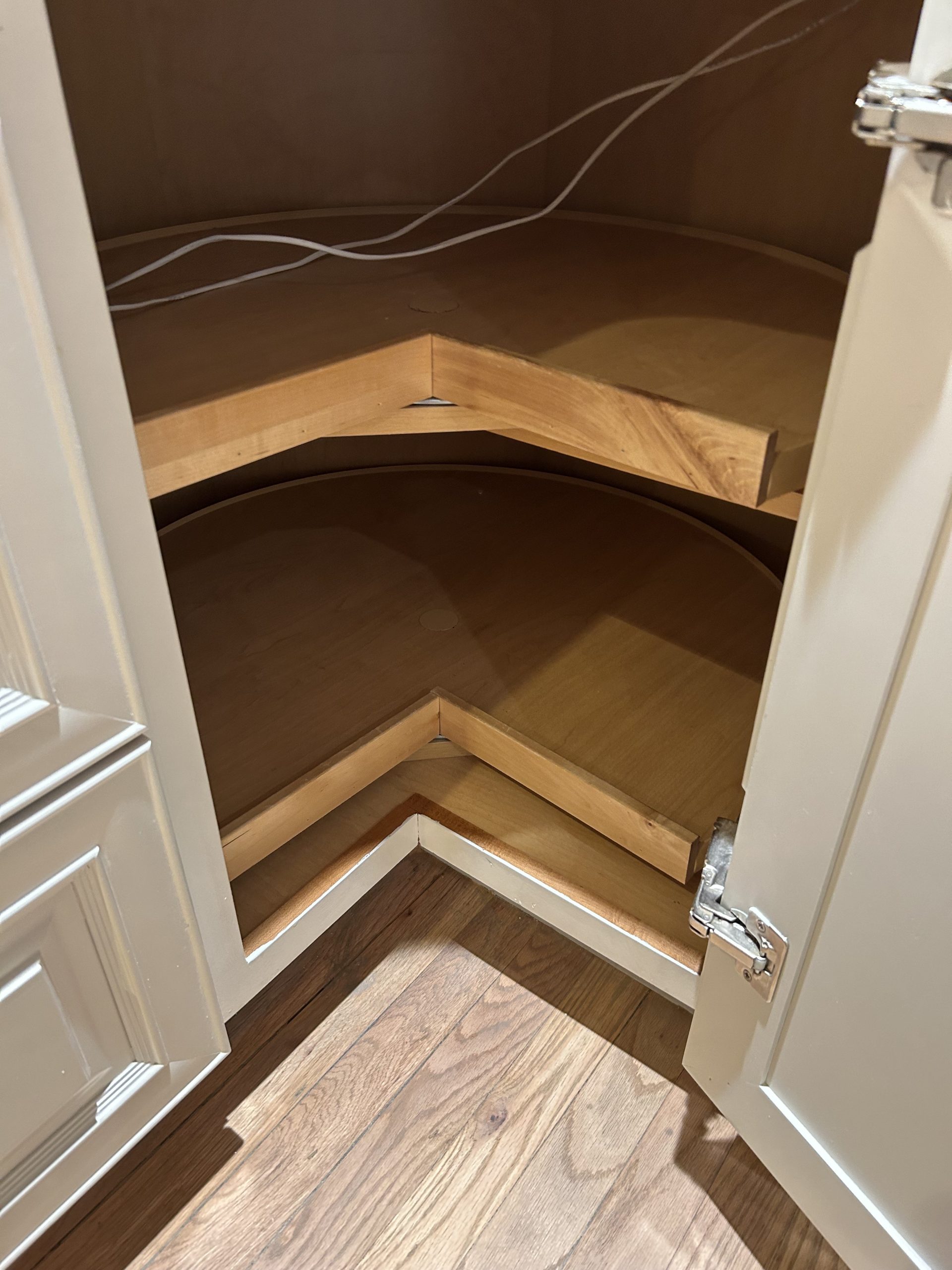
Some kitchens come with built-in rotating corner shelves. If yours does, great – you already have a solid starting point.
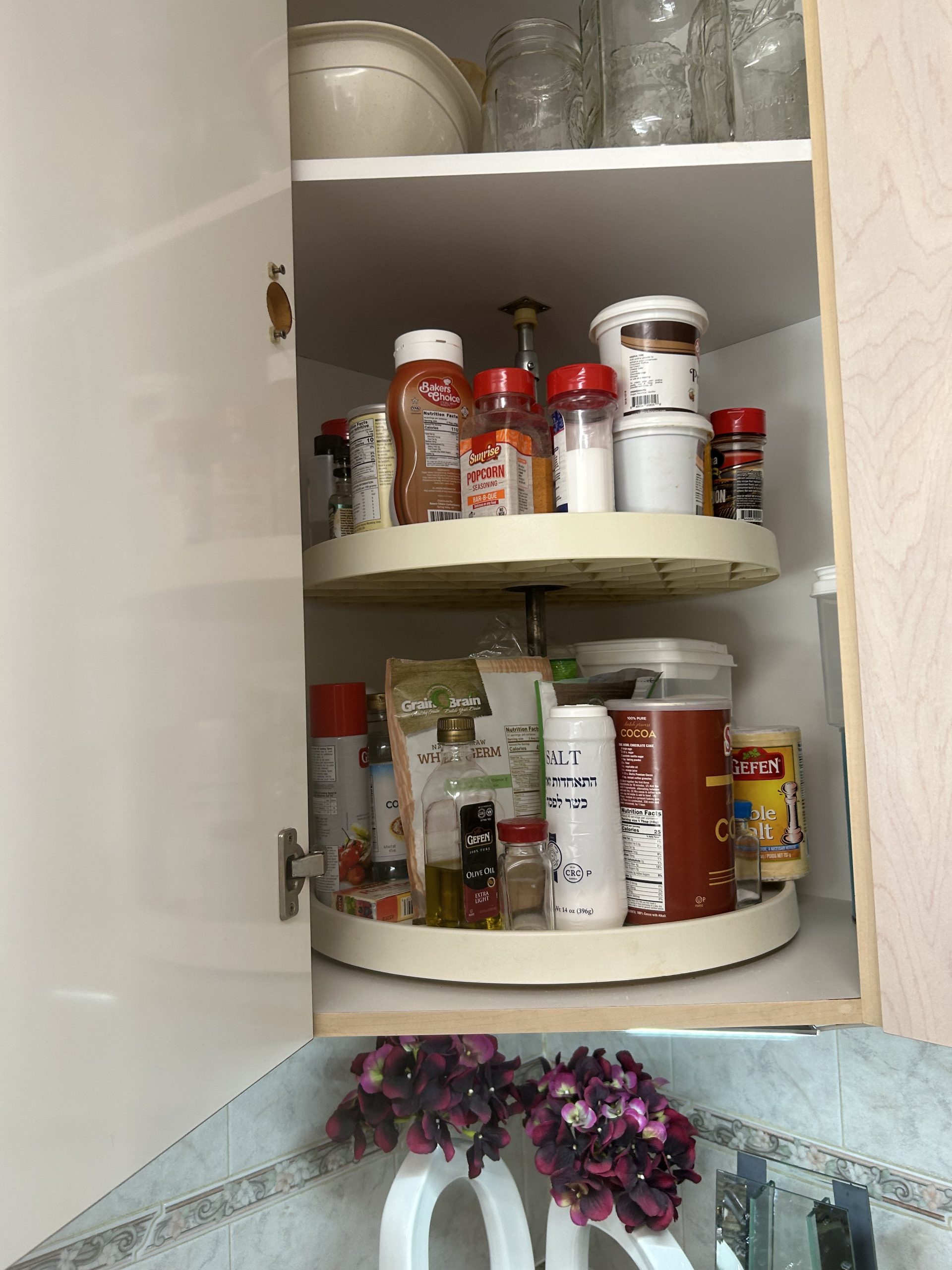
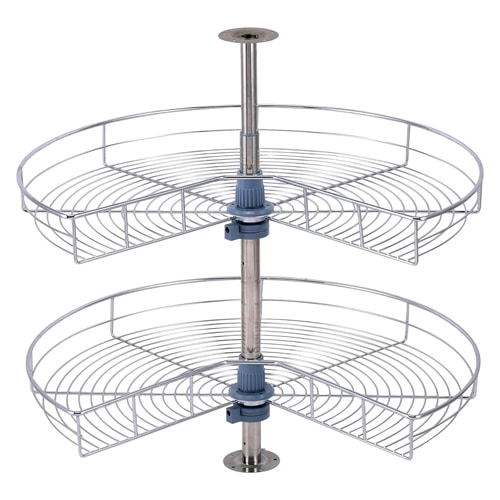
If not, and you want to get a little creative, there are corner turntable systems designed to fit these cabinets. Think of them as rotating shelves that bring items out to you instead of letting them disappear into the back. There are budget-friendly options available online that you can install yourself, and I’ve done this for clients who wanted a more functional setup without redoing their kitchen.
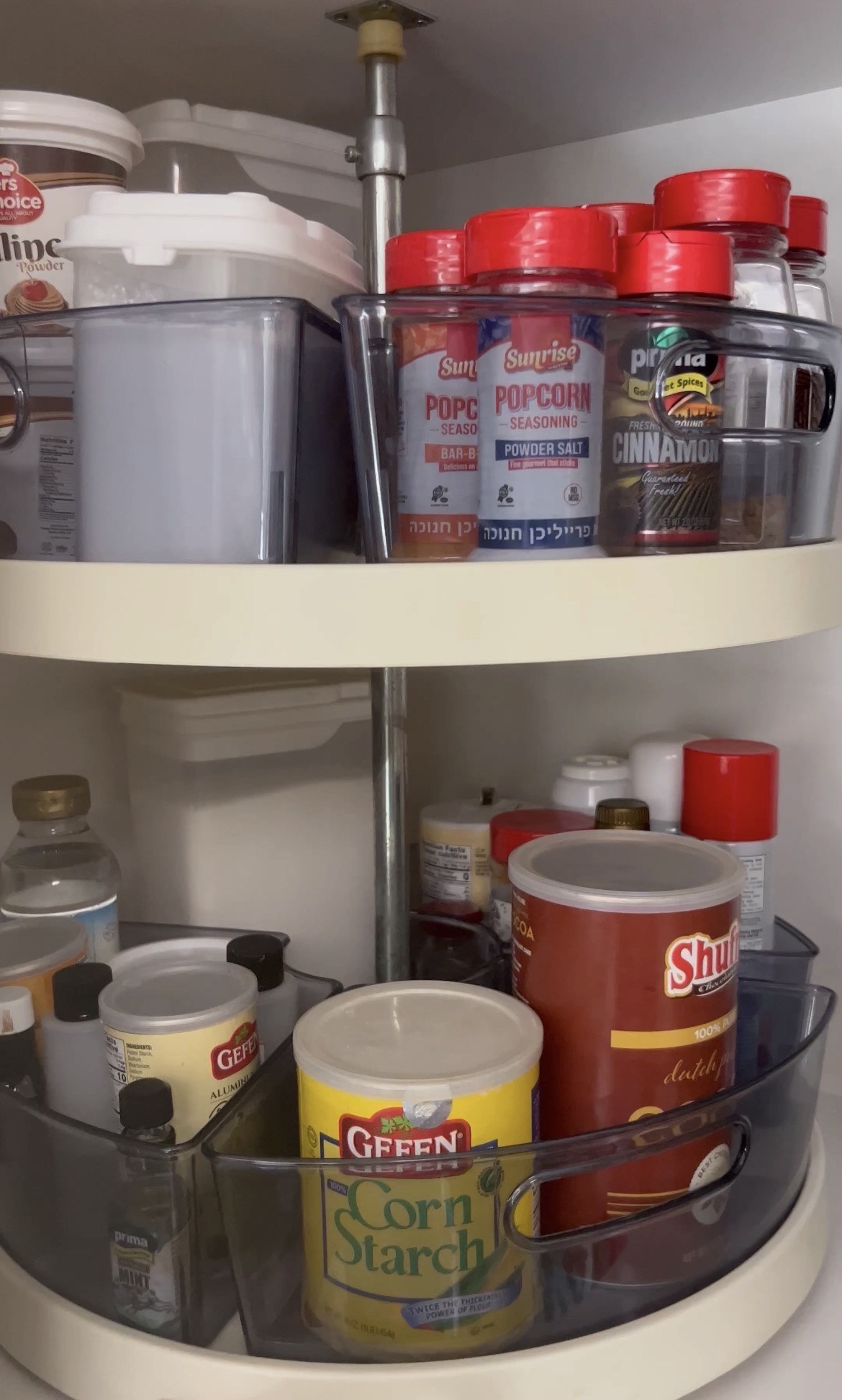
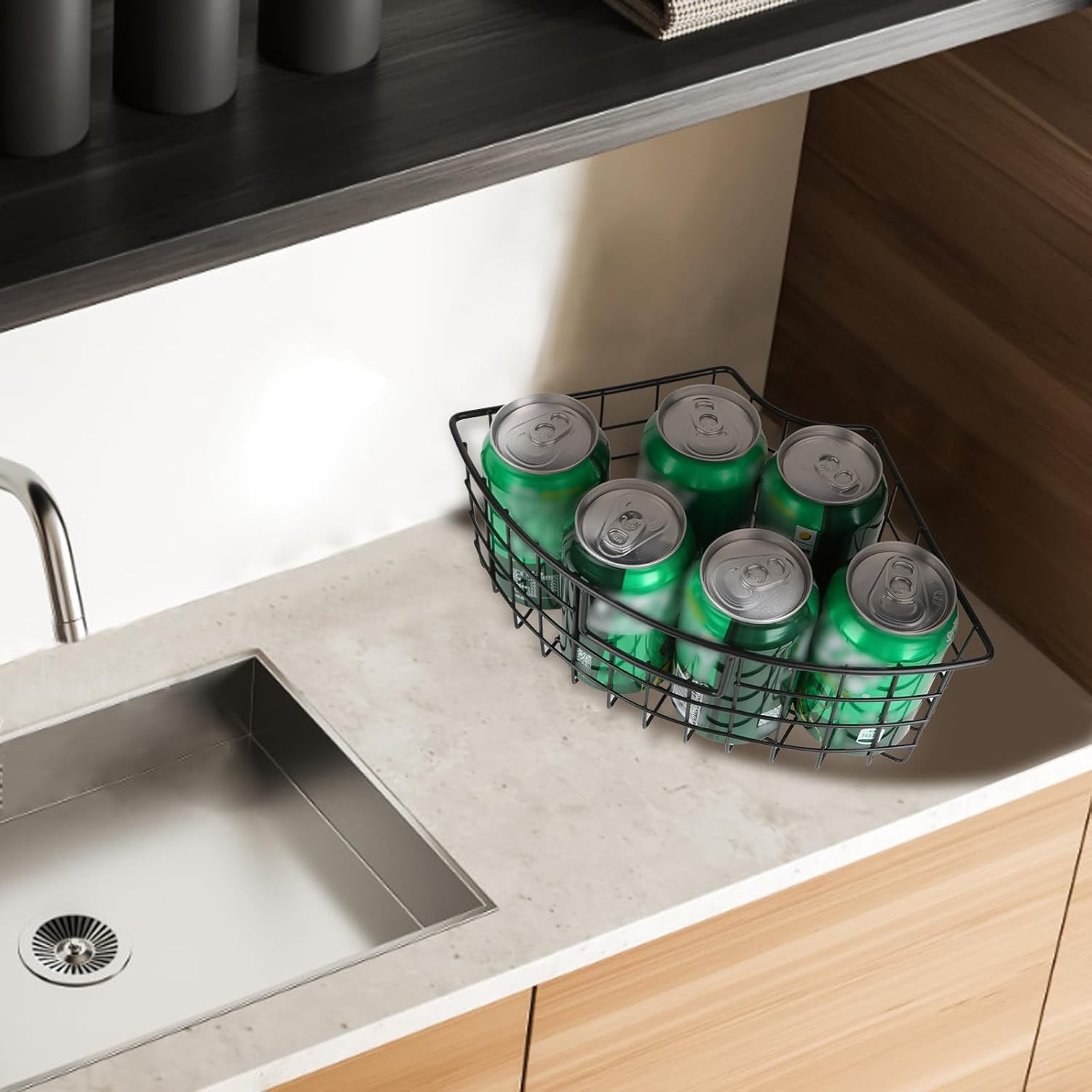
Whether the rotating shelf is built-in or added later, you can make it work even better by using triangular bins that fit neatly inside. They help divide categories and prevent items from sliding around every time the shelf turns, making the cabinet easier to use and maintain.
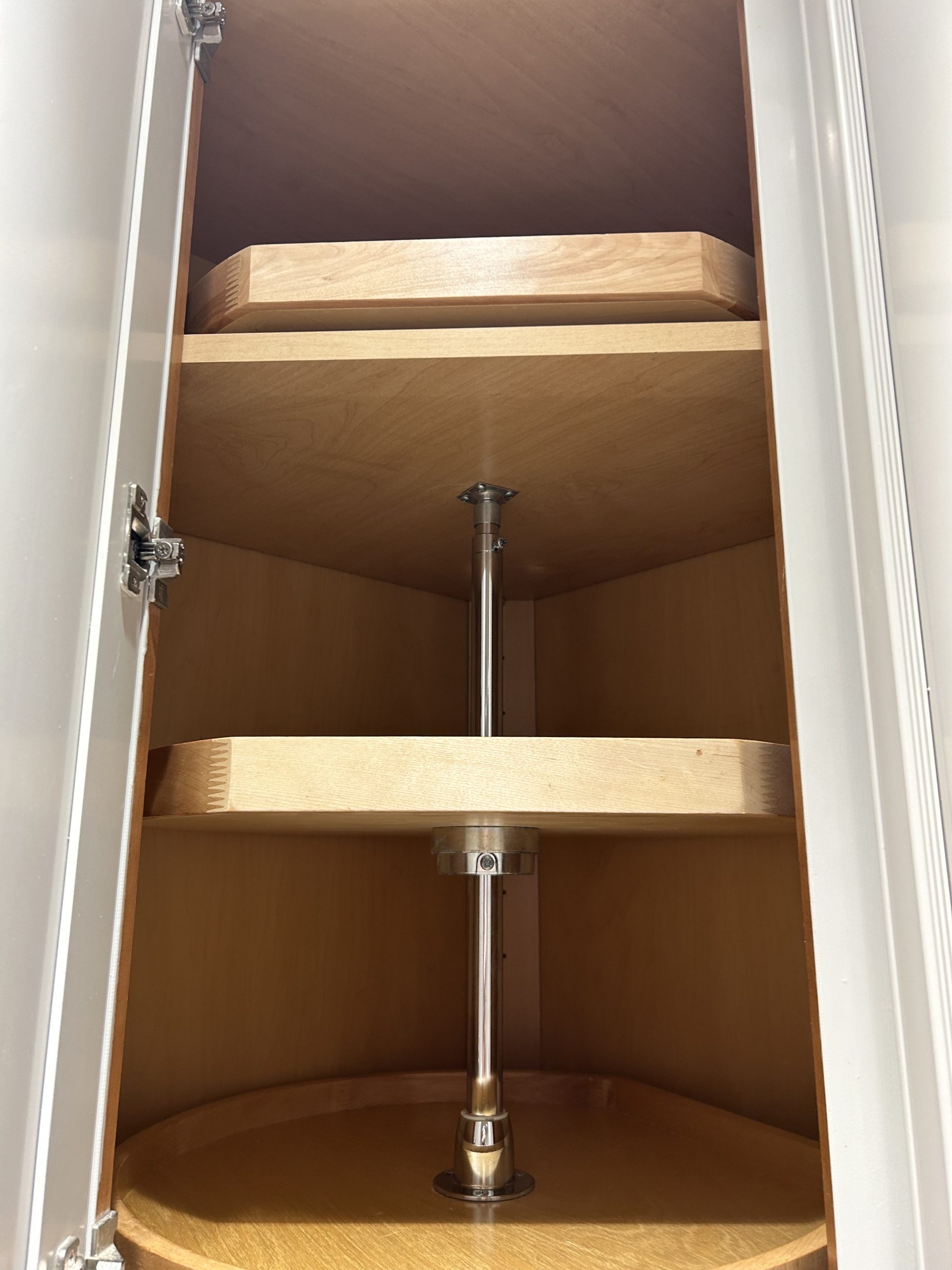
This isn’t required – but it’s a nice upgrade if you want it.
Final Thoughts
Corner cabinets are never going to be your favorite cabinet. And that’s okay.
Sometimes organizing isn’t about fixing the space; it’s about accepting it and making it manageable. This is one of those areas where perfection isn’t the goal. Ease is. If your corner cabinet opens easily, you know what’s inside, and nothing falls out when you open the door…Organizing win!
You got this! Happy Organizing
– Devorah







|