
There are few things we want more during Elul than to be judged favorably.
As we stand before Hashem, we hope He sees more than what is visible on the surface. We hope He sees the effort behind the struggle, the intentions behind the mistakes, the victories no one noticed, and the quiet battles no one else even knew we were fighting.
We hope He does not define us by one failure, one reaction, or one moment when we fell short. We hope He sees the whole person. The full story. Everything that brought us to that moment and everything inside us that is still trying.
There is something deeply comforting about knowing that Hashem sees beyond what the eye can see.
One of the greatest gifts of Elul is that we’re reminded of what it feels like to be truly seen.
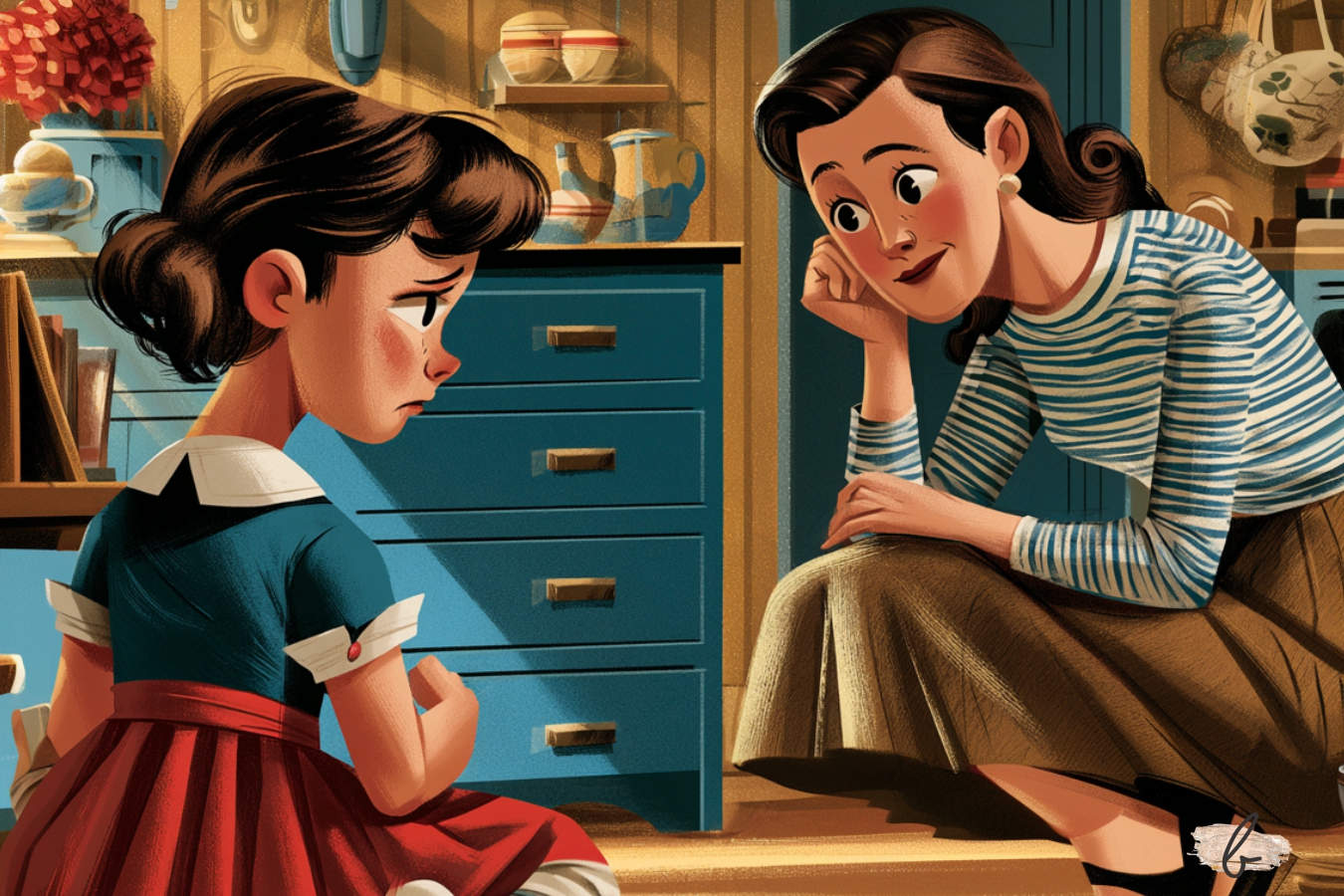
What if we tried to offer our children that same gift?
What if, before defining them by one difficult moment, we paused long enough to look beneath the surface? What if we looked for the effort, the struggle, the intention, and the story we couldn’t immediately see?
The challenge is that we don’t parent in slow, reflective moments. We parent in the middle of real life. Behavior is what we see. It is loud, immediate, and often frustrating. Before we’ve had time to think, our minds have already created an explanation for it.
He’s disrespectful. She’s mean. He’s looking for attention.
What if, before settling on that first explanation, we could train ourselves to pause and consider what else might be true?
There is a simple activity I play with the children I work with that teaches exactly that. I call it The Maybe Game.
I’ll tell a child, “A boy got off the school bus carrying three backpacks.” Then I’ll ask, “Why do you think he’s carrying three backpacks?”
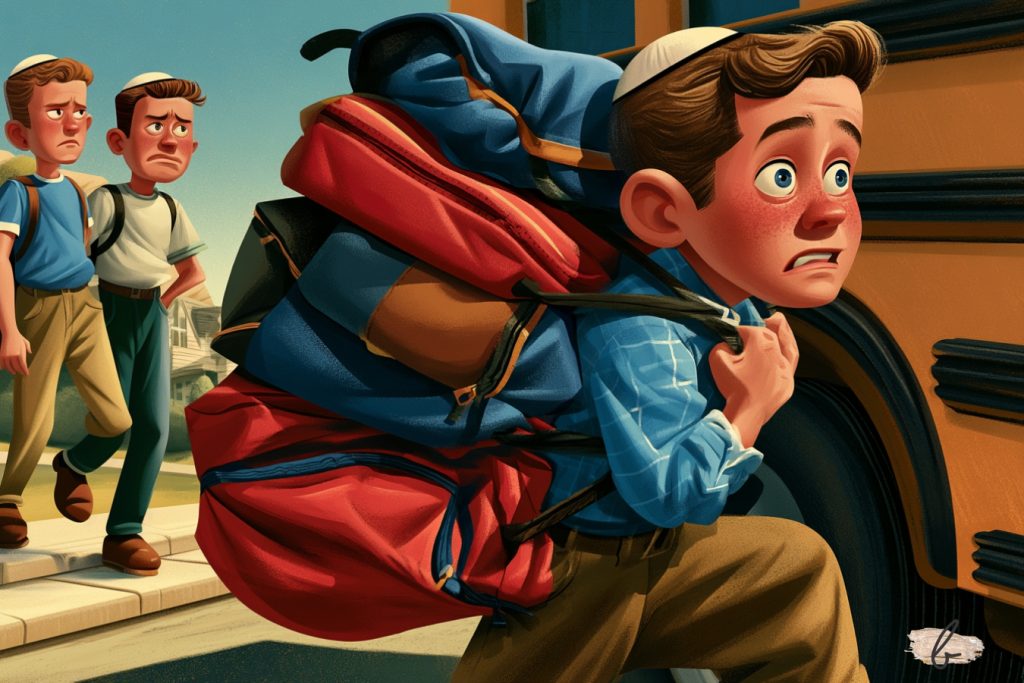
They usually shrug and say, “I don’t know…he’s weird.”
They haven’t stopped to think it through. Instead of wondering why he might be carrying three backpacks, they simply settle on the easiest explanation.
So we play the Maybe Game.
The Maybe Game is simple: Before settling on one explanation, challenge yourself to come up with as many “maybes” as you can.
Maybe… he’s carrying his two brothers’ backpacks because they forgot them. Maybe… he’s bringing supplies for a school siyum.
Maybe… he offered to help classmates whose hands were full.
Maybe… his friends slept over and left their backpacks at his house.
Maybe… the bags are filled with costumes for a school play or presents for his teachers.
Without stopping to think it through, there is no way to move beyond that first impression.

Children who struggle with flexible thinking often get stuck there. They either know the answer or they don’t. The Maybe Game teaches them to stretch their thinking, consider possibilities they hadn’t seen before, and make room for more than one explanation.
As speech therapists, we call that flexible thinking.
As parents, I think we simply call it love.
Because how often do we see one moment and believe we have seen the whole story? Our child ignores us. Our daughter snaps at her sibling. Our son melts down over something that seems so small.
Within seconds, we have filled in the blanks.
He’s disrespectful. She’s mean. He’s looking for attention.
But maybe there is more we haven’t seen.
What if we played the Maybe Game?
Maybe… he is embarrassed.
Maybe… she is overwhelmed.
Maybe… he feels left out.
Maybe… she has been holding it together all day.
Maybe… he is hungry, exhausted, or struggling with something he does not yet know how to explain.
Maybe… the behavior in front of us is only one small part of a much bigger story.
Playing the Maybe Game does not mean excusing behavior or pretending it didn’t happen. It doesn’t mean there are no limits, expectations, or consequences.
It simply reminds us to pause long enough to consider that there may be more to the story than what first meets the eye.
When we change the explanation in our minds, we often change the way we respond. We may still need to address the behavior, but we can do it with more compassion, more curiosity, and a little less certainty that we already know the full story.
The greatest gift we can give our children this Elul may be to let them feel what we hope to feel ourselves.
To be seen beyond what is immediately visible. To be understood as more than one difficult moment. To know someone paused before deciding who they are.
Let’s play the Maybe Game together.
Share a time in the comments when you were able to stop yourself, come up with a few “maybes,” and broaden your perspective before jumping to a conclusion. What possibilities did you consider that changed the way you understood your child?
Let’s encourage each other by sharing the “maybes” that helped us see our children more clearly.
And iy”H, in that zechus, may Hashem see us with that same compassion as we stand before Him this Rosh Hashanah.









|